
The modern service economy is increasingly defined by a phenomenon that sociologists and productivity experts describe as a decline in "social situational awareness." While technological advancements have streamlined many aspects of daily life, from mobile ordering to automated check-ins, a growing disconnect appears to be emerging between individuals and their immediate physical environments. This lack of preparation in public spaces—ranging from fast-food restaurants to government offices—is creating a cumulative "friction" that impacts economic efficiency, service worker mental health, and the general flow of civic life.
The Anatomy of Public Inefficiency
At the core of this issue is the "point-of-service bottleneck," a situation where a customer reaches the front of a queue without the necessary information or tools to complete a transaction. Observers note that this often occurs in environments where the requirements for the transaction are either static or clearly communicated through signage.
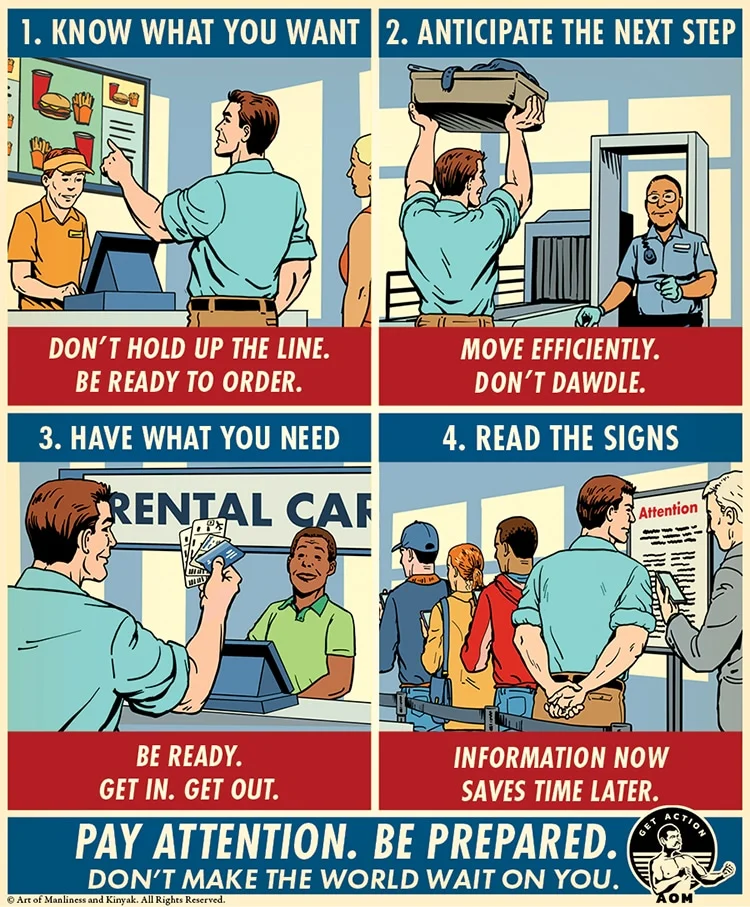
In the fast-food industry, for example, the "McDonald’s Effect" remains a primary point of frustration. Despite menus remaining largely consistent for decades, frontline workers frequently report customers reaching the cashier before deciding on their order. This behavior ignores the lead time provided by the queue itself, which serves as a natural window for decision-making.
Similarly, the travel and logistics sectors face significant delays due to procedural ignorance. At car rental counters and airport security checkpoints, travelers often wait until they are face-to-face with an agent before searching for identification, credit cards, or confirmation numbers. This occurs even when multiple signs are posted along the queue line explicitly detailing the required documentation. The result is a cascading delay: a thirty-second delay for one individual, when multiplied by a line of fifty people, results in twenty-five minutes of lost collective time.
The Psychology and Data Behind the Distraction
The root of this "sleepwalking" through public interactions is often attributed to the rise of the "attention economy." According to a 2023 report on digital habits, the average adult checks their smartphone approximately 58 times per day. In public queues, this translates to "continuous partial attention," where individuals are more engaged with digital interfaces than with their physical surroundings.
Research from the University of California, Irvine, suggests that it takes an average of 23 minutes and 15 seconds to return to a state of deep focus after a distraction. While a queue does not require deep focus, the "switch-tasking" involved in moving from a smartphone screen to a human interaction causes a cognitive lag. This lag is the primary driver of the "flat-footed" response observed at service counters.
Furthermore, operations management theory, specifically "Queuing Theory," posits that the perceived wait time is often more significant than the actual wait time. When a line is delayed by a person who is clearly unprepared, the "social friction" increases. This leads to heightened stress levels for everyone in the vicinity, often resulting in "queue rage" or public altercations.
Case Study: The Passport Office and Procedural Literacy
The United States Postal Service (USPS) and other government entities provide a stark example of how a lack of situational awareness can disrupt public services. Many post offices handle passport applications, a process that requires strict adherence to appointment schedules and documentation.
Despite the proliferation of "Appointment Only" signage and digital confirmation systems, postal workers frequently encounter "walk-in" attempts. These interactions often follow a predictable and counterproductive chronology:
- The Arrival: An individual enters the facility, bypassing signs regarding appointments.
- The Wait: The individual stands in a general service line, often distracted by a mobile device.
- The Confrontation: Upon reaching the counter, the individual is informed of the appointment requirement.
- The Friction: The individual, feeling inconvenienced, often reacts with frustration, delaying the service of others who are there for standard transactions like purchasing postage.
This cycle highlights a failure in "procedural literacy"—the ability to understand and follow the steps required to navigate a system. When citizens fail to do prior research or read on-site instructions, they outsource the burden of their preparation to the service worker and the public.
Industry Responses and the Move Toward Automation
In response to the rising tide of customer unpreparedness, many industries are pivoting toward "defensive design." This includes the installation of self-service kiosks and the mandate of mobile-only ordering in certain locations. By removing the human element, companies hope to force a structured interaction where the system cannot proceed until the user provides the necessary inputs.
However, industry analysts suggest that while automation reduces the burden on staff, it does not solve the underlying issue of situational awareness. In fact, some argue that automation further erodes the "social muscle" required to navigate the world.
Managers in the hospitality and travel sectors have begun implementing "line-busting" techniques, where staff members walk through the queue to ensure customers have their documents ready before they reach the counter. While effective, this is an additional labor cost necessitated by a lack of individual agency among the clientele.
The Economic and Social Impact of Collective Friction
The broader implications of a "clueless" public are both economic and social. Economically, every minute wasted in a bottleneck is a minute of reduced throughput. For a high-volume business, the difference between a 30-second transaction and a 90-second transaction can represent thousands of dollars in lost revenue per day and increased labor costs.
Socially, the erosion of situational awareness contributes to a "low-trust" environment. When people do not pay attention to the rules or the needs of the collective, the social contract is weakened. The "high-agency" individual—one who is prepared, observant, and proactive—becomes an outlier in a sea of passive consumers.
In Spanish-speaking cultures, the term listo is used to describe someone who is not just "ready," but "sharp" or "clever" in their navigation of the world. This concept of being listo involves maintaining a mental model of one’s environment and anticipating the next step in any given process. Cultivating this trait is increasingly seen as a competitive advantage in both personal and professional spheres.
Strategies for Reclaiming Situational Awareness
To mitigate the friction of modern life, experts suggest a return to basic principles of public etiquette and observational vigilance. The following steps are recommended for individuals looking to increase their social situational awareness:
- Active Observation: Upon entering a new environment, individuals should scan for signage, protocols, and the flow of traffic. Reading the "rules of the road" before joining a queue prevents later confusion.
- Anticipatory Preparation: The time spent waiting in a line should be used as preparation time. This includes retrieving wallets, opening apps to the correct QR code, and finalizing decisions on orders or services.
- Friction Point Analysis: Observing the interactions of those ahead in line can reveal common obstacles. If an agent asks every customer for a specific form, the observant individual will have that form ready when it is their turn.
- Proactive Clarification: If a protocol is unclear despite observation, the individual should ask a brief, clarifying question as soon as they reach the service point, rather than attempting to guess and potentially causing a longer delay.
Conclusion: The Call for High-Agency Citizenship
The "PSA: Know What You’re Doing" initiative is more than a plea for efficiency; it is a call for a more engaged and respectful form of citizenship. In a world that is increasingly complex and fast-paced, the ability to navigate public spaces without becoming a bottleneck is a vital skill.
By transitioning from a "clueless" state to one of high agency, individuals contribute to a smoother, more functional society. The goal is a "win-win-win" scenario: service representatives experience less stress and higher efficiency, the individual saves time and avoids frustration, and the collective public is able to move through the world with minimal friction. The art of paying attention is not merely a personal convenience; it is a fundamental component of a well-ordered and high-functioning civilization. True agency begins with the simple act of looking up, reading the signs, and being ready when it is your turn to act.

0 Comments