
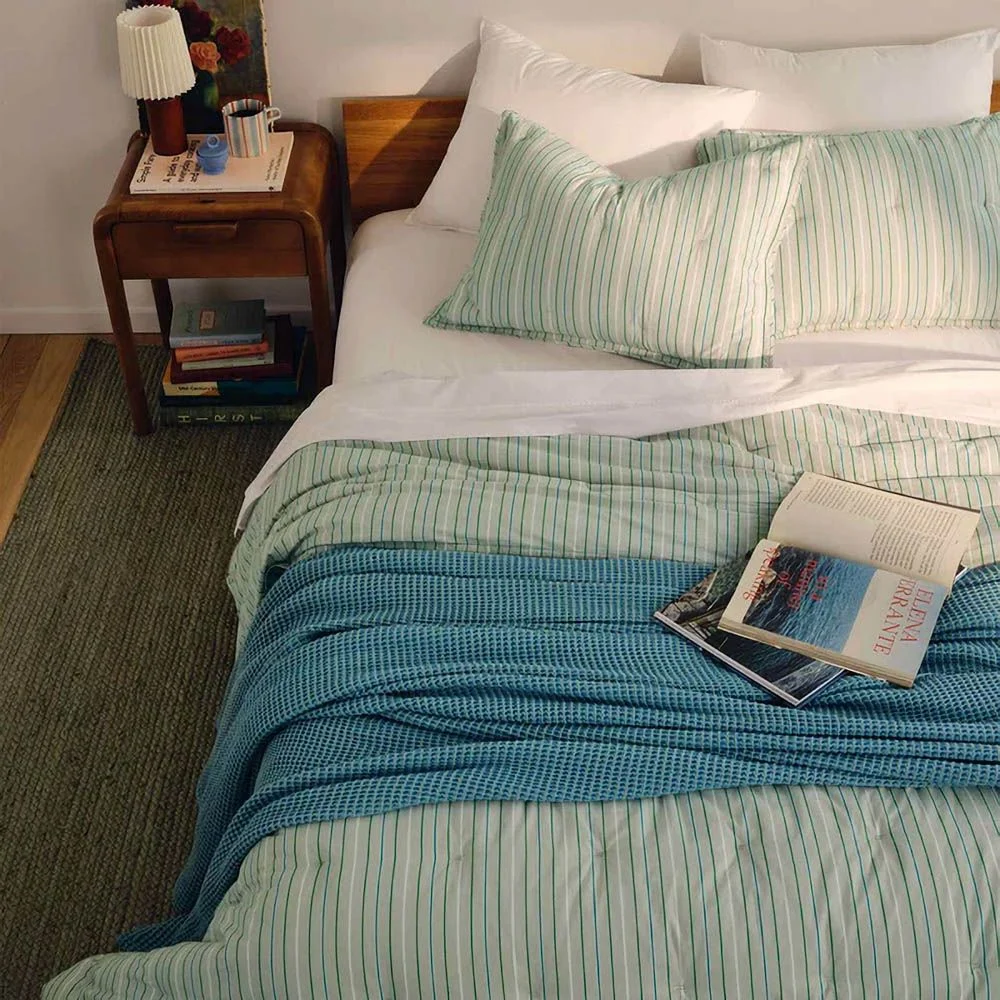
The global home textiles industry is witnessing a significant shift as consumers increasingly seek to replicate the high-end sensory experiences of luxury hospitality within their private residences. At the forefront of this movement is Brooklinen, a direct-to-consumer pioneer that has recently adjusted its market strategy to include aggressive discounting and tiered bundling options. By offering incentives such as 15% discounts for email subscribers, up to 75% off through its "Last Call" inventory clearance, and 30% savings on curated bundles, the company is positioning itself to capture a larger share of the premium bedding market during a period of fluctuating consumer discretionary spending. This strategic pricing model reflects a broader trend in the retail sector where the lines between professional-grade hospitality supplies and consumer-facing home goods are becoming increasingly blurred.
The Strategic Shift to At-Home Luxury
For decades, the "hotel bed" represented the pinnacle of sleep engineering, characterized by high-thread-count linens, specialized laundering techniques, and layered bedding components designed for maximum comfort. Historically, these items were available only to the hospitality trade or through high-markup boutique retailers. However, the rise of the direct-to-consumer (DTC) model in the mid-2010s revolutionized this supply chain. Brooklinen, founded in 2014 by Rich and Vicki Fulop, was a primary driver of this disruption, utilizing a business model that bypassed traditional wholesalers and department stores to offer "at-home luxury" at a lower price point.
The current promotional landscape at Brooklinen suggests a maturation of this model. By offering a 15% sitewide discount for new email subscribers, the brand is prioritizing customer acquisition and data-driven marketing. This entry-level discount serves as a gateway for consumers to experience flagship products such as the Classic Percale and Luxe Sateen core sheet sets. Market analysis indicates that once a consumer invests in a high-quality "base layer" of bedding, the likelihood of "cross-category" purchasing—moving from sheets to duvet covers, robes, and towels—increases by approximately 40%.
Inventory Management and the Last Call Model
A critical component of Brooklinen’s operational efficiency is its "Last Call" section, which currently features discounts of up to 75%. In the retail industry, inventory turnover is a key performance indicator (KPI). By aggressively discounting seasonal colors, overstocked items, and older iterations of products like the Marlow Mini Pillow or waffle throw blankets, the company maintains a lean supply chain.
This "Last Call" strategy serves two primary functions. First, it allows the brand to clear warehouse space for new product launches and seasonal collections without devaluing its core, full-price offerings. Second, it provides a low-barrier entry point for price-sensitive consumers who may eventually transition into full-price "hardcore" bundle purchasers. The inclusion of travel essentials in this sale, such as the Marlow Mini Pillow (currently discounted by 50%), highlights the brand’s expansion into the "portable comfort" market, catering to a demographic that seeks consistency in sleep quality regardless of their physical location.
Technical Specifications and Material Science
The efficacy of Brooklinen’s products is rooted in textile science, specifically the distinction between various weaves and cotton staples. To understand the value proposition of these discounts, it is necessary to analyze the materials involved:
- Classic Percale: This weave follows a "one over, one under" pattern, resulting in a matte finish and a crisp, breathable feel. Percale is historically favored by luxury hotels in warmer climates due to its superior airflow and durability.
- Luxe Sateen: Utilizing a "four over, one under" weave, this material offers a silkier feel and a slight sheen. It is heavier than percale, making it ideal for year-round use and for consumers who prefer a softer, more substantial drape.
- Washed European Linen: Sourced from high-quality flax, linen is prized for its thermoregulating properties and its ability to become softer with each wash. Brooklinen’s use of European flax positions the brand within the premium tier of the linen market.
By offering 30% discounts on "Hardcore" bundles—which typically include a core sheet set, a duvet cover, and extra pillowcases—Brooklinen leverages the economics of scale. These bundles encourage consumers to overhaul their entire bedding system rather than purchasing piecemeal, thereby increasing the Average Order Value (AOV) while providing the consumer with a cohesive aesthetic and tactile experience.
Logistics and the 365-Day Return Policy
In the competitive landscape of online retail, shipping and returns remain the most significant friction points for consumers. Brooklinen’s policy of providing free shipping on orders exceeding $100 is a calculated move to encourage bundle purchases. Since most core sheet sets and duvet covers are priced near or above this threshold, the policy effectively removes a major psychological barrier to checkout.
Perhaps more significant is the brand’s 365-day return policy. In the bedding industry, where hygiene concerns often lead to restrictive return windows, a one-year trial period is an industry-leading standard. This policy functions as a "risk reversal" mechanism, signaling high confidence in product durability and comfort. From a data perspective, long-term return windows often result in lower overall return rates, as consumers become accustomed to the product over several months, a phenomenon known as the "endowment effect" in behavioral economics.
Chronology of the Direct-to-Consumer Bedding Movement
The evolution of the bedding market can be traced through several distinct phases:
- 2010–2013: The Pre-DTC Era: Consumers were largely limited to department stores where thread count was used as a misleading proxy for quality. Prices remained high due to middleman markups.
- 2014–2017: The Disruption Phase: Brooklinen and competitors like Parachute and Casper launched, focusing on transparency, simplified choices, and high-quality long-staple cotton.
- 2018–2021: Category Expansion: DTC brands expanded beyond sheets into "lifestyle" categories, including loungewear, candles, and furniture. The COVID-19 pandemic accelerated this growth as the "nesting" trend took hold.
- 2022–Present: Strategic Optimization: Facing increased competition and rising acquisition costs, brands have shifted toward sophisticated loyalty programs, aggressive bundling, and high-inventory turnover sales like the "Last Call" events.
Market Analysis and Competitive Implications
The broader impact of Brooklinen’s pricing strategy is felt throughout the home goods sector. Traditional retailers have been forced to modernize their digital presence and reconsider their pricing structures to compete with the perceived value of DTC bundles. Furthermore, the emphasis on "hotel-quality" bedding has pressured actual hospitality brands to launch their own retail lines. Large chains such as Marriott and Westin now sell their signature "Heavenly Beds" and linens directly to consumers, creating a feedback loop between the travel experience and home commerce.
Industry analysts suggest that Brooklinen’s current focus on 25% to 30% bundle discounts is a response to the "subscription fatigue" and "inflationary pressure" currently affecting US households. By positioning high-quality sleep as a "long-term investment" rather than a luxury splurge, the brand maintains its relevance in a tightening economy.
Official Corporate Outlook and Sustainability
While Brooklinen has not released a formal statement regarding these specific summer discounts, the brand’s corporate communications consistently emphasize "comfort for all" and "accessible luxury." Internally, the company has also moved toward more sustainable practices, including OEKO-TEX certification for its linens, ensuring they are free from harmful chemicals. This focus on safety and sustainability is a growing requirement for the modern consumer, who often weighs environmental impact alongside price and comfort.
The 30% savings on bundles such as the Washed Percale comforter set or the Luxe Sateen duvet bundle are not merely seasonal clearances but part of a sophisticated customer lifecycle management strategy. By securing a customer’s loyalty through a high-value bundle, the brand creates a long-term relationship that extends into future categories like bath towels and robes.
Conclusion and Future Projections
As the home textile market continues to evolve, the success of brands like Brooklinen will depend on their ability to balance premium brand perception with aggressive, value-driven pricing. The current availability of 75% discounts on "Last Call" items and 30% off bundles suggests a highly responsive approach to market demand and inventory levels. For the consumer, these shifts represent a unique opportunity to acquire professional-grade hospitality products at a fraction of historical costs. In the long term, the "hotelization" of the home is expected to persist, with technical performance and longevity becoming the primary metrics by which all bedding—regardless of price point—is judged. Brooklinen’s strategic maneuvers in shipping, returns, and tiered discounting sets a benchmark that will likely be emulated by competitors across the luxury home goods landscape.

0 Comments