
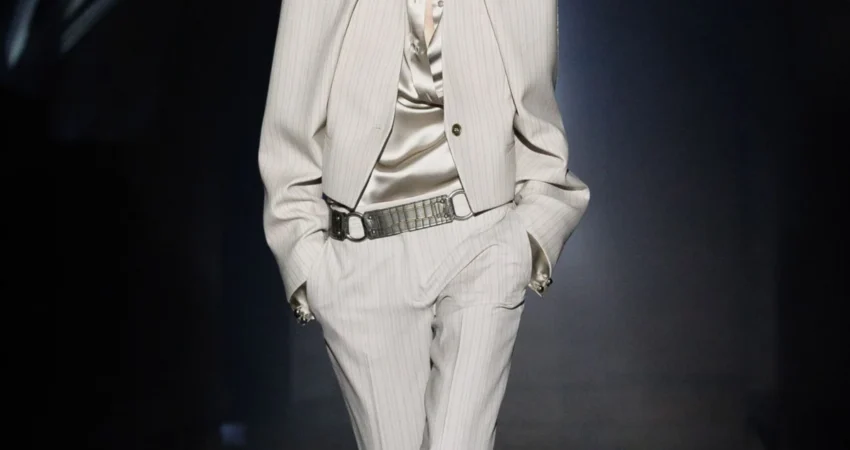
The decision by Kering Group leadership to return the Alexander McQueen runway presentations to London marks a strategic pivot for the fashion house, reuniting the brand with its geographic and creative origins. After several seasons showing in Paris, the house returned to the British capital for its latest collection, staged within the historic Undercroft of Lincoln’s Inn Chapel. This 17th-century architectural landmark, characterized by its flagstone floors etched with the names of past legal and religious figures and its intricate Gothic lierne vaulting, served as the backdrop for Creative Director Seán McGirr’s second major outing for the label. The event signaled a departure from the traditional Parisian luxury circuit, leaning instead into the "messily inspirational chaos" that defined the early years of the late Lee Alexander McQueen’s career.
Architectural Context and Atmosphere of the Undercroft
The choice of Lincoln’s Inn Chapel as a venue was not merely aesthetic but deeply symbolic of the collection’s themes. The Undercroft, a vaulted open space beneath the chapel, has stood since the 1620s. Its historical weight was palpable, with the remains of spymasters, lawyers, and preachers resting beneath the very stones upon which the models walked. This subterranean environment provided a stark contrast to the high-gloss, sterile environments often favored by modern luxury brands.
As attendees settled onto plain wooden benches, the atmosphere was described as one of expectant tension. The architecture—specifically the star-patterned Gothic ceiling—offered a visual representation of the "neoclassical sacred," one of the two primary pillars McGirr cited as inspiration. The physical space acted as a silent collaborator in the show, grounding the avant-garde designs in centuries of British institutional history.
The Creative Dichotomy: Sacred Art and Subcultural Rebellion
Seán McGirr’s creative direction for the season was built upon a deliberate collision of opposing forces. He articulated his vision as an exploration of the space between the "neoclassically sacred" and the "chemically profane." This duality was anchored by two specific cultural touchstones: Piero della Francesca’s 15th-century masterpiece The Baptism of Christ and the visceral energy of London’s 1990s rave culture.
The influence of della Francesca was evident in the collection’s moments of stillness and structural purity. McGirr, who encountered the painting as a student in London, sought to translate its ethereal light and geometric precision into garment form. Conversely, the "profane" element was represented by the grit and hedonism of the London underground scene. This manifested in silhouettes and styling choices that referenced figures like Keith Flint of The Prodigy, specifically through hair styled into twin peaks to evoke the late singer’s "demonically energized" persona.
Tailoring and Technical Collaborations
A significant highlight of the presentation was the focus on Savile Row craftsmanship, a foundational element of the McQueen brand identity. McGirr collaborated with Huntsman—the venerable tailor where Lee Alexander McQueen once apprenticed—to develop the collection’s suiting.
The tailoring sought to bridge the gap between traditional discipline and radical disruption. McGirr drew inspiration from Tommy Nutter, the legendary Savile Row tailor known as the "first rebel" of the district for his work with the Beatles and the Rolling Stones. The resulting silhouettes featured:
- Closed-over shoulders: Designed to resemble furled angel wings, adding a sculptural, almost ecclesiastical dimension to the suiting.
- Thick leather collars: These served as a stylistic bridge between the refined world of Nutter’s tailoring and the "off your nut" subculture of 1990s nightlife.
- Disruptive proportions: Balancing the precise fit of bespoke tailoring with exaggerated, warped lines that challenged conventional garment construction.
This technical rigor was further enhanced by the inclusion of hardware and accessories designed by Shaun Leane. As an original collaborator of the house, Leane’s presence provided a sense of continuity, contributing harnesses and metallic elements that spiked the classic gowns with an anarchic edge.
Materiality and Ornamental Detail
The collection’s material palette was a study in texture and light, designed to mimic the "seared-retina glitching" of strobe lights in a darkened club. This was achieved through a variety of innovative techniques:
- Hand-Embroidered Metal Skulls: One of the most technically complex pieces featured a dress composed of interlinked metal skulls. Each skull was individually crafted, echoing the memento mori themes that have long been a staple of the McQueen aesthetic and providing a direct link to the bones resting beneath the Undercroft’s floor.
- Metallic Foliage: Tailoring and dresses were embellished with metallic leaves that appeared to have been caught in a gust of wind, creating a sense of organic randomness against the structured garments.
- Rave-Inspired Textiles: The collection moved toward "true ravewear" through the use of mesh, perforated leather, and color-piped sporty knits. These elements were integrated into skirts and shorts, signaling a younger, more aggressive energy.
- Deconstructed Jacquards: Traditional jacquard fabrics were shadowed and overlaid with interference patterns, pushing the decorative integrity of the material to the point of visual collapse.
Strategic Realignment and Industry Implications
The decision to move the show to London, sanctioned by Kering Group leadership, reflects a broader trend within the luxury sector toward "heritage-centric" marketing. By returning to the brand’s point of origin, McQueen is positioning itself to reclaim its status as the premier representative of British avant-garde fashion.
Industry analysts suggest that this move is a strategic attempt to differentiate McQueen from its stablemates within the Kering portfolio, such as Gucci and Saint Laurent, which are firmly rooted in the aesthetics of Milan and Paris respectively. London provides a unique backdrop that allows McGirr to explore the "freedom and contradictions" of the city—a narrative that resonates with the brand’s core demographic.
Furthermore, the collection marks a pivotal moment for McGirr as he navigates the challenge of following the long and successful tenure of Sarah Burton. By leaning into the "dark stuff" while maintaining a focus on technical excellence, McGirr is attempting to carve out a space that honors the legacy of Lee McQueen while speaking to a contemporary audience.
Chronology of the Collection’s Narrative
The runway show was structured to take the audience on a journey from the celestial to the terrestrial. The opening looks focused heavily on the "sacred" aspect, featuring the winged tailoring and the muted, ethereal tones reminiscent of Renaissance frescoes.
As the show progressed, the "profane" elements began to dominate. The silhouettes became more distorted, the fabrics more synthetic, and the colors more jarring. This transition culminated in the rave-inspired pieces and the heavy, metallic embroidery. The final sequence of gowns, which featured open-backed corsets flying above the shoulder-line and warped satin bodices, represented the ultimate fusion of the two themes—a "dancing in the shadows" that sought a state of euphoria.
Official Responses and Creative Philosophy
In post-show statements, Seán McGirr emphasized the importance of emotional honesty in his work. Regarding the darker themes inherent to the house of McQueen, he noted that while darkness is a generative creative tool, it should remain confined to the work rather than the life of the creator. "You can talk about the dark stuff," he stated. "You can let it into your work, but you shouldn’t let it into your life: you should have a good time."
This philosophy appears to be at the heart of the "new" McQueen. While the collection did not shy away from the macabre or the rebellious, there was an underlying sense of celebration—a tribute to the resilience and creativity of London’s youth subcultures.
Conclusion and Future Outlook
The Spring Summer 2025 presentation at Lincoln’s Inn Chapel has been viewed by many in the industry as a successful "homecoming" for Alexander McQueen. By successfully synthesizing high-art references with street-level subculture, McGirr has demonstrated a sophisticated understanding of the brand’s DNA.
The strategic implications of the London return will likely be felt in the coming fiscal quarters. As Kering continues to navigate a complex global luxury market, the emphasis on McQueen’s British specificity and its heritage of "rebellious tailoring" provides a clear path forward. The collection not only reaffirms the house’s technical capabilities but also its role as a cultural provocateur, proving that even in the hallowed halls of a 17th-century chapel, the spirit of the London rave lives on.

0 Comments