
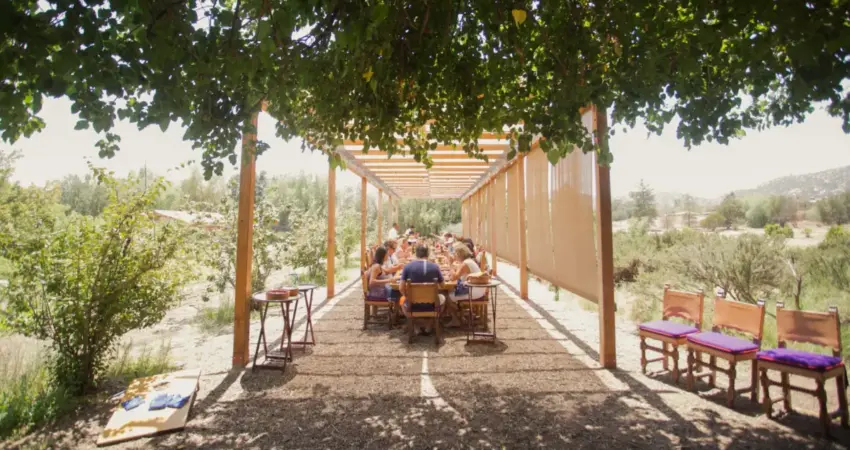
The hospitality industry is currently witnessing a significant shift in consumer preferences as travelers increasingly prioritize quietude and internal reflection over traditional social engagement. At the forefront of this movement is Rancho La Puerta, a 4,000-acre wellness estate located in Tecate, Baja California, which has gained international attention for its signature Silent Dinner. This 90-minute, five-course meditative meal requires 16 participants to break bread in absolute silence, a practice that aligns with an emerging travel phenomenon recently labeled as "hushpitality." According to Hilton’s 2026 Trends Report, this desire to "turn down the noise" of modern existence is no longer a niche preference but a defining characteristic of the future travel market, driving a surge in demand for destinations that facilitate moments of profound quiet.
The Silent Dinner: Structure and Protocol
The Silent Dinner at Rancho La Puerta is a carefully orchestrated event that has been a staple of the resort’s programming for over 15 years. The experience is held in a private, indoor dining room designed to evoke a communal, historic atmosphere, often compared to a traditional banquet setting. Upon entering, participants—most of whom are strangers to one another—are seated at a large rectangular table. The rules of the engagement are established before the first course is served: no speaking, no whispering, and a total prohibition of mobile devices.
The event commences with the ringing of a bell, signaling the official start of the silent period. From that moment, all communication between guests and staff must be non-verbal. Participants are encouraged to use gestures, facial expressions, or miming to request items such as condiments or utensils. The menu typically consists of five courses designed for mindful consumption, allowing guests to focus entirely on the sensory aspects of the food—texture, aroma, and flavor—without the distraction of table talk.

Observations from these sessions suggest that the initial minutes are often characterized by a palpable sense of social awkwardness, as guests navigate the lack of conventional social cues. However, as the meal progresses, many participants report a transition into a state of heightened awareness and psychological "flow." The sounds of the environment—the scraping of silverware, the rhythmic ticking of a clock, and the ambient noise of the mountainous countryside—become the focal points of the experience.
A Chronology of the Quiet Movement at Rancho La Puerta
The commitment to silence at Rancho La Puerta is rooted in its foundational history. Founded in 1940 by Deborah and Edmond Szekely, the resort began as a humble health camp dedicated to "sane, well-balanced living." While the resort has evolved into a world-class wellness destination, its core philosophy has remained consistent for over eight decades.
- 1940–1960s: The founders establish the importance of nature and physical exertion, introducing sunrise mountain hikes and outdoor meditation as central pillars of the guest experience.
- 2000s: Recognizing the increasing digital saturation of modern life, the resort begins offering specific silent programming, including the Silent Dinner, to help guests disconnect from technology.
- 2010–2020: The resort expands its quiet-focused infrastructure, incorporating onsite labyrinths for walking meditation and dedicated "silent zones" where man-made noise is discouraged.
- 2024–2026: The concept of "hushpitality" becomes a mainstream travel trend, with Rancho La Puerta serving as a primary case study for how silence can be integrated into luxury hospitality.
Today, the resort’s 86 casitas and extensive grounds serve as a sanctuary for those seeking a reprieve from the "always-on" culture of the 21st century.
Supporting Data: The Economic and Social Drivers of Hushpitality
The rise of silent travel is supported by significant data within the global wellness tourism sector. According to the Global Wellness Institute (GWI), the wellness tourism market is projected to reach $1.1 trillion by 2025, growing at an annual rate of nearly 21%. A substantial portion of this growth is attributed to "mental wellness" travel, which includes silent retreats, meditation centers, and digital detox programs.

Market research indicates that the average professional is interrupted every 11 minutes and takes nearly 23 minutes to refocus on a task. This chronic fragmentation of attention has created a high demand for "cognitive recovery" experiences. Hilton’s 2026 Trends Report highlights that 64% of global travelers now seek out destinations that offer "sensory reduction" or "quiet luxury." Furthermore, the report notes that the term "hushpitality" describes a new service standard where silence is treated as a premium amenity, similar to high-end spa treatments or gourmet dining.
Psychological studies conducted on silence and mindfulness suggest that even short periods of intentional quiet can lower cortisol levels, reduce blood pressure, and improve sleep quality. For many travelers, particularly those in high-stress urban environments or parents managing young children, the 90 minutes of silence offered at a dinner can provide a rare opportunity for "internal monologue processing," leading to creative breakthroughs and emotional clarity.
Participant Reactions and Non-Verbal Connectivity
While the Silent Dinner is an individual experience, it often results in a unique form of communal bonding. Following the 90-minute meal, the bell is rung again to signal the end of the silence, and guests are invited to share their observations. These post-meal debriefs often reveal a common thread of shared humanity that transcends verbal introductions.
Participants frequently report that the absence of speech forced them to pay closer attention to their fellow diners. One common reaction is an increase in eye contact and smiling, as guests use these cues to acknowledge one another’s presence in the absence of words. In several recorded instances, guests have described "sharing" the meal with late loved ones in their minds or finding the solution to a long-standing professional problem during the quiet period.

The guide for the dinner at Rancho La Puerta often notes that silence acts as a "leveler," removing the social hierarchies that are often reinforced through professional titles and small talk. By the time the meal concludes, participants often feel a sense of intimacy with strangers, having shared a profound experience without knowing each other’s names or backgrounds.
Broader Impact and the Future of Silent Travel
The success of the Silent Dinner at Rancho La Puerta has prompted other hospitality brands to explore similar concepts. From "silent hotels" in the Swiss Alps to "quiet carriages" on high-speed rail lines and silent meditation pods in airport lounges, the industry is adapting to a world where silence is becoming a scarce and valuable commodity.
Industry analysts suggest that the "hushpitality" trend will continue to evolve in several key ways:
- Design-Driven Silence: Architects are increasingly using sound-dampening materials and acoustic engineering to create "silent suites" that block out all external noise.
- Digital-Free Zones: More resorts are implementing "phone-free" policies in communal areas to encourage guests to remain present in their surroundings.
- Silent Service: High-end hotels are training staff in "low-impact" service, where room cleaning and meal delivery are performed with minimal noise and verbal interaction.
The implications for the wellness industry are significant. As mental health becomes a central component of the travel experience, silence is being redefined from a "lack of sound" to a "presence of peace." For destinations like Rancho La Puerta, the challenge lies in maintaining the authenticity of these experiences as they become more popular.

Conclusion: Silence as a Form of Listening
The Silent Dinner at Rancho La Puerta demonstrates that silence is not merely the absence of noise, but a tool for connection and self-discovery. In a world characterized by constant notification and digital chatter, the act of sitting quietly with strangers offers a form of "radical presence" that is increasingly difficult to find.
As the "hushpitality" trend gains momentum, it reflects a deeper societal shift toward valuing stillness. Whether through a five-course meal in Baja California or a sunrise hike in silence, travelers are discovering that by turning down the external volume, they are finally able to hear themselves. The success of these programs suggests that the future of luxury travel may not be defined by what is added to the experience, but by what is intentionally taken away.

0 Comments