
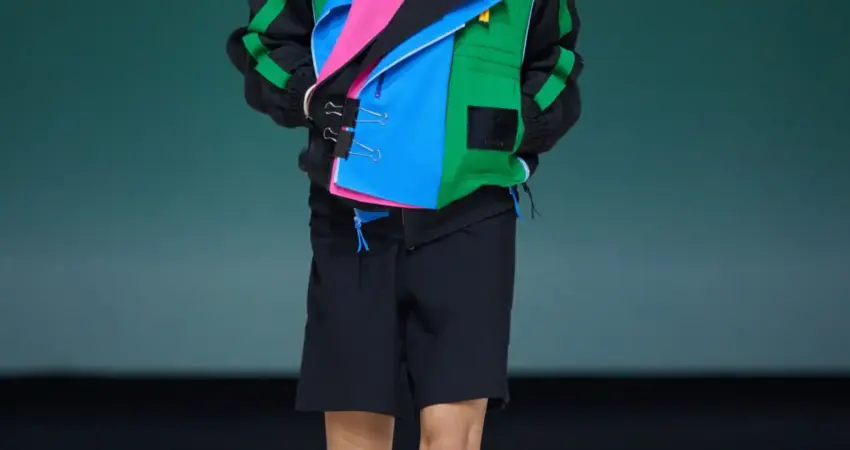
The contemporary fashion landscape has increasingly become a theater for sociological commentary, and the latest Spring/Summer collection from Staffonly, titled "No Duty to Be Cute," serves as a poignant example of this trend. Presented during the height of the international fashion circuit, the collection utilizes the architectural and social structure of a zoo as a direct metaphor for the modern corporate workplace. By examining the parallels between captive animals and salaried employees, designers Shimo Zhou and Une Yea have crafted a narrative that questions the necessity of conformity and the performative nature of professional identity. While the collection’s theoretical framework was extensively articulated through a staged performance, the garments themselves provided a more visceral and immediate argument for the brand’s vision of "orderly rebellion."
The Conceptual Framework: Zoo as Workplace
The central thesis of "No Duty to Be Cute" rests on the observation that both zoos and modern offices are environments designed to regulate behavior through observation and classification. In the zoo, animals are expected to perform the "cuteness" or "wildness" assigned to their species to satisfy the expectations of the observer. In the workplace, Staffonly posits that individuals are similarly constrained by the specifications of management, forced into roles that may not align with their internal identities.
The show opened with a performance centered on the concept of "casting." This sequence served as a dramatization of the hiring process and the subsequent pressure to fit into a pre-established mold. Models were subjected to a series of movements that mimicked the persistence of rules and the rigidity of corporate hierarchies. This performance-heavy approach underscored the collection’s intellectual ambitions, though some observers noted that the elaborate theory of human behavior at times threatened to overshadow the technical merits of the apparel. Nevertheless, the metaphor established a clear lens through which the audience could interpret the deconstructed uniforms that followed.
Chronology and Production of the Spring Show
The development of "No Duty to Be Cute" followed a rigorous timeline typical of high-end independent labels. Planning for the Spring collection began approximately six months prior to the runway debut, with the design team focusing on the intersection of traditional tailoring and avant-garde subversion.
- Concept Phase (Month 1-2): Research into corporate dress codes and the history of the "Preppy" aesthetic. The designers explored archival office wear from the 1980s and 90s, identifying key elements such as the button-down shirt, the pleated trouser, and the necktie.
- Prototyping and Performance Design (Month 3-4): Development of the "wayward" tailoring techniques. This involved experimenting with pattern cutting to create skewed plackets and displaced pockets. Simultaneously, the choreography for the "casting" performance was finalized.
- Fabric Sourcing and Sampling (Month 5): Selection of materials that could hold architectural shapes while maintaining the appearance of standard business attire. High-twist wools, crisp cotton poplins, and technical blends were chosen for their ability to be "folded and fixed" into shape.
- The Runway Event: The show took place in an industrial venue, transformed into a sterile, observational space. The lighting was clinical, reinforcing the "zoo" and "office" themes.
Technical Analysis of the Collection
The true strength of the collection lay in its ability to communicate complex ideas through garment construction rather than just performance. Staffonly’s signature approach to menswear—which often blends humor with high-level tailoring—was evident in the "eccentric school" or "unruly office" aesthetic of the Spring line.
Subverting the Uniform
The collection featured a series of colorful, preppy uniforms that appeared conventional from a distance. However, upon closer inspection, each piece revealed a "lodged objection" in its seams. Key design elements included:
- Twisted Shirt Fronts and Skewed Plackets: Standard button-down shirts were re-engineered so that the buttons and openings did not align with the center of the body, creating a sense of visual tension.
- Displaced Pockets and Sleeves: Pockets were moved to anatomically unusual locations, and sleeves were gathered into irregular pleats, suggesting a breakdown in the mechanical precision of the garment.
- Backward Ties: In a literal subversion of the most iconic symbol of corporate authority, ties were styled to be worn backward, turning a symbol of professionalism into a mark of eccentricity.
- Layered Details: Collars and cuffs were layered, and contrasting panels of fabric were utilized to create silhouettes that felt "off-kilter." These elements were designed to be folded or fixed, allowing the wearer a degree of agency over the garment’s final shape.
Color Palette and Fabric Choice
The palette moved away from the traditional greys and blacks of the corporate world, opting instead for a vibrant array of colors that suggested a refusal to be "drab" or "muted." The use of fabrics that could be manipulated into rigid shapes allowed the designers to create silhouettes that looked orderly from a distance but revealed a wayward, rebellious spirit up close.
Market Data and Industry Context
The "No Duty to Be Cute" collection arrives at a time when the global menswear market is seeing a significant shift toward "directional tailoring." According to market research data from 2023 and 2024, the demand for traditional suits has decreased by 12% in the youth demographic, while "hybrid" or "deconstructed" professional wear has seen a 15% increase in interest.
Staffonly, founded in 2015 by Shimo Zhou and Une Yea, has positioned itself at the forefront of this shift. Both designers are alumni of prestigious London institutions—London College of Fashion and the Royal College of Art, respectively—and their work reflects a blend of British tailoring traditions and contemporary Chinese innovation. The brand currently maintains a strong presence in the independent designer market, with stockists across Asia and Europe, including high-profile retailers like Dover Street Market and Lane Crawford.
The success of the Spring collection is expected to bolster the brand’s standing in the "New Office" category. Industry analysts suggest that as the boundaries between work and life continue to blur, consumers are seeking apparel that reflects a more nuanced relationship with their professional identities. Staffonly’s focus on "conformity with objections" resonates particularly well with Gen Z and Millennial professionals who are increasingly vocal about workplace culture and mental health.
Reactions from Industry Stakeholders
While official statements from the designers emphasized the "metaphorical necessity" of the zoo theme, reactions from critics and retail buyers were more focused on the commercial viability of the deconstructed pieces.
A lead buyer from a prominent Shanghai-based multi-brand boutique commented: "The performance provided a strong narrative hook, but the real value is in the shirting and the outerwear. The way Staffonly handles the ‘unruly office’ look is very sellable because it offers something unique without being unwearable. The ‘backward tie’ and ‘skewed placket’ are small details that make a big statement in a retail environment."
Fashion critics noted that while the "theory of human behavior" presented in the show was elaborate, the clothes made a "better case for the collection" than the performance itself. The consensus among the press was that the garments effectively captured the "waywardness" of modern life without needing the heavy-handedness of the zoo metaphor.
Broader Implications and Sociological Impact
The "No Duty to Be Cute" collection reflects a broader cultural conversation regarding the "996" work culture (working from 9 a.m. to 9 p.m., six days a week) that has dominated many sectors of the global economy, particularly in East Asia. By critiquing the "zoo" of the workplace, Staffonly aligns itself with social movements that advocate for individuality and the rejection of performative productivity.
The collection suggests that even within systems of extreme conformity, there is room for small, significant acts of rebellion. A twisted seam or a misplaced pocket becomes a symbol of the "persistence of the self" against the "persistence of the rules." This message is particularly relevant in a post-pandemic world where the very definition of the "workplace" has been dismantled and reconstructed.
Furthermore, the collection highlights the evolving role of fashion shows as platforms for social critique. Rather than simply presenting a series of looks for purchase, brands like Staffonly are using the runway to engage with complex ideas about labor, autonomy, and the human condition.
Conclusion
Staffonly’s Spring collection, "No Duty to Be Cute," successfully navigates the line between conceptual art and functional fashion. By utilizing the zoo as a metaphor for corporate life, the brand has provided a framework for understanding the tensions of modern employment. However, it is the technical execution of the garments—the "orderly at a distance, wayward up close" effect—that ultimately defines the collection’s success. As the fashion industry continues to grapple with its role in a changing society, Staffonly’s blend of intellectual rigor and subversive tailoring offers a compelling vision for the future of menswear. The collection stands as a reminder that even in the most regulated environments, there is always room for a few objections to be lodged in the seams.

0 Comments