
In an era defined by fluctuating work schedules and the increasing demands of domestic life, the traditional concept of "meal prepping"—the practice of dedicating several hours on weekends to batch-cooking and portioning meals—is undergoing a significant transformation. While the health-conscious demographic has long championed the Sunday afternoon ritual of grilling chicken and boiling starches, a growing segment of the population is adopting "no-prep" strategies to maintain nutritional integrity during periods of high stress or limited time. This shift reflects a broader economic trend where consumers are increasingly willing to trade financial capital for temporal efficiency, fueling a multi-billion-dollar industry centered on high-protein, "clean-label" convenience foods.
The Evolution of the Convenience Economy and Nutritional Standards
Historically, "convenience food" was synonymous with high sodium, preservative-heavy frozen dinners or the fast-food industry. However, the last decade has seen a bifurcation in the market. As consumer awareness regarding macronutrient ratios—specifically the balance of proteins, carbohydrates, and fats—has intensified, the food industry has responded with products that bridge the gap between home-cooked quality and industrial speed.

According to market research data, the global frozen food market was valued at approximately $284.2 billion in 2023 and is projected to grow at a compound annual growth rate (CAGR) of 5.1% through 2030. Within this sector, the "healthy" or "functional" frozen meal segment is outpacing traditional categories. This growth is driven by a demographic that views health as a non-negotiable investment but finds the labor-intensive nature of traditional meal preparation incompatible with modern productivity demands.
The Hybrid Assembly Model: A New Standard for Mid-Week Sustainability
For many individuals, the failure of a traditional meal prep routine occurs when the weekend "window" for cooking is closed by travel, professional obligations, or family commitments. In these instances, the emergence of a "hybrid assembly" model has provided a viable alternative to the nutritional pitfalls of the quick-service restaurant (QSR) sector.
The hybrid model relies on the procurement of three distinct categories: pre-cooked proteins, flash-frozen starches, and steam-in-bag vegetables. By outsourcing the most time-consuming aspect of cooking—the thermal processing of proteins—consumers can reduce a three-hour labor process into a ten-minute assembly task.

Protein Procurement Trends
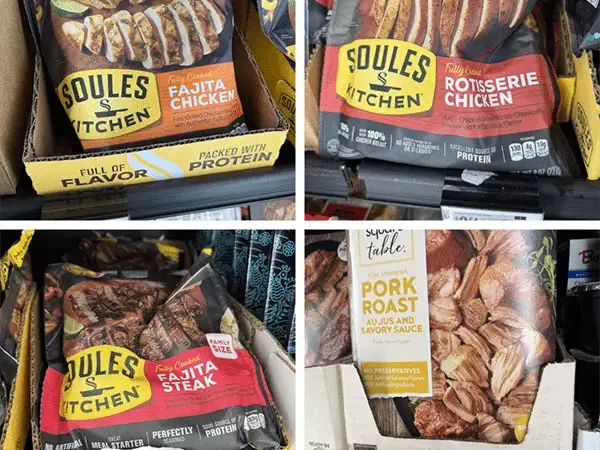
The market for pre-cooked, sous-vide, or rotisserie-style meats has expanded significantly. Brands like Kevin’s Natural Foods have capitalized on this by offering paleo-certified, fully cooked proteins that require only minutes of reheating. Similarly, large-scale retailers such as Walmart and Target have expanded their private-label offerings to include pre-sliced fajita strips, shredded rotisserie chicken, and seasoned beef tips. These products allow for precise macro-tracking, a critical component for individuals following specific fitness or weight-management protocols.
The Role of Flash-Frozen Starches and Vegetables
The integration of frozen components is no longer viewed as a compromise in quality. Modern flash-freezing technology preserves the micronutrient profile of vegetables, often making them superior to "fresh" produce that has spent days in transit. The availability of frozen diced sweet potatoes, quinoa, and steamable brown rice has further streamlined the assembly process. This "modular" approach to nutrition allows for daily variety while maintaining a consistent caloric and nutrient floor.
Comparative Economic Analysis: Time vs. Capital
The primary barrier to adopting a no-prep or semi-prepared strategy is the cost-per-serving differential. A comprehensive analysis of the "prep vs. purchase" economy reveals a tiered pricing structure:

- Traditional DIY Meal Prep: Costs typically range from $1.25 to $3.50 per meal. This model requires a high investment of "active time" (3–5 hours per week).
- Hybrid Assembly (Grocery Store Solutions): Costs range from $3.50 to $6.50 per meal. Active time is reduced to approximately 15–20 minutes of assembly.
- Premium Direct-to-Consumer (DTC) Meal Delivery: Services such as Factor or Ice Age Meals cost between $11.00 and $15.00 per meal. Active time is virtually zero, limited only to the four minutes required for microwaving.
Industry analysts suggest that the "Return on Investment" (ROI) for these more expensive options is found in the avoidance of "decision fatigue" and the prevention of "nutritional drift." When a consumer is time-crunched and lacks a prepared meal, the probability of opting for high-calorie, low-nutrient fast food increases. In this context, a $12 prepared meal serves as an insurance policy against health-goal setbacks.
The Rise of Direct-to-Consumer (DTC) Nutritional Logistics
The most significant disruption in the meal-prep space has been the proliferation of subscription-based meal delivery services. Companies like Factor (owned by HelloFresh) and Ice Age Meals have moved beyond the "meal kit" model—which still requires cooking—to the "heat-and-eat" model.
Factor, for instance, has successfully marketed its fresh, never-frozen meals to the fitness community by emphasizing "macro-friendly" profiles. These services operate on a logistical framework that delivers weekly allotments of chilled meals directly to the consumer’s door. While the subscription model requires a higher level of financial commitment, it eliminates the need for grocery shopping, a task that consumes an average of 43 to 60 minutes per week for the American consumer.

Inferred statements from supply chain experts indicate that the efficiency of these services is predicated on centralized kitchen hubs that can portion meals with a level of caloric precision that is difficult to achieve in a domestic kitchen. This precision is particularly attractive to the "quantified self" movement—individuals who track every gram of protein and carbohydrate consumed.
Chronology of the Meal Preparation Shift
The transition from traditional cooking to the current "no-prep" landscape can be mapped through several key phases:
- 1950s–1980s: The Era of the TV Dinner. Focus was entirely on convenience and shelf-life, with little regard for nutritional density or macro-composition.
- 1990s–2000s: The Rise of "Diet" Frozen Foods. Brands like Lean Cuisine and Weight Watchers introduced portion control, but meals often relied on high sodium and processed carbohydrates to maintain flavor.
- 2010s: The Meal Prep Revolution. Social media platforms like Instagram and Pinterest popularized "batch cooking," leading to a surge in the sales of glass storage containers (e.g., Pyrex) and a culture of Sunday kitchen labor.
- 2020–Present: The Hybrid and DTC Era. The COVID-19 pandemic accelerated the adoption of grocery delivery and high-quality frozen options. Post-pandemic, the return to busy professional lives has solidified the demand for "no-prep" solutions that do not sacrifice athletic performance or health.
Broader Impact and Implications for Public Health
The mainstreaming of high-quality, pre-prepared meals has significant implications for public health. One of the primary drivers of the obesity epidemic is the "convenience gap"—the fact that unhealthy food is traditionally faster and cheaper than healthy food. As the price of high-protein, semi-prepared meals decreases through economies of scale, the "convenience gap" begins to close.

Furthermore, the "no-prep" movement may reduce the mental barrier to entry for individuals starting a fitness journey. The intimidating prospect of learning to cook, meal plan, and grocery shop simultaneously often leads to early abandonment of health goals. By providing an "assembly-only" pathway, the industry lowers the friction associated with dietary compliance.
However, critics point to the environmental impact of increased packaging and the carbon footprint of individual meal deliveries. The industry is currently facing pressure to innovate in the areas of compostable trays and more efficient delivery routes to offset these concerns.
Analysis of the "Time-Poor" Demographic
The target audience for these strategies is often referred to by sociologists as the "time-poor, cash-rich" demographic, though the trend is expanding into the middle class. As the gig economy and "always-on" work culture continue to permeate society, the value of an hour has increased. If an individual’s hourly earning potential or the value they place on family time exceeds the $8–$10 price difference between a home-cooked meal and a premium prepared meal, the economic choice shifts toward the latter.

Conclusion: The Future of Domestic Nutrition
The move toward "no-prep meal prepping" represents a maturation of the health and fitness industry. It acknowledges that human willpower is a finite resource and that systems—rather than just motivation—are required for long-term success. While the artisanal joy of cooking will always have a place in the home, the daily requirement for fuel is increasingly being met by sophisticated logistics and food science.
As we look toward the next decade, we can expect further integration between wearable health technology and food procurement. It is not outside the realm of possibility that future "no-prep" systems will automatically adjust a consumer’s weekly meal delivery based on biometric data from their fitness tracker, ensuring that convenience and precision are perfectly aligned. For the modern professional, the ability to maintain a high-performance diet without the traditional time investment is no longer a luxury—it is a strategic necessity.

0 Comments