
The modern social landscape is currently defined by a phenomenon sociologists describe as the "friendship recession," a period marked by a measurable decline in the number and depth of personal relationships among adults. While many individuals report a desire for more robust romantic and platonic connections, behavioral experts observe a pervasive "reactive" mindset that prevents these connections from forming. This passivity creates a social stalemate where multiple parties wait for an external catalyst that rarely arrives. To combat this trend, communication specialists emphasize the necessity of proactive social initiative, utilizing specific, low-stakes invitation strategies to bridge the gap between casual acquaintance and meaningful connection.
The Mechanics of Social Passivity and the Friendship Recession
Data from the Survey Center on American Life indicates a significant shift in social dynamics over the last three decades. In 1990, 33% of Americans reported having ten or more close friends; by 2021, that number had dropped to 13%. For men, the statistics are particularly stark, with 15% reporting they have no close friends at all—a fivefold increase since the late 20th century. This "friendship recession" is often attributed to the erosion of "third places"—communal spaces like churches, cafes, and lodges where people interact outside of home and work—and a growing reliance on digital interaction.
In this environment, many individuals find themselves in "social holding patterns." These are scenarios where two people may have a positive rapport—such as a regular interaction with a barista, a coworker in a different department, or a fellow congregant at a place of worship—but the relationship remains stagnant. The primary barrier identified by sociologists is a fear of rejection and a misunderstanding of social initiative. Most people operate under the assumption that if someone else wanted to spend time with them, that person would initiate. When both parties adopt this passive stance, no progress is made. Breaking this stalemate requires one individual to assume the role of the "proactive agent," moving the interaction from a shared environment to a chosen one.
A Chronology of Social Interaction Shifts
The evolution of how people form bonds has undergone three distinct phases over the last century:
- The Institutional Era (Pre-1970s): Social lives were largely dictated by proximity and institution. Individuals were born into neighborhoods, attended local churches, and joined fraternal organizations. Invitations were often unnecessary because social calendars were built into the community structure.
- The Transition to Individualism (1980s–2000s): As mobility increased and traditional institutions declined, social connection became more dependent on work environments and hobby groups. The responsibility for connection shifted slightly toward the individual, but physical environments still facilitated regular "unplanned" interactions.
- The Digital and Post-Pandemic Era (2010s–Present): The rise of social media and the remote work revolution further decoupled social interaction from physical space. This has led to a "skill decay" regarding face-to-face invitations. The 2020 global pandemic accelerated this trend, making spontaneous social outreach feel higher-stakes and more cognitively demanding for many.
In this current phase, the "vague invitation"—phrases like "we should hang out sometime"—has become a defense mechanism. It allows individuals to signal interest without risking the definitive rejection of a specific proposal. However, data suggests these vague overtures are almost entirely ineffective at producing actual social engagement.
Strategic Methodologies for Effective Invitations
In his foundational work, Conversationally Speaking, Alan Garner outlines a framework for reducing the friction of social invitations. These strategies are designed to mitigate the "awkwardness factor" and increase the probability of a positive response.
The Dual Perspective Framework
A common error in social initiation is the "ego-centric invitation," where the initiator proposes an activity based solely on their own interests. Behavioral psychologists suggest adopting a "dual perspective." This involves observing or inquiring about the other person’s interests and identifying an overlap with one’s own. For instance, if an acquaintance mentions an interest in fitness, an invitation to a specific gym class is more likely to be successful than a generic invitation to a movie. By framing the invitation around a shared interest, the initiator reduces the social pressure on the recipient, making the "yes" feel like a natural extension of their existing preferences.
Specificity and the Avoidance of Vague Commitments
The "sometime" trap is a primary cause of social stagnation. Journalistic analysis of social patterns reveals that vague invitations are often interpreted as polite dismissals rather than genuine interest. To counter this, experts recommend the "X-Activity, X-Place, X-Time" formula. By proposing a specific event (e.g., "Would you like to grab a drink at The Alibi on Thursday at 6:00 PM?"), the initiator moves the conversation from an abstract idea to a concrete logistical decision. This forces a definitive answer and demonstrates a level of confidence and organization that is socially attractive.

The Psychological Trap of Open-Ended Questions
A frequent mistake in social outreach is asking, "Are you doing anything on Saturday?" While intended to be polite, this question often creates psychological discomfort for the recipient. If the recipient is not busy, they are forced to admit they have no plans, which can feel socially embarrassing. Furthermore, answering "no" commits them to an unknown proposal, leading to a sense of resentment or a feeling of being trapped. Professional communication coaches advise leading with the activity first, allowing the recipient to evaluate the proposal based on the merit of the event rather than their own availability.
The "Accordion" Structure and the Value of Low Stakes
The intensity of an invitation significantly impacts its success rate. In the realm of dating and platonic friendship, "starting small" is a high-yield strategy. Large commitments—such as a four-course dinner or a day-long hike—carry a high social cost. If the chemistry is lacking, both parties are stuck in a protracted engagement.
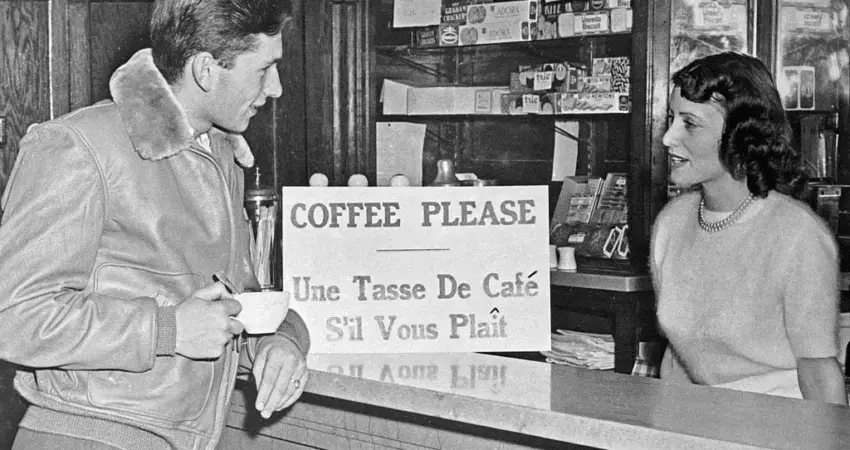
Instead, behavioral experts recommend "accordion-like" social structures. A coffee date is the primary example of this. It has a natural duration of 20 to 30 minutes, providing an easy "exit" if the interaction is uninspired. However, if the interaction is successful, the event can be expanded (e.g., "I’m heading to the bookstore next door; want to join?"). This low-stakes approach signals that the initiator is a "positive asset" rather than a "negative burden." Desperation or high-stakes invitations send a signal of low social status, whereas casual, confident invitations suggest that the initiator’s life is already fulfilling and the invitee is simply being offered an opportunity to share in it.
Analyzing Responses: The "Brad Pitt Rule" and Persistent Outreach
Understanding the nuances of a "no" is critical for maintaining social grace. In the context of romantic pursuit, many social strategists point to the "Brad Pitt Rule." The logic follows that if a world-famous celebrity like Brad Pitt asked someone on a date, they would only decline if it were physically impossible for them to attend, in which case they would immediately suggest an alternative time.
Therefore, if an invitee declines a specific proposal without offering a counter-proposal (e.g., "I can’t do Saturday, but I’m free next Tuesday"), it is generally a signal of a lack of interest. In romantic contexts, a second or third attempt without a counter-offer is often viewed as a breach of social norms.
However, in platonic friendships, the rules are more fluid. Factors such as "flakiness," busy life phases, and general social anxiety can lead people to decline invitations they actually wish to accept. In these cases, experts suggest a "spaced-out persistence" strategy. Extending a third or fourth invitation over several months can eventually break through the recipient’s logistical or psychological barriers, provided the tone remains light and non-pressuring.
Broader Implications for Public Health and Society
The ability to successfully initiate social contact is more than a personal convenience; it is a public health imperative. In 2023, U.S. Surgeon General Dr. Vivek Murthy issued an advisory declaring loneliness a national epidemic, noting that social isolation is associated with a 29% increased risk of heart disease and a 32% increased risk of stroke. The health impact of loneliness is frequently compared to smoking 15 cigarettes a day.
By mastering the mechanics of the invitation, individuals contribute to "social capital," the networks of relationships among people who live and work in a particular society, enabling that society to function effectively. When individuals take the initiative to move a "weak tie" (an acquaintance) into a "strong tie" (a friend), they create a ripple effect that strengthens the social fabric of their community.
The transition from a reactive to a proactive social life requires a departure from the fear of rejection and an embrace of logistical clarity. While the risk of a "no" is inherent in any outreach, the data suggests that the "social stalemate" is the far more likely outcome of silence. In a world increasingly defined by isolation, the specific, casual, and direct invitation remains the most effective tool for building a robust social and romantic life. As individuals adopt these professional communication strategies, they not only improve their own well-being but also provide a vital service to a society increasingly starved for genuine connection.

0 Comments