
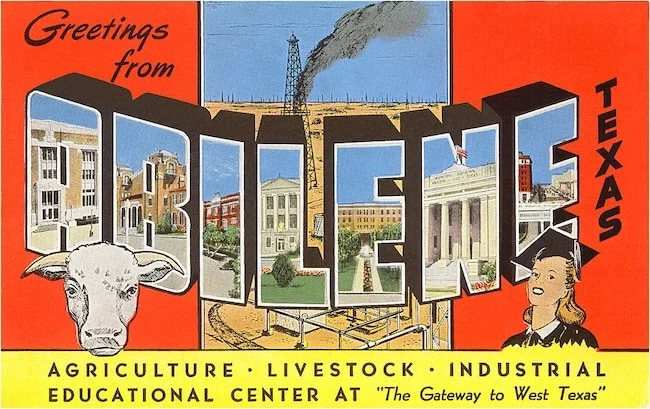
The phenomenon of collective agreement leading to outcomes that no individual member actually desires represents one of the most persistent challenges in organizational behavior and management science. Known as the Abilene Paradox, this psychological trap highlights a critical failure in group communication where the fear of social exclusion and the misinterpretation of consensus override individual judgment. While most management literature focuses on conflict resolution, the Abilene Paradox suggests that "mismanaged agreement" can be far more destructive than open disagreement, leading organizations, families, and governments to expend significant resources on projects that were doomed from their inception.
Historical Context and the Genesis of the Paradox
The concept was first formalized by Dr. Jerry B. Harvey, a professor of management science at George Washington University, in his 1974 article "The Abilene Paradox: The Management of Agreement." The theory emerged from a personal anecdote involving a family trip in the scorching heat of a Texas summer.
The timeline of the paradox’s development began on a Sunday afternoon in Coleman, Texas, during the 1950s. Dr. Harvey was visiting his in-laws. Despite the 104-degree temperature and the lack of air conditioning in their 1958 Buick, the family embarked on a 106-mile round trip to Abilene to eat at a cafeteria. Upon their return—exhausted, hot, and dissatisfied with the mediocre meal—the family discovered a startling truth: not a single person had wanted to go. Harvey’s father-in-law had suggested it only because he thought the others were bored; Harvey’s wife agreed to be social; Harvey himself agreed to avoid being the "wet blanket"; and the mother-in-law joined simply because the rest of the group seemed enthusiastic.
This narrative served as the foundation for Harvey’s thesis that groups frequently take "trips to Abilene"—metaphorical journeys toward decisions that are counterproductive to the group’s actual goals and individual preferences.
Literary Parallels: The Case of Lonesome Dove
The Abilene Paradox finds a profound cultural echo in Larry McMurtry’s Pulitzer Prize-winning novel, Lonesome Dove. The narrative follows two legendary former Texas Rangers, Woodrow Call and Augustus McCrae, as they lead a massive cattle drive from the Rio Grande to the Montana territory. On the surface, the venture is framed as a grand final adventure. However, a deeper analysis of the characters’ motivations reveals a classic Abilene scenario.
Captain Woodrow Call initiates the drive based on a vague suggestion from a former partner and a general sense of restlessness. As the journey progresses, it becomes evident that Call is burdened by the very mission he organized. Augustus McCrae, his counterpart, participates not out of a desire to ranch in Montana, but out of a sense of loyalty and a lack of better alternatives. Even the younger members of the crew, such as Newt, follow because they lack the agency to question the leadership.
The cattle drive, much like the drive to Abilene, is fueled by a collective assumption of purpose that masks a void of individual buy-in. The tragedy of Lonesome Dove lies in the immense loss of life and hardship endured for a goal that the primary protagonists barely understood and arguably did not want. This literary example illustrates how the paradox can scale from a small family dinner to a multi-month industrial or migratory endeavor.
Psychological Drivers: Why Groups Fail to Speak Up
Social psychologists point to several key mechanisms that drive the Abilene Paradox, most notably pluralistic ignorance and the fear of ostracism. Pluralistic ignorance occurs when individuals privately reject a norm or idea but assume that everyone else accepts it. This leads to a "spiral of silence," where the lack of visible dissent is mistaken for unanimous support.
- The Fear of Separation: At its core, the paradox is driven by the human anxiety of being separated from the group. In an evolutionary context, social exclusion was often a death sentence. In modern organizational settings, this manifests as a fear of being labeled "uncooperative" or "not a team player."
- Mismanaged Agreement: Unlike "Groupthink"—a term coined by Irving Janis where groups reach a consensus due to a desire for harmony and a lack of critical evaluation—the Abilene Paradox involves individuals who already disagree with the plan but fail to communicate that disagreement.
- Negative Fantasy: Individuals often conjure "negative fantasies" about what will happen if they speak up, imagining career ruin or social alienation, even when such outcomes are statistically unlikely.
- Sunk Cost Fallacy: Once a "trip to Abilene" has begun, the effort already expended serves as a justification to continue. The group assumes that since the journey has started, it must have been a good idea, further silencing potential critics.
Supporting Data and Organizational Impact
Research into corporate failures suggests that the Abilene Paradox is a recurring theme in major disasters. A notable example often cited by management experts is the Space Shuttle Challenger disaster in 1986. While engineers at Morton Thiokol had significant concerns about the O-ring seals in cold temperatures, the pressure to maintain the launch schedule and the perceived consensus among NASA leadership led to a failure to halt the mission.
In a study published in the Journal of Management Studies, researchers found that nearly 70% of employees across various industries admitted to remaining silent about organizational problems they believed were serious. The reasons cited were not necessarily a lack of knowledge, but a belief that speaking up would be futile or socially damaging.
Furthermore, data from the Harvard Business Review indicates that "false consensus" can lead to a 20% to 30% waste in corporate budgets through projects that are continued simply because no one wants to be the first to suggest cancellation. This "organizational inertia" is a direct byproduct of the Abilene Paradox.
Strategies for Mitigation: Breaking the Silence
Avoiding a figurative trip to Abilene requires intentional structural changes in how groups communicate and make decisions. Experts suggest several interventions for leaders and team members:
For Leaders: The Power of the Last Word
Leaders often inadvertently trigger the paradox by stating their preferences too early. When a leader says, "I think we should move in this direction," they effectively set the "Abilene" destination. To counter this, leaders should solicit opinions from the most junior members first and withhold their own views until all others have spoken. This reduces the pressure on subordinates to align with the perceived "official" stance.
Institutionalizing Dissent
Organizations can mitigate the risk of false consensus by assigning a "Devil’s Advocate" or a "Red Team" to every major project. This person’s explicit job is to find flaws in the prevailing plan, thereby giving others "permission" to voice their own doubts without fear of social repercussions.
The "Pre-Mortem" Analysis
Developed by psychologist Gary Klein, the "pre-mortem" involves asking a group to imagine that a project has failed one year in the future. Members are then asked to work backward to determine what caused the failure. This exercise shifts the group’s focus from seeking agreement to identifying risks, making it socially acceptable to voice concerns.
Checking the Pulse
Before finalizing a major decision, leaders should utilize anonymous polling. Digital tools that allow for real-time, anonymous feedback can reveal a lack of consensus that might not be apparent in a face-to-face meeting. If an anonymous poll shows 40% of the team has "significant reservations," it provides a factual basis for pausing the decision without outing any individual dissenter.
Broader Implications and Analysis
The Abilene Paradox serves as a stark reminder that the health of a group is measured not by the absence of conflict, but by the presence of honest communication. In a professional landscape increasingly dominated by "collaboration" and "consensus-building," the risk of falling into the Abilene trap is higher than ever.
The cost of these "trips" extends beyond wasted time and money; it erodes organizational trust. When a project inevitably fails, and it is revealed that everyone involved knew it was a mistake, the resulting cynicism can be permanent. Employees lose faith in leadership, and leaders lose faith in the integrity of their teams.
Ultimately, the paradox teaches that the most "agreeable" team is not necessarily the most effective one. A robust organization is one where "no" is treated as a valuable data point rather than a social transgression. By acknowledging the psychological gravity that pulls groups toward Abilene, individuals can find the courage to speak up before the bus pulls out of the driveway, saving themselves—and their organizations—from the long, hot journey to nowhere.

0 Comments