
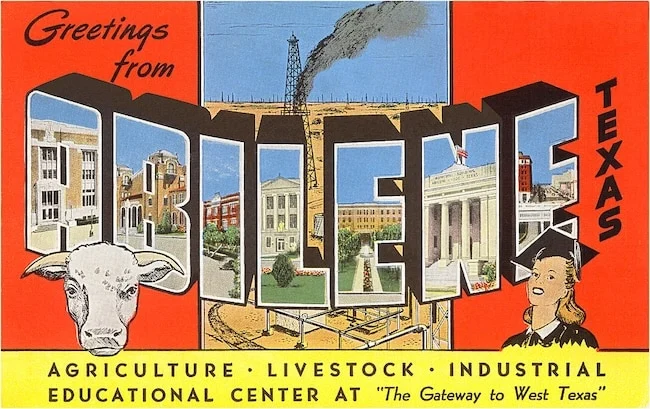
The Abilene Paradox represents a significant phenomenon in social psychology and organizational management wherein a group of people collectively decides on a course of action that is counter to the preferences of many or all of the individuals in the group. It involves a breakdown in group communication where each member mistakenly believes that their own private reservations are contrary to the group’s consensus and, therefore, fails to raise any objections. This leads to a situation where a group takes a path that no single member actually desires, often resulting in wasted resources, frustration, and collective regret.
The concept was first articulated by management expert Jerry B. Harvey in his 1974 article, "The Abilene Paradox: The Management of Agreement." Unlike "groupthink," where individuals are pressured to conform to a perceived consensus or a leader’s strong opinion, the Abilene Paradox occurs when individuals believe they are being cooperative and "going along to get along," unaware that every other member of the group is doing the exact same thing for the exact same reason.
The Literary Archetype: Lonesome Dove and the Inertia of Leadership
A poignant illustration of this paradox can be found in Larry McMurtry’s Pulitzer Prize-winning novel, Lonesome Dove. The narrative follows two retired Texas Rangers, Woodrow Call and Augustus McCrae, as they embark on a massive cattle drive from the Rio Grande to the untouched territories of Montana. While the journey is framed as a grand adventure, a closer analysis of the characters’ motivations reveals a classic Abilene scenario.
Woodrow Call, the stoic leader, initiates the venture after a former partner mentions the lush grasslands of the North. However, throughout the novel, Call appears burdened and uncertain about the undertaking. Augustus McCrae, his counterpart, joins the drive not out of ambition, but out of a sense of loyalty and a lack of better alternatives. The younger members of the crew, such as the orphan Newt, follow because they lack the agency to do otherwise, and the hired hands join simply because it is a job.
Individually, the primary actors have little "buy-in" for the specific goal of reaching Montana. However, because no one speaks up to challenge the premise of the journey, the collective unit moves forward with an unstoppable, yet unwanted, momentum. This literary example mirrors real-world organizational behavior where the "momentum of the project" becomes a substitute for genuine strategic alignment.
The Chronology of a Paradox: The Original July 1974 Incident
The naming of the paradox stems from a specific event in Coleman, Texas, during the summer of 1974. Jerry B. Harvey was visiting his in-laws during a period of intense heat, with temperatures reaching 104 degrees Fahrenheit. The family was comfortably situated on a porch, playing dominoes and drinking lemonade under a fan.
The sequence of events unfolded as follows:
- The Suggestion: Harvey’s father-in-law suggested they drive 53 miles to Abilene to eat at a cafeteria.
- The False Agreement: Harvey, despite thinking the idea was terrible due to the heat and the lack of air conditioning in their 1958 Buick, agreed because he did not want to be a "party-pooper." His wife followed suit, assuming her husband and father were enthusiastic. The mother-in-law also agreed, believing the others were set on the trip.
- The Execution: The family spent four hours driving through dust and heat, only to eat a mediocre meal at a cafeteria.
- The Revelation: Upon returning home, exhausted and irritable, the family began to talk. Harvey admitted he hadn’t wanted to go. His wife revealed she only went to please the group. The mother-in-law confessed she would have preferred to stay home. Finally, the father-in-law revealed he only suggested it because he thought the others looked bored.
This timeline illustrates that the group’s action was not the result of a conflict, but a total mismanagement of agreement. Every member of the group acted against their own self-interest based on a flawed perception of what the others wanted.
Psychological Foundations and Supporting Data
The Abilene Paradox is rooted in several well-documented psychological and sociological principles. Research into human behavior suggests that the fear of social exclusion is often more powerful than the desire to achieve a logical or efficient outcome.
1. Pluralistic Ignorance
This is a situation where a majority of group members privately reject a norm, but incorrectly assume that most others accept it. Data from social psychology studies indicate that people are highly sensitive to "social cues." When no one speaks up, individuals interpret the silence as consent, which reinforces their own decision to remain silent.
2. The Asch Conformity Experiments
In the 1950s, psychologist Solomon Asch demonstrated that individuals would often provide obviously incorrect answers to simple questions if they saw other members of a group doing the same. Asch’s data showed that approximately 75% of participants conformed at least once to the group’s incorrect consensus. While the Abilene Paradox is slightly different—in that the group consensus is often an illusion—the underlying pressure to conform remains the driver.
3. Social Cost and Risk Avoidance
Management studies have shown that employees often perceive a high "social cost" to dissent. In many corporate cultures, raising an objection is equated with being "not a team player." According to a 2022 survey on workplace communication, nearly 40% of employees reported that they have remained silent about a project they thought was failing because they did not want to appear negative.
Organizational Impact and Economic Implications
The Abilene Paradox is not merely a social curiosity; it has profound implications for business efficiency and public policy. When organizations "go to Abilene," the costs are multifaceted:
- Financial Waste: Projects that lack genuine support often suffer from poor execution and eventually require cancellation, leading to significant "sunk cost" losses.
- Employee Burnout: Working on a project that feels meaningless or ill-conceived leads to high levels of disengagement. Gallup’s "State of the Global Workplace" reports suggest that disengaged employees cost the global economy trillions in lost productivity.
- The Sunk Cost Fallacy: Once a group has started a "trip to Abilene," they are less likely to turn back. The more resources invested in a failing course of action, the more the group feels compelled to continue, regardless of the logic.
Historical analyses of major organizational failures, such as the Bay of Pigs invasion or the Challenger shuttle disaster, often point to elements of the Abilene Paradox. In these cases, individuals within the decision-making chain had serious doubts but failed to express them because they perceived a total consensus among their peers and superiors.
Expert Strategies for Prevention and Intervention
To avoid the Abilene Paradox, leaders and group members must actively work to foster an environment where honest communication is prioritized over superficial harmony. Management experts suggest several tactical interventions:
The Role of the Leader
Leaders are often the unwitting catalysts of the Abilene Paradox. Because of the power dynamic, a leader’s casual suggestion can be interpreted as a directive. Experts recommend that leaders "speak last" during brainstorming sessions. By withholding their opinion until others have spoken, they prevent the group from gravitating toward a perceived "safe" consensus.
Formalizing Dissent
One effective method to break the paradox is to assign a "Devil’s Advocate" for every major decision. This legitimizes dissent and ensures that at least one person is tasked with identifying potential flaws in the plan. This removes the social stigma of being "disagreeable," as the dissent is now a formal job requirement.
Anonymous Polling
In high-stakes environments, anonymous voting or "blind" feedback can reveal the true sentiment of the group. When the fear of social repercussion is removed, the "illusion of agreement" often evaporates, revealing that the group is far less aligned than it appeared.
The Pre-Mortem Technique
Developed by psychologist Gary Klein, the "pre-mortem" involves asking a group to imagine that a proposed project has already failed. Members are then asked to work backward to determine what caused that failure. This exercise encourages people to voice their private doubts in a constructive, hypothetical framework.
Broader Implications for Modern Society
In an era of rapid digital communication and remote work, the risk of the Abilene Paradox may actually be increasing. Without the benefit of non-verbal cues and "water cooler" conversations, it is easier for individuals to misread the room and assume a consensus that does not exist.
Furthermore, the paradox extends into the realm of public policy and community planning. Often, committees or boards will approve measures that no individual member truly believes in, simply because the momentum of the meeting suggests that the measure is "expected."
The ultimate lesson of the Abilene Paradox is that "agreement" is not always a sign of a healthy group. In many cases, it is a sign of a group that has stopped communicating. By recognizing the forces that drive us toward Abilene—the fear of separation, the misreading of silence, and the pressure of leadership—groups can begin to navigate toward outcomes that reflect the genuine will of their members. Speaking up is not an act of disruption; it is an essential safeguard against the collective pursuit of a goal that no one actually wants.

0 Comments