
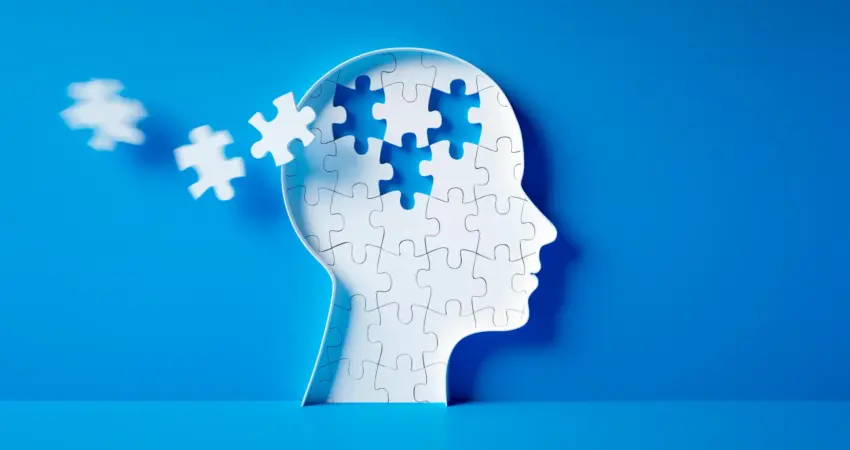
Growing older is often associated with memory loss and declining mental abilities. However, scientists are questioning whether these changes tell the whole story. Rather than simply becoming less capable, the brain may be adapting to a new stage of life in which accumulated knowledge, wisdom, and understanding become more important than remembering every detail.
A Paradigm Shift in Understanding Cognitive Aging
Researchers at the University of Arizona are proposing a significant re-evaluation of how we understand cognitive aging. Moving beyond a singular narrative of decline, their work suggests that the alterations observed in older brains are not merely indicators of deterioration but represent a natural and adaptive stage of human development. This novel perspective, published in the esteemed journal Perspectives on Psychological Science, draws upon recent advancements in molecular biology and sophisticated brain imaging techniques to offer a more nuanced explanation for the shifts in thinking and memory that accompany age.
At the heart of this new understanding is the "adaptive aging hypothesis." This framework posits that as individuals mature, their brains gradually reorient their priorities. Instead of prioritizing the rapid acquisition and precise recall of new information, the aging brain becomes optimized for leveraging a lifetime of accumulated experience. This recalibration, the hypothesis suggests, is what underpins the remarkable strengths often observed in older adults, such as exceptional abilities in teaching, mentoring, storytelling, and the invaluable transmission of knowledge to younger generations.
"If we look at normative aging as a story of just decline, we are really missing the boat," stated Fabian-Xosé Fernandez, an associate professor of cognition and neural systems at the University of Arizona and a coauthor of the study. "The older brain is optimized for different things than the younger brain, predominantly the sharing of stored expertise and social relationships." This statement encapsulates the core of the adaptive aging hypothesis: a shift in the brain’s operational goals rather than a simple impairment of its functions.
The Brain’s Strategic Shift: From Hippocampus to Frontal Cortex
To comprehend this proposed shift, it is essential to examine the roles of key brain regions involved in memory and cognitive processing. The hippocampus, a seahorse-shaped structure deep within the temporal lobe, is critically important for the formation and retrieval of episodic memories – the specific details and contextual information surrounding events. In contrast, the frontal cortex, the brain’s executive control center located at the front of the head, is more heavily involved in higher-order cognitive functions. These include extracting broader meaning, identifying patterns, making judgments, and understanding the overarching "gist" or central message of an experience.
The adaptive aging hypothesis suggests that a fundamental change occurs in the balance of activity between these two crucial brain regions during healthy aging. As individuals progress through life, there appears to be a natural decrease in the reliance on the hippocampus for detailed recall, coupled with an increased engagement of the frontal cortex. This recalibration is theorized to facilitate a cognitive strategy that prioritizes interpreting new information through the lens of existing knowledge and wisdom, rather than expending significant neural resources on meticulously recording every novel detail.
This phenomenon is not unique to humans. Researchers have observed similar patterns of cognitive and neural shifts in various animal models. The presence of these cross-species parallels suggests a potential evolutionary driving force behind this adaptive process. "The fact that you see this across people and animal models suggests there is an evolutionary driving force," Fernandez elaborated. "One could argue you are developing your entire life, and development occurs in lockstep with the needs of your brain. When you’re younger, the hippocampus turns on because you don’t have a knowledge base or know how the world works. A kid absorbs information like a sponge because they are building an archive of information. In early life, the balance is tilted toward recollecting declarative memories with precision, detail, and context."
The Evolutionary Imperative of Wisdom
This evolutionary perspective offers a compelling explanation for why the aging brain might shift its focus. In the early stages of life, the brain’s primary imperative is to absorb and catalog vast amounts of information to build a foundational understanding of the world. This is a period of intense learning and memory formation, where the hippocampus plays a starring role. However, by later adulthood, individuals have already amassed an extensive repository of memories, concepts, and life experiences. At this stage, the ability to connect new information to this existing knowledge base becomes significantly more advantageous than retaining every isolated detail.
The researchers propose that this changing neural emphasis reflects a fundamental shift in how the brain processes experience. Rather than focusing primarily on the meticulous collection of granular memories, the aging brain increasingly prioritizes understanding complex relationships, identifying underlying patterns and meanings, and strategically applying previously acquired knowledge to navigate the present and future.
This evolutionary rationale extends to the vital role older adults can play within their communities and families. The ability to draw upon decades of lived experience is invaluable for making sound judgments, offering guidance to others, and facilitating the transfer of critical knowledge across generations. This is where the strengths of the aging brain, as conceptualized by the adaptive aging hypothesis, truly shine. Mentorship, teaching, and storytelling become not just desirable activities but biologically supported functions that contribute to the continuity and resilience of a society.
"Given those goals, it makes sense that you aren’t interested in nitty-gritty details," Fernandez explained. "You are interested in safeguarding the vast knowledge you already have. Evolution may be saying that if you make it long enough, there’s a need to transmit this information, so we put into motion biological changes that enforce and protect your semantic and autobiographical memories." In this view, the cognitive changes associated with aging are not necessarily markers of decline but rather a sophisticated adaptation designed to preserve and disseminate accumulated wisdom.
Distinguishing Healthy Aging from Neurodegenerative Disease
A significant implication of the adaptive aging hypothesis lies in its potential to refine our understanding of the distinctions between normal cognitive aging and devastating neurodegenerative conditions like Alzheimer’s disease. For decades, Alzheimer’s was often viewed as an extreme or pathological manifestation of typical aging. However, Fernandez and his colleagues contend that this perspective is inaccurate.
"When I was in grad school, people thought about Alzheimer’s as a more intense version of cognitive aging, but that is just not the case," Fernandez emphasized. "They are completely different." The biological underpinnings of healthy cognitive adaptation and the pathological processes driving Alzheimer’s disease are fundamentally distinct.
In normative aging, the gradual shift from hippocampal dominance to frontal cortex engagement typically unfolds between the fifth and seventh decades of life. This is a relatively smooth transition. In stark contrast, Alzheimer’s disease is characterized by the disruptive influence of abnormal protein accumulations, such as amyloid plaques and tau tangles. These pathological processes can interfere with and fundamentally alter the brain’s natural developmental trajectory.
A crucial point of divergence lies in hippocampal activity. While healthy aging is associated with a de-emphasis on the hippocampus, Alzheimer’s disease can paradoxically involve hyperactivity in this region. "In normative aging, hippocampal activation is deemphasized, which is probably what should be happening in a 70-year-old. But in many cases of Alzheimer’s, it turns out the hippocampus is hyperactive," Fernandez noted. This hyperactivity, rather than supporting cognitive function, can disrupt the intricate neural networks responsible for memory encoding and retrieval. "This beautiful developmental transition is completely disrupted in Alzheimer’s disease by pathological processes that mess with episodic memory and interfere with circuits that allow you to think about your own life, lexicon, and vocabulary."
These disruptions in Alzheimer’s can severely impair an individual’s ability to recall personal experiences and access deeply stored knowledge, including their vocabulary and understanding of language. By clearly delineating the adaptive changes of healthy aging from the pathological disruptions of Alzheimer’s, researchers may gain invaluable insights into both normal brain development and the mechanisms underlying neurodegenerative disorders. This clarity is crucial for developing more targeted and effective diagnostic tools and therapeutic interventions.
Embracing the Untapped Potential of the Aging Brain
The adaptive aging hypothesis calls for a fundamental societal re-evaluation of what constitutes successful brain aging. The prevailing notion that older adults should strive to maintain cognitive abilities in the same manner as younger individuals may, in fact, be counterproductive.
"For many individuals, the weight of how you process information should probably not be so hippocampal-centric by the sixth or seventh decade," Fernandez suggests. Encouraging older adults to overemphasize the recall of precise details might run counter to their brain’s natural adaptive priorities.
Instead of judging older adults primarily by metrics that naturally tend to diminish with age, the researchers advocate for a greater appreciation of the unique capabilities that often flourish later in life. This includes fostering environments that encourage and leverage the wisdom, judgment, and relational skills that are hallmarks of experienced individuals.
Creating more opportunities for intergenerational interaction is one practical approach to nurturing these strengths. The relationships forged between older and younger generations can be profoundly mutually beneficial. They provide fertile ground for the exchange of life experiences, the sharing of specialized knowledge, and the vital preservation of cultural and personal histories that might otherwise be lost.
"People see older individuals and look at them as not being on par with younger individuals across a lot of metrics," Fernandez observes. "The way I look at it is that you’ve got someone with a brain that has been active for several decades and has seen a lot. There is tremendous value there, and we don’t do a good job of unlocking it."
The central message of the adaptive aging hypothesis is a powerful one: growing older is not simply a story of cognitive attrition. While certain cognitive functions may naturally become less sharp, the aging brain is actively engaged in a sophisticated process of adaptation. It is reorienting itself to harness the immense power of accumulated knowledge and lived experience. By recognizing and valuing these evolved strengths, society can transform its understanding of aging and unlock the profound contributions that older adults are uniquely positioned to make. This shift in perspective promises to enrich not only the lives of older individuals but also the collective wisdom and resilience of society as a whole.

0 Comments