
The Catskill Mountains, a physiographic province of the larger Appalachian Mountains located in southeastern New York, have re-emerged as a primary destination for domestic travelers seeking a blend of wilderness and high-end hospitality. Situated approximately 100 miles northwest of New York City, the region spans four primary counties—Greene, Delaware, Ulster, and Sullivan—and encompasses the 600,000-acre Catskill Park. Once the epicenter of 20th-century American summer tourism, the region is currently experiencing a significant economic and cultural renaissance driven by the short-term rental market, boutique hospitality developments, and a renewed interest in rural exploration.
Historical Evolution of Catskills Tourism
The trajectory of the Catskills as a tourism hub began in the early 19th century. The 1824 opening of the Catskill Mountain House marked the beginning of the "Romantic Wilderness" era, where the American elite sought the "sublime" landscapes depicted by the Hudson River School of painters. This period established the region as a sanctuary for those looking to escape the industrialization of Manhattan.
By the mid-20th century, the region transitioned into the "Borscht Belt" era. This period was defined by massive resort complexes—such as Grossinger’s and The Concord—that catered predominantly to Jewish families who were often excluded from other American resorts due to antisemitic policies. At its peak, the Borscht Belt featured over 500 hotels and thousands of bungalows, serving as a training ground for legendary comedians and musicians.
The decline of the grand resort era in the 1970s and 1980s, precipitated by the advent of affordable air travel and the integration of other vacation destinations, left many properties abandoned. However, the last two decades have seen a reversal of this trend. The "Brooklynization" of the Catskills—a term used by urban planners to describe the influx of creative professionals and entrepreneurs from New York City—has led to the restoration of historic farmhouses and the construction of modern, design-centric dwellings that now dominate platforms like Airbnb.
The Economic Impact of Short-Term Rentals
The rise of digital rental platforms has fundamentally altered the economic landscape of the four-county region. According to data from tourism research firms, the Catskills saw a 40% increase in short-term rental bookings between 2019 and 2023, a trend accelerated by the COVID-19 pandemic. This surge has provided a vital revenue stream for local municipalities through occupancy taxes, which are often redirected into infrastructure and environmental conservation.
In Ulster County alone, short-term rentals have contributed millions of dollars in annual tax revenue. However, this growth has prompted a complex regulatory response. Several towns, including Woodstock and Gardiner, have implemented caps on the number of non-owner-occupied short-term rentals to mitigate the impact on local housing affordability. The balance between fostering a lucrative tourism economy and preserving the residential character of small mountain towns remains a central point of debate for local legislatures.
Geographic Diversity and Regional Specializations
The Catskills are not a monolith; each county and sub-region offers a distinct atmosphere and set of attractions that influence the types of accommodations available.
Ulster County: The Cultural Core
Ulster County is home to Woodstock, perhaps the most famous town in the region despite the 1969 festival taking place miles away in Bethel. This area is characterized by a high density of "design-minded hideaways," including renovated 19th-century cottages and glass-walled modernists’ retreats. The proximity to the Ashokan Reservoir and the popular hiking trails of Overlook Mountain makes this a primary target for weekend travelers.
Greene County: The Adventure Hub
Greene County, specifically the towns of Hunter and Windham, serves as the region’s premier winter sports destination. The rental market here is dominated by large-scale chalets and A-frame cabins designed for group travel. During the "off-season," these towns transition into hubs for mountain biking and festivals, maintaining a high occupancy rate year-round.
Sullivan County: The Southern Revival
Sullivan County, the heart of the former Borscht Belt, has seen a dramatic resurgence. Towns like Livingston Manor and Callicoon have become centers for the "farm-to-table" movement. Rentals in this area often emphasize access to world-class fly fishing on the Willowemoc Creek and the Delaware River.
Delaware County: The Rural Frontier
As the most remote of the four counties, Delaware County offers larger land parcels and a more secluded experience. The inventory here often consists of expansive farmhouses and "off-grid" cabins that appeal to travelers seeking total privacy and a connection to the region’s agricultural roots.
Architectural Trends and Guest Preferences
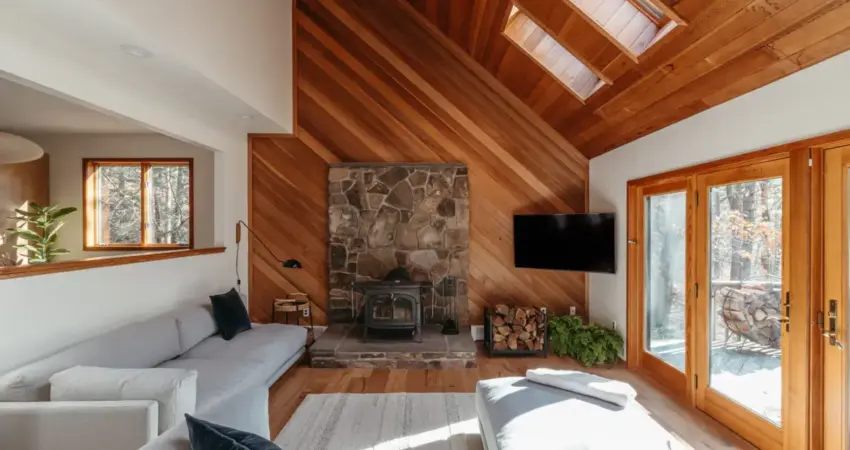
The modern Catskills Airbnb market is defined by a specific aesthetic often referred to as "Mountain Modern" or "Cottagecore." Vetted listings that achieve "Guest Favorite" or "Superhost" status typically share several key architectural and amenity-based traits:
- A-Frame Resurgence: The mid-century A-frame cabin has become the visual shorthand for a Catskills getaway. These structures are prized for their geometric symmetry and large windows that integrate the interior with the surrounding forest.
- Adaptive Reuse: Renovated dairy barns and schoolhouses provide a historical narrative that appeals to culturally conscious travelers. These properties often retain original timber framing while incorporating high-efficiency heating and modern kitchens.
- Wellness Amenities: There is a growing demand for "wellness-integrated" stays. Properties featuring outdoor cedar saunas, wood-fired hot tubs, and dedicated yoga spaces command a significant price premium.
- Environmental Integration: "Biophilic design"—architecture that connects occupants more closely to nature—is a dominant trend. This includes the use of local bluestone, floor-to-ceiling glass, and wrap-around decks that overlook seasonal waterfalls or mountain ridges.
Seasonal Dynamics and Tourism Logistics
Tourism in the Catskills follows a distinct seasonal chronology, each requiring different logistical considerations for visitors and property managers:
- Winter (December–March): Focuses on the ski resorts of Hunter, Windham, and Belleayre. The rental market is driven by proximity to slopes and "apres-ski" amenities like wood-burning stoves and heated mudrooms.
- Spring (April–June): Known as "Mud Season" locally, this period is increasingly popular for fly fishing and bird watching. It is also the time when many farm-to-table restaurants launch their seasonal menus.
- Summer (July–August): The peak season for hiking, swimming hole exploration, and outdoor concerts. High-altitude properties are favored for their natural cooling.
- Autumn (September–November): "Leaf-peeping" season represents one of the highest-grossing periods for the region. The colorful foliage of the Catskill High Peaks attracts international tourists, with bookings often made a year in advance.
Environmental Stewardship and Sustainability
The Catskills serve a critical role beyond tourism: they provide the majority of the unfiltered drinking water for New York City via a complex system of reservoirs and aqueducts. Consequently, development in the region is strictly monitored by the New York City Department of Environmental Protection (DEP).
New short-term rental developments must adhere to rigorous septic and land-use regulations to prevent runoff into the watershed. Many leading Airbnb hosts in the area have adopted "eco-friendly" operational models, utilizing solar arrays, composting systems, and EV charging stations to appeal to the environmentally conscious demographic that frequents the region.
Broader Implications and Future Outlook
The evolution of the Catskills from a declining resort destination to a premier Airbnb hotspot reflects broader shifts in American travel habits. There is a documented move away from "mass tourism" toward "curated experiences" that offer a sense of place and history.
However, the rapid growth of the rental market has brought challenges. Local officials are increasingly tasked with managing "overtourism" at popular trailheads and ensuring that the influx of visitors does not degrade the natural beauty that draws them there. Organizations like the Catskill Center for Conservation and Development work to balance these interests, promoting "Leave No Trace" principles and sustainable tourism.
As the region continues to evolve, the integration of professional hospitality standards with the rugged, independent spirit of the mountains will likely define the next decade of Catskills tourism. Whether through the preservation of historic "Borscht Belt" bungalows or the construction of sustainable modern retreats, the Catskills remain a vital laboratory for the future of rural American hospitality. The 17 most-vetted properties currently on the market represent the pinnacle of this movement, offering more than just a place to sleep, but a gateway into the complex and enduring allure of the New York wilderness.

0 Comments