
Hanoi, a city where two millennia of civilization continue to dictate the rhythm of a rapidly modernizing metropolis, is currently undergoing a transformation that balances its deep-rooted heritage with an aggressive push toward global luxury status. The Vietnamese capital, once characterized primarily by its ancient temples and French colonial architecture, has evolved into a sophisticated hub where narrow Old Quarter alleyways coexist with expansive boulevards and high-end commercial developments. This shift is not merely aesthetic; it represents a strategic pivot in Vietnam’s economic and tourism sectors, positioning Hanoi as a premier destination for international travelers seeking a blend of historical authenticity and contemporary refinement.
The Architectural and Cultural Synthesis of a Changing City
The physical landscape of Hanoi serves as a living museum of its complex history. In the central districts, French colonial villas, characterized by their ochre walls and green shutters, stand in stark contrast to the centuries-old pagodas and communal houses that have survived numerous dynastic shifts and conflicts. The Old Quarter, a dense network of 36 streets traditionally organized by craft, remains the city’s commercial heart, though it is increasingly being redefined by the presence of art galleries, specialty coffee shops, and boutique retailers.
This architectural diversity is mirrored in the city’s hospitality sector, which has seen a surge in investment from both global luxury brands and independent developers. The hospitality landscape in Hanoi is no longer defined solely by its historical landmarks; it now includes bold expressions of "Vietnamese maximalism"—a design philosophy that integrates traditional motifs with opulent, modern sensibilities. These properties are increasingly becoming destinations within themselves, housing Michelin-starred dining rooms and world-class wellness facilities that compete on a global scale.
A Chronology of Development: From Thang Long to the Modern Era
To understand Hanoi’s current trajectory, one must look at the timeline of its urban development. Founded as Thang Long ("Rising Dragon") in 1010 by Emperor Ly Thai To, the city served as the political center of Vietnam for most of the next 800 years. The 19th-century arrival of French colonial forces introduced a new layer of urban planning, resulting in the "Paris of the East" aesthetic found in the French Quarter, complete with the iconic Hanoi Opera House and the State Bank of Vietnam.
The post-independence era, particularly following the 1986 "Doi Moi" economic reforms, initiated a period of rapid urbanization. By the early 2000s, Hanoi began expanding its borders, incorporating surrounding provinces to facilitate industrial and residential growth. Today, the city is in a phase of "qualitative expansion," where the focus has shifted from mere infrastructure growth to the cultivation of high-value tourism and cultural preservation. This chronology highlights a city that has consistently adapted to external influences while maintaining a core identity rooted in the Red River Delta’s traditions.
The Luxury Hospitality Market: A Strategic Economic Driver
The emergence of high-end hotels is a critical component of Hanoi’s economic strategy. The city’s hospitality offerings are now bifurcated into two distinct categories: the "Grande Dame" landmarks and the "Contemporary Icons."
-
The Heritage Landmarks: The Sofitel Legend Metropole Hanoi, which opened its doors in 1901, remains the benchmark for luxury in the city. Having hosted figures such as Charlie Chaplin and Graham Greene, the hotel underwent a significant restoration of its Heritage Wing to preserve its Indochine-era charm. The discovery and preservation of its wartime air-raid shelter—now part of the "Path of History" tour—exemplify how Hanoi uses its historical narrative to provide a unique value proposition to tourists.
-
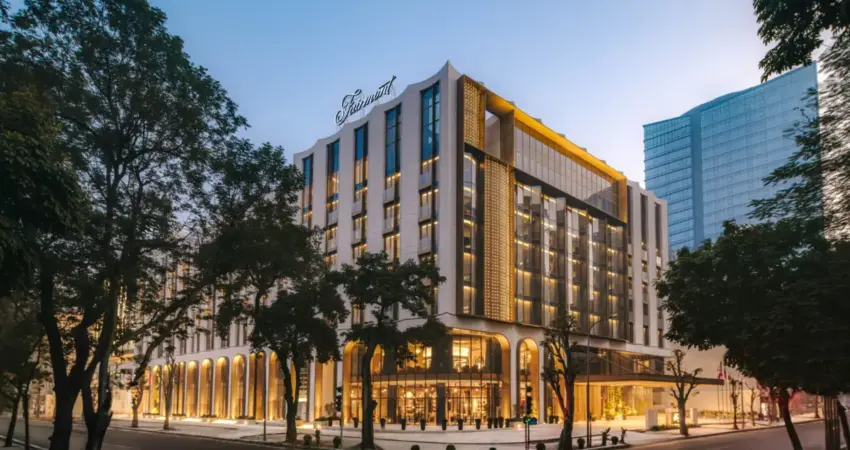
The Modern Entrants: Representing the new wave of development is the Fairmont Hanoi. This property reflects the city’s appetite for contemporary luxury that does not abandon local context. With expansive suites and the sprawling Cirua Spa, the Fairmont signifies a shift toward large-scale, high-amenity luxury that caters to a new demographic of affluent travelers from East Asia, Europe, and North America.
-
The Boutique Revolution: Smaller properties like the Hotel de Lagom offer a more intimate, localized experience. These hotels are strategically placed just outside the high-traffic zones of the Old Quarter, providing a "quiet luxury" alternative that appeals to seasoned travelers who prioritize design and authenticity over brand recognition.
Supporting Data: The Economic Impact of Tourism in Hanoi
Recent data from the Hanoi Department of Tourism underscores the city’s growing importance as a regional travel hub. In 2023, Hanoi welcomed approximately 24 million visitors, a 27% increase compared to the previous year. Of these, 4 million were international tourists, marking a significant recovery toward pre-pandemic levels. The tourism sector’s total revenue for 2023 was estimated at 87.65 trillion VND (approximately $3.5 billion USD), a 45.5% increase year-over-year.
The rise of Hanoi as a culinary capital has further bolstered these numbers. The arrival of the Michelin Guide in 2023, which awarded stars to several Hanoi-based restaurants including Hibana by Koki and Gia, has transformed the city’s food scene into a primary motivator for travel. According to industry analysts, the "Michelin effect" typically results in a 15% to 20% increase in high-spending international arrivals for a city in its first three years of inclusion.
Official Responses and Industry Sentiment
Tourism officials and industry experts have voiced a unified vision for Hanoi’s future. Representatives from the Vietnam National Authority of Tourism (VNAT) have emphasized that the goal is not just to increase visitor numbers, but to increase the "length of stay and average spend."
"Hanoi is no longer just a gateway to Ha Long Bay or Sapa; it is a destination that requires its own dedicated itinerary," stated a senior tourism advisor during a recent regional forum. "The focus is on sustainable luxury—integrating the city’s 2,000-year-old soul with services that meet the highest international standards."
Hospitality managers within the city have also noted a shift in traveler behavior. There is a growing demand for "experiential luxury," where guests seek guided tours of ancient alleys, private viewings of local art collections, and immersion in the city’s coffee culture. The traditional "three-day visit" is increasingly being extended as travelers realize the depth of the city’s cultural offerings, including its proximity to UNESCO World Heritage sites like the Thang Long Imperial Citadel.
Broader Impact: Hanoi’s Role in Southeast Asian Competition
Hanoi’s evolution has significant implications for the Southeast Asian tourism market. Historically, cities like Bangkok and Singapore have dominated the luxury travel sector. However, Hanoi offers a different value proposition: a combination of high-end amenities and a palpable sense of living history that is often lost in more modernized capitals.
The city’s infrastructure projects, including the development of the Hanoi Metro and the expansion of Noi Bai International Airport, are designed to support this growth. Furthermore, the city’s commitment to pedestrianizing areas around Hoan Kiem Lake on weekends has created a "living room" for the city, enhancing the quality of life for residents while providing a vibrant, safe environment for tourists.
As Hanoi moves toward 2026, it is positioning itself as a leader in "culturally conscious" tourism. By leveraging its 2,000 years of history to inform its future, the city is creating a model for urban development that honors the past without being trapped by it. For the global traveler, the choice of where to stay in Hanoi is no longer a matter of convenience; it is a choice of which era of the city’s storied history they wish to inhabit. Whether it is the colonial elegance of the French Quarter or the vibrant energy of the emerging art districts, Hanoi offers a multifaceted experience that is unique in the Asian landscape.

0 Comments