
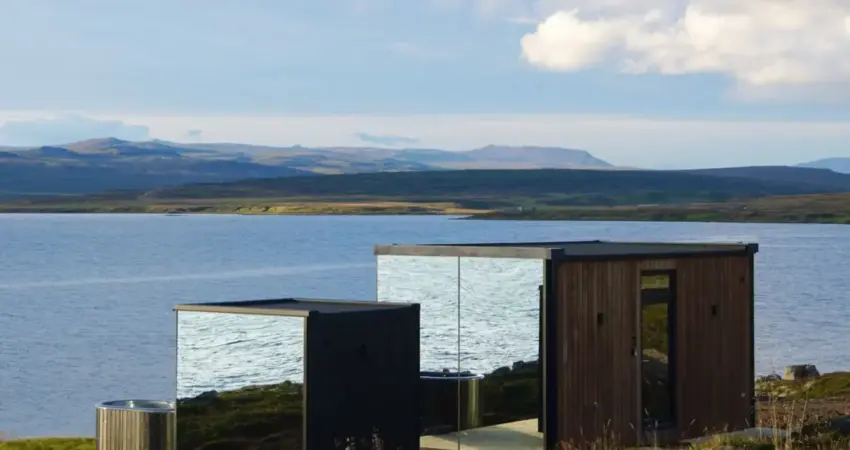
The modern travel landscape is witnessing a profound shift in consumer behavior as travelers increasingly bypass traditional urban hubs in favor of "unplugged" experiences in geographically isolated locations. This movement, often characterized by a desire to disconnect from digital tethers—such as high-speed Wi-Fi and cellular service—and reconnect with the natural world, has transformed from a niche subculture into a significant sector of the global tourism economy. While the prospect of isolation remains divisive, for a growing demographic, the "middle of nowhere" represents the ultimate luxury. Whether the motivation is to find a "readaway" environment free from digital distractions or to engage in deep introspection against the backdrop of an Icelandic fjord or the Andean peaks of Patagonia, the demand for remote accommodations is reshaping the hospitality industry and the way platforms like Airbnb curate their offerings.
The Evolution of Remote Travel: A Chronological Context
The trajectory of remote travel has evolved significantly over the past two decades. In the early 2000s, off-the-grid travel was largely the domain of backpackers and outdoor enthusiasts seeking rugged, low-amenity experiences. However, the 2010s saw the rise of "glamping" and the professionalization of the short-term rental market, which began to bridge the gap between rustic isolation and high-end comfort.
The most pivotal turning point occurred during the 2020-2022 global pandemic. As urban centers faced lockdowns and social distancing became a public health necessity, the appeal of rural and remote properties surged. According to industry data, search queries for "remote" and "secluded" cabins increased by over 40% during this period. This shift was not merely a temporary reaction to health mandates but a fundamental change in traveler priorities. By May 2022, Airbnb responded to this trend by launching "Airbnb Categories," a structural overhaul of their platform that allowed users to search specifically for "Off-the-grid," "National Parks," "Arctic," and "Desert" homes. This move signaled the industry’s recognition that location—specifically secluded location—had become a primary search filter, often superseding the destination city itself.
Market Data and the Economic Impact of Rural Tourism
The economic implications of this shift are substantial. The global glamping market, a key subset of the remote travel sector, was valued at approximately $2.73 billion in 2022 and is projected to expand at a compound annual growth rate (CAGR) of 10.2% through 2030. This growth is driven by a younger demographic; data indicates that Millennials and Gen Z travelers are the primary consumers of "transformative travel" experiences that emphasize wellness and nature.
In the United States, rural counties have seen a disproportionate increase in tourism spending compared to their urban counterparts. In states like Maine and North Carolina, where remote farm stays and mountain cabins are prevalent, local economies have benefited from an influx of "high-value, low-impact" tourists. These travelers often stay longer and spend more per capita on local services and artisanal goods than the average city-break tourist. Furthermore, the rise of the "digital nomad" has created a secondary market for remote stays that offer a "best of both worlds" scenario—isolation for deep work, coupled with proximity to essential infrastructure.
The Geography of Solitude: From the High Desert to the Andes
The current portfolio of premier remote accommodations spans a diverse range of biomes, each offering a unique psychological and physical experience. In the high deserts of California, the appeal lies in the stillness and the celestial clarity of the night sky, drawing those interested in astrotourism. Conversely, the craggy cliffs of Iceland and the Faroe Islands offer a sense of "edge-of-the-world" drama that appeals to travelers seeking a connection with raw, geological forces.
In South America, specifically the Andean peaks of Patagonia, remoteness is defined by the sheer scale of the wilderness. Here, the experience is often centered around the "Route of Parks," a massive conservation initiative that has turned secluded travel into a vehicle for environmental awareness. In the domestic United States, regions like the Green Mountains of Maine and the vegetable farms of North Carolina provide a softer version of isolation, focusing on agricultural rhythms and the "slow food" movement.
Interestingly, the industry has identified a "paradox of remoteness." While guests seek the feeling of being miles from civilization, there is a significant market for properties that are "conveniently remote." This includes cabins in Tennessee or cottages in the Faroe Islands that feel entirely isolated but are located within a 20-minute drive of a regional airport or a major town. This accessibility allows travelers to experience the mental benefits of isolation without the logistical hurdles of multi-day treks or complex transport arrangements.
Psychological Drivers and the "Digital Detox" Phenomenon
The psychological impetus for seeking remote Airbnbs is deeply rooted in the modern struggle with "technostress." As the boundaries between work and home life have blurred due to constant connectivity, the "digital detox" has moved from a wellness trend to a mental health necessity for many. Research in environmental psychology suggests that "soft fascination"—the type of attention required when observing nature—allows the brain’s "directed attention" mechanisms to recover from the fatigue caused by urban environments and screen time.
Industry analysts observe that the "readaway" trend is a prime example of this. Travelers are increasingly booking stays specifically to finish a book or engage in a creative project, surrendering to the lack of distractions. The stillness of a mountain top in Peru or a forest in the American South provides a "sensory reset" that urban luxury hotels, with their constant service and ambient noise, cannot replicate.
Industry Standards and the Vetting of Remote Properties
As the market for remote stays grows, so does the need for rigorous quality control. Platforms have implemented specific metrics to ensure that "remote" does not equate to "neglected." The vetting process for high-tier remote listings typically includes:
- Superhost and Guest Favorite Status: Highlighting hosts with a proven track record of reliability and excellence in communication.
- Amenity Verification: Ensuring that despite the remote location, essential needs—such as heating, potable water, and safety equipment—are met.
- Location Accuracy: Providing detailed topographical and logistical information to manage guest expectations regarding terrain and accessibility.
- Design and Decor: A focus on aesthetic integration with the surrounding environment, often using natural materials and floor-to-ceiling windows to minimize the barrier between the interior and the landscape.
Official Responses and Strategic Shifts
Travel industry leaders have noted that the move toward remote tourism is a strategic opportunity to combat "overtourism" in major capitals like Paris, Venice, and New York. By redirecting tourist traffic to under-visited rural areas, platforms can help distribute the economic benefits of tourism more equitably.
A spokesperson for the travel industry recently noted, "The traveler of 2024 is looking for more than a bed; they are looking for a state of mind. Remote listings are no longer just about the house; they are about the silence, the stars, and the sense of autonomy that comes from being away from the crowd." This sentiment is echoed by regional tourism boards in places like the Faroe Islands, which have launched campaigns specifically targeting the "slow traveler" who values immersion over sightseeing.
Broader Implications: Sustainability and the Future of Travel
The rise of remote travel brings with it significant questions regarding sustainability. The paradox of flying to a remote Icelandic fjord to "connect with nature" is not lost on environmentalists. As a result, there is an increasing push for remote Airbnbs to adopt sustainable technologies, such as solar power, composting toilets, and rainwater harvesting systems. Many of the properties in Patagonia and the high deserts of the US are now marketing their low-carbon footprints as part of the luxury experience.
Furthermore, the "remote" trend is influencing architectural design. We are seeing a rise in "modular" and "low-impact" housing that can be transported to remote areas without the need for heavy permanent infrastructure. This allows for the creation of temporary or seasonal accommodations that leave no trace on the environment once removed.
Conclusion: The New Frontier of Luxury
The shift toward remote Airbnbs and off-the-grid travel represents a fundamental redefinition of luxury. In the 20th century, luxury was defined by service, opulence, and central location. In the 21st century, it is increasingly defined by space, silence, and the ability to disconnect. Whether it is a mountain top in Peru or a quiet farm in North Carolina, these 13 remote Airbnbs and others like them are not just places to stay; they are tools for modern survival in an increasingly loud and connected world. As this trend continues to mature, the focus will likely shift from merely "getting away" to "staying away," as travelers seek deeper, more meaningful engagements with the world’s most quiet corners.

0 Comments