
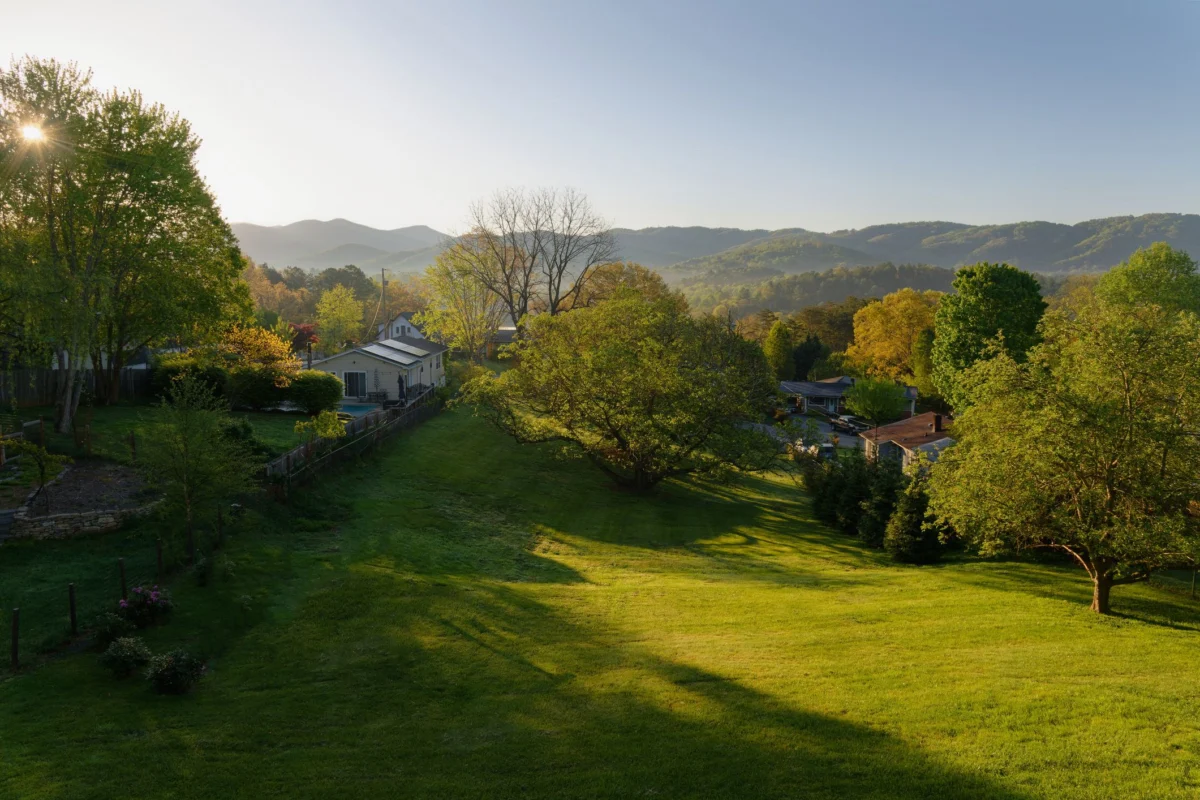
The Blue Ridge Mountains, a physiographic province of the larger Appalachian Mountains range, represent one of the most significant geographic and economic features of the Eastern United States, stretching approximately 550 miles from southern Pennsylvania to northern Georgia. This ancient range, characterized by a distinct bluish haze caused by the release of isoprene from its dense forest canopy, has transitioned from a rugged frontier to a premier global destination for ecotourism and high-end vacation rentals. As the region experiences a surge in domestic travel, the infrastructure supporting these visitors—ranging from historic trailside cabins to modern architectural retreats—has become a focal point for economic development and environmental conservation discussions across four primary states: Virginia, North Carolina, Tennessee, and Georgia.
The Geographic and Historical Context of the Blue Ridge Range
The Blue Ridge province is divided into northern and southern sections by the Roanoke River. The northern section is narrower and features lower elevations, while the southern section expands significantly in width and contains the highest peaks in the eastern United States, including Mount Mitchell in North Carolina, which reaches an elevation of 6,684 feet. The region’s accessibility was fundamentally altered during the mid-20th century with the construction of the Blue Ridge Parkway.
Conceived during the Franklin D. Roosevelt administration as part of the New Deal, the Parkway was designed to connect Shenandoah National Park in Virginia with the Great Smoky Mountains National Park in North Carolina. Construction began on September 11, 1935, near Cumberland Knob, North Carolina. The project took over 50 years to fully complete, with the final section at the Linn Cove Viaduct finishing in 1987. Today, the Parkway serves as the backbone of the region’s tourism industry, facilitating millions of visitors annually who seek access to over 360 miles of trails, numerous waterfalls, and historic landmarks like the Peaks of Otter.
Economic Impact and Tourism Statistics
Tourism in the Blue Ridge Mountains is a multi-billion-dollar industry that sustains thousands of small businesses and gateway communities. According to the National Park Service (NPS), the Blue Ridge Parkway consistently ranks as one of the most-visited units of the National Park System. In 2023, the Parkway recorded over 16.7 million visits. This influx of visitors translated into approximately $1.3 billion in direct spending within "gateway" communities—towns located within 60 miles of the Parkway.
This spending supports a wide array of sectors, including lodging, food services, and outdoor recreation. Data from the Virginia Tourism Corporation and Visit North Carolina indicate that the mountain regions have seen a 15% increase in tourism-related revenue since 2019. The rise of short-term rental platforms has further decentralized this economic benefit, allowing property owners in rural areas to monetize unique lodgings such as converted barns, treehouses, and mountain-top cabins.
A Chronology of Regional Development
The development of the Blue Ridge as a tourism hub can be traced through several distinct eras:
- The Pre-Industrial Era (1700s–1800s): The mountains were primarily used for subsistence farming, timber, and mining. Early "tourism" was limited to medicinal springs and mineral retreats for the wealthy.
- The New Deal Era (1933–1945): The establishment of Shenandoah National Park (1935) and the commencement of the Blue Ridge Parkway project signaled a shift toward federal conservation and recreational planning.
- The Post-War Boom (1946–1970s): Increased car ownership led to the rise of roadside motels and family-oriented attractions. The region became a staple of the American road trip.
- The Modern Preservation and Luxury Era (1980s–Present): A growing emphasis on environmental sustainability and "experiential travel" has led to the rise of luxury eco-lodges and the professionalization of the vacation rental market.
The Evolution of Lodging: From Motels to Curated Experiences
The contemporary traveler’s preference has shifted away from standardized hotel chains toward unique, localized accommodations. In the Blue Ridge region, this trend is manifested in the high demand for properties that offer "immersion" in the natural landscape. Modern vacation rentals are now vetted through rigorous standards, often requiring "Superhost" or "Guest Favorite" status on digital platforms to remain competitive.
Criteria for top-tier rentals in the region now include proximity to the Blue Ridge Parkway (typically within a 45-minute drive), high-speed internet for "workation" travelers, and aesthetic integration with the environment. Notable examples of this evolution include urban-adjacent stays in Lynchburg, Virginia, which provide a "foothill" experience with mountain views from mundane city locales, and the creative hubs of Asheville, North Carolina, where industrial spaces are converted into artist-centric lofts.
In rural sections of the mountains, unique architectural stays have become a primary draw. Treehouse retreats, which utilize modern engineering to suspend living quarters within the forest canopy, and apartments situated above working artisanal bakeries represent a new category of "destination lodging." These properties are no longer just places to sleep; they are marketed as integral components of the travel experience.
Infrastructure and Environmental Stewardship
The increased density of visitors and the proliferation of vacation rentals have prompted responses from environmental and governmental organizations. The Blue Ridge Parkway Foundation, the primary non-profit partner of the Parkway, has raised concerns regarding the maintenance backlog of the aging infrastructure. As of 2024, the Parkway faces hundreds of millions of dollars in deferred maintenance, including road repairs, bridge stabilization, and facility upgrades.
Furthermore, the "Leave No Trace" initiative has become a central pillar of regional tourism management. Officials from the National Park Service have issued statements emphasizing the need for sustainable visitor behavior to protect the fragile ecosystems of the Appalachian highlands. "The challenge lies in balancing record-breaking visitation with the preservation of the very resources people come to see," an NPS spokesperson noted in a recent regional planning report.
Local municipalities have also begun implementing stricter regulations on short-term rentals (STRs). In cities like Asheville, zoning laws have been adjusted to prevent the "hollowing out" of residential neighborhoods while still allowing for a robust tourism economy. These regulations often focus on safety standards, occupancy limits, and the collection of local occupancy taxes which are reinvested into local infrastructure.
Regional Profiles: Virginia vs. North Carolina
The Blue Ridge Mountains offer distinct experiences as one moves from north to south:
Virginia: The Gateway and the Foothills
In Virginia, the range is defined by the Shenandoah Valley and the rolling foothills of the Piedmont. The Peaks of Otter, located near Bedford, have been a tourist destination since the mid-19th century. Virginia’s approach to Blue Ridge tourism often emphasizes history, with trailheads frequently intersecting with Civil War sites and historic mountain settlements. The city of Lynchburg serves as a strategic hub, offering a mix of urban amenities and immediate access to the mountain range’s northern stretches.
North Carolina: The High Peaks and Artistic Hubs
As the range moves into North Carolina, the topography becomes more dramatic. This region is home to the highest peaks east of the Mississippi River and the city of Asheville, which has become a national center for arts, craft beer, and culinary tourism. The North Carolina section of the Blue Ridge is also the heart of the "Crooked Road" music trail, celebrating the region’s deep roots in bluegrass and old-time music.
Broader Impact and Future Implications
The continued popularity of the Blue Ridge Mountains as a vacation destination has significant implications for the future of the Appalachian region. On one hand, the "amenity migration"—where people move to a region specifically for its natural beauty and recreational opportunities—has revitalized many dying mountain towns. Property values have increased, and new service-oriented jobs have been created.
On the other hand, this growth presents challenges related to affordability and environmental impact. The "Asheville Effect," where rising housing costs driven by tourism and second-home ownership displace long-term residents, is a phenomenon now being observed in smaller gateway towns like Boone, North Carolina, and Roanoke, Virginia.
Technological advancements are also expected to play a role in the region’s future. The expansion of fiber-optic internet into rural mountain coves is making the Blue Ridge a top choice for remote workers, further blurring the line between seasonal tourism and permanent residency. This shift necessitates a long-term strategy for sustainable development that includes protecting the viewsheds—the visible natural landscape—from overdevelopment.
As the Blue Ridge Parkway nears its centennial, the focus remains on maintaining the delicate balance between accessibility and preservation. The region’s ability to offer a diverse range of accommodations—from rustic cabins to high-tech treehouses—ensures its continued relevance in the global tourism market, provided that the underlying natural and physical infrastructure is adequately supported by both public and private investment.

0 Comments