
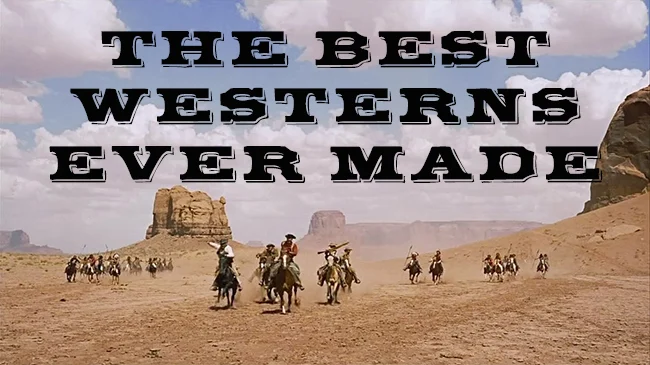
The American Western remains one of the most enduring and influential genres in the history of global cinema, serving as a foundational pillar for the conceptualization of American masculinity and national identity. While the mythologization of the frontier began in the late 19th century through dime novels and traveling Wild West shows, it was the advent of 20th-century motion pictures that codified the cowboy as an indelible icon of self-reliance, honor, and grit. Much like the sagas of Norse mythology or the epics of Homeric Greece, Western films offer a complex exploration of the dichotomy between civilization and the wilderness, the nuances of justice versus vengeance, and the moral ambiguity inherent in the expansion of the American West.
The Genesis of the Cinematic Frontier: 1939–1949
The year 1939 marked a pivotal moment for the genre with the release of Stagecoach, directed by John Ford. This film not only transformed John Wayne into a global superstar but also established the visual and narrative vocabulary for the modern Western. Filmed against the majestic backdrop of Monument Valley, Stagecoach utilized the journey of nine strangers through Apache territory as a metaphor for social redemption. Film historians often cite this era as the beginning of the Western’s "Standard Period," where the archetypes of the outlaw, the lawman, and the pioneer were refined.
During this formative decade, films like My Darling Clementine (1946) and Red River (1948) began to probe deeper into the psychological motivations of their protagonists. In Red River, John Wayne’s portrayal of Thomas Dunson introduced audiences to a more tyrannical, obsessive version of the Western hero, highlighting the internal conflicts that arise when the drive for success eclipses personal relationships. This period also saw the emergence of "Western Noir" with The Ox-Bow Incident (1943), a stark indictment of mob mentality and "groupthink" that remains a chillingly relevant study of the American justice system.
The Golden Age and the Rise of Moral Complexity: 1950–1959
The 1950s represented the "Golden Age" of the Western, characterized by a shift toward psychological realism and social commentary. High Noon (1952) stands as a landmark of this era. Starring Gary Cooper as Marshal Will Kane, the film is a masterclass in tension, exploring the isolation of a man who stands by his principles when his community abandons him. At the time of its release, High Noon was interpreted by many as an allegory for the Hollywood blacklist and the lack of moral courage during the McCarthy era.
Contemporaneously, the genre began to address the historical mistreatment of indigenous populations. Broken Arrow (1950), starring James Stewart, is recognized by cinematic historians as the first major Western to offer a sympathetic and humanizing portrayal of Native Americans. This shift continued with John Ford’s The Searchers (1956), in which Wayne plays Ethan Edwards, a character whose blatant racism and vengeful obsession make him a deeply problematic and tragic figure. The Searchers is now frequently cited by the American Film Institute (AFI) as one of the greatest films ever made, credited with influencing directors from Martin Scorsese to George Lucas.
The decade concluded with films like Rio Bravo (1959) and The Big Country (1958). Rio Bravo was famously produced as a direct rebuttal to High Noon, with director Howard Hawks and John Wayne seeking to portray a lawman who relied on a "professional" team rather than pleading for help from reluctant civilians. Meanwhile, The Big Country explored the futility of long-standing feuds and the true meaning of courage, famously becoming a favorite of President Dwight D. Eisenhower.
Revisionism and the Death of the Myth: 1960–1969
As the 1960s progressed, the traditional Western began to yield to the "Revisionist Western," which deconstructed the romanticized notions of the frontier. The "Spaghetti Western" subgenre, led by Italian director Sergio Leone, introduced a stylized, cynical, and violent aesthetic. The Good, the Bad and the Ugly (1966) and Once Upon a Time in the West (1968) replaced the moral clarity of earlier films with anti-heroes driven by greed and survival. Clint Eastwood’s "Man with No Name" became the new face of the genre—a stoic, poncho-wearing figure who operated in a world where the line between "good" and "bad" was razor-thin.

The year 1969 is often viewed as the symbolic end of the classic Western era. Sam Peckinpah’s The Wild Bunch presented a nihilistic and ultra-violent look at a group of outlaws out of time, facing an increasingly modernized world. Simultaneously, Butch Cassidy and the Sundance Kid utilized the easy chemistry of Paul Newman and Robert Redford to create a more lighthearted but equally elegiac tribute to the disappearing frontier. These films reflected a nation grappling with the Vietnam War and social upheaval, signaling that the simple myths of the past were no longer sufficient.
The Modern Revival and the Neo-Western: 1980–Present
After a period of relative dormancy in the 1970s and 1980s, the Western experienced a significant resurgence in the early 1990s. Kevin Costner’s Dances with Wolves (1990) became a box office phenomenon and won seven Academy Awards, including Best Picture. It revitalized interest in the frontier experience, focusing on the cultural exchange between a Union soldier and the Lakota people.
However, it was Clint Eastwood’s Unforgiven (1992) that provided the definitive final word on the genre. As a director and star, Eastwood dismantled the very myths he helped create, portraying violence as a messy, soul-crushing endeavor rather than a heroic necessity. Unforgiven won the Academy Award for Best Picture and is widely regarded as the pinnacle of the Revisionist Western.
In the 21st century, the genre has continued to evolve into the "Neo-Western," where the themes of the frontier are transposed onto modern settings. No Country for Old Men (2007), directed by the Coen brothers, utilized the stark landscapes of West Texas to explore fate, conscience, and the persistence of evil. The Coens also revisited traditional Western tropes with their 2010 remake of True Grit, which critics praised for its adherence to the gritty, literary tone of Charles Portis’s original novel.
Statistical Significance and Cultural Legacy
The enduring impact of the Western is reflected in its representation within the National Film Registry. To date, numerous Westerns, including Stagecoach, High Noon, The Searchers, and 3:10 to Yuma (1957), have been selected for preservation due to their "cultural, historical, or aesthetic significance."
Furthermore, the genre’s influence extends beyond American borders. The 1960 film The Magnificent Seven was a direct adaptation of Akira Kurosawa’s Japanese masterpiece Seven Samurai, demonstrating the universal appeal of the "warrior for hire" trope. Modern directors like Quentin Tarantino and Andrew Dominik have continued to mine the genre for inspiration, with films like The Assassination of Jesse James by the Coward Robert Ford (2007) receiving critical acclaim for their poetic and meditative approach to outlaw history.
Chronology of Major Cinematic Milestones
- 1939: Stagecoach establishes the Western as a serious cinematic genre.
- 1943: The Ox-Bow Incident introduces moral noir to the frontier.
- 1950: Broken Arrow marks the first sympathetic portrayal of Native Americans in a major film.
- 1952: High Noon explores the theme of individual duty versus communal cowardice.
- 1956: The Searchers debuts, offering a complex study of revenge and racism.
- 1966: The Good, the Bad and the Ugly popularizes the "Spaghetti Western" aesthetic.
- 1969: The Wild Bunch and Butch Cassidy and the Sundance Kid signal the end of the traditional Western era.
- 1989: The television miniseries Lonesome Dove becomes a cultural phenomenon, proving the Western’s continued viability in a new medium.
- 1992: Unforgiven deconstructs the cowboy myth and wins Best Picture.
- 2007: No Country for Old Men bridges the gap between the Western and the modern thriller.
Conclusion: The Frontier as a Permanent Canvas
The Western film remains a vital part of the global cultural canon because it provides a canvas for exploring the most fundamental human questions. Whether through the stoic resolve of a John Wayne character or the weary cynicism of a Clint Eastwood anti-hero, these films examine what it means to live with honor in an often lawless world. As society continues to change, the Western evolves with it, reflecting new perspectives on race, gender, and the nature of power. The "tracks in history" left by these cinematic pioneers continue to inspire and challenge audiences, ensuring that the legend of the American West will never be truly buried.

0 Comments