
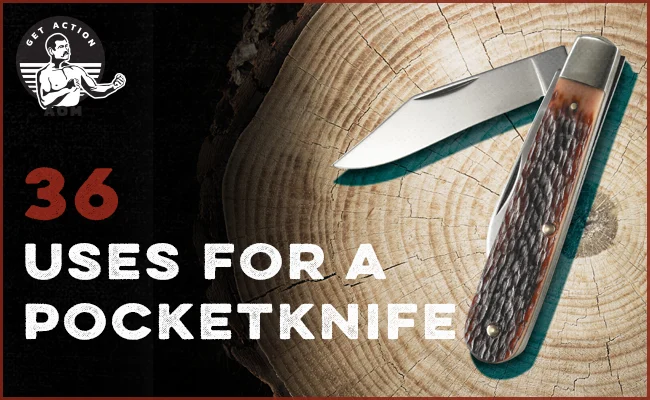
The pocketknife, a tool with a lineage stretching back to the early Iron Age, remains one of the most versatile instruments in a modern individual’s arsenal. While the digital revolution has rendered many physical tools obsolete, the folding blade has maintained its relevance within the growing "Every Day Carry" (EDC) movement. Since 2008, advocacy for the consistent carriage of a pocketknife has transitioned from a niche hobbyist interest to a mainstream lifestyle choice, driven by a global push toward self-reliance and preparedness. This analysis explores 36 distinct applications for the pocketknife, ranging from mundane household tasks to critical life-saving interventions, while providing context on the tool’s historical and contemporary significance.
The Evolution of the Pocketknife as an Essential Tool
Historically, the folding knife served as a primary tool for laborers, sailors, and soldiers. From the Roman "friction folder" to the iconic multi-tools issued to Swiss soldiers in the late 19th century, the design has prioritized portability and accessibility. In the 21st century, the pocketknife has seen a resurgence. Market data indicates that the global folding knife market has expanded significantly, with a projected compound annual growth rate (CAGR) of over 5% through the next decade. This growth is attributed to an increase in outdoor recreational activities and a cultural shift toward "preparedness culture."
Despite its utility, experts emphasize that a knife is an improvised substitute for specialized equipment. Using a blade for tasks like prying or screwdriving can damage the temper of the steel or cause mechanical failure. However, in scenarios where the "right" tool is unavailable, the pocketknife functions as a critical fallback.
Logistical and Household Efficiency
The rise of e-commerce has fundamentally changed the domestic environment, making the pocketknife a high-frequency tool for logistical management.
- Opening Packages: With the exponential increase in home deliveries, the ability to cleanly sever shipping tape and adhesive labels is a primary daily use.
- Breaking Down Cardboard: Efficient recycling requires the reduction of volume. A sharp blade allows users to slice through reinforced tape and heavy-duty cardboard, facilitating easier disposal and storage.
- Opening Clamshell Packaging: Rigid plastic "clamshell" packaging is notorious for causing "wrap rage" and minor injuries. A controlled cut with a pocketknife provides a safer alternative to tearing at the plastic by hand.
- Puncturing Air Pillows: Modern shipping utilizes plastic air cushions for protection. Deflating these before disposal significantly reduces the footprint of household waste.
- Opening Letters: While digital communication is dominant, physical correspondence remains a reality for legal and formal documents. A knife ensures envelopes are opened without damaging the contents.
- Removing Staples: In the absence of a dedicated staple remover, a thin blade can be used to pry up the tines of a staple, though this requires care to avoid dulling the tip.
- Cutting Loose Threads: Protruding threads on garments can lead to further unraveling if pulled. A quick snip prevents structural damage to clothing.
- Removing Clothing Tags: New apparel often features plastic fasteners or adhesive tags that are difficult to remove by hand without risking damage to the fabric.
Emergency and Life-Saving Interventions
The most compelling argument for carrying a pocketknife lies in its potential to serve as a life-saving device during unforeseen crises.
- Cutting Seatbelts: In the event of a vehicular accident, particularly those involving submersion or fire, seatbelt pretensioners can jam. A pocketknife allows a passenger or first responder to quickly sever the webbing to facilitate an escape.
- First Aid Access: Administering medical care often requires immediate access to the skin. Knives are used to cut away clothing to treat impalement wounds, gunshot injuries, or to clear the chest for the application of an Automated External Defibrillator (AED).
- Emergency Tracheotomy: Though extremely rare and high-risk, there are documented cases of medical professionals using pocketknives to perform emergency cricothyrotomies in restaurants or on airplanes when a patient’s airway is completely obstructed.
- Wild Animal Defense: While not an ideal weapon, a pocketknife has been successfully used to fend off mountain lions and bears in documented survival scenarios where the victim was otherwise unarmed.
- Self-Defense: As a tool of last resort, a pocketknife can serve as a deterrent or defensive implement against human attackers, though experts warn that this requires significant training and carries legal complexities.
Outdoor Survival and Resource Management
For the outdoorsman, the pocketknife is the foundation of "bushcraft," a set of skills focused on thriving in the natural environment.
- Making Kindling: A knife is essential for paring dry wood into shavings or "feather sticks," which have a higher surface-area-to-volume ratio and ignite more easily.
- Creating Tinder Bundles: Processing natural fibers into a "bird’s nest" configuration is a fundamental skill for primitive fire-starting.
- Cutting Rope and Cordage: Whether setting up a shelter or securing gear, the ability to trim paracord or hemp rope is vital.
- Filleting Fish: For those practicing sustainable foraging or survival fishing, a sharp blade is necessary for cleaning and prepping a catch for consumption.
- Cutting Fishing Line: Managing tangles and trimming excess line after tying knots is a constant requirement in angling.
- Cutting Bait: A knife allows for the precise sectioning of bait, extending the utility of limited resources.
- Whittling: Beyond utility, whittling serves as a traditional method of passing time and practicing fine motor skills, often resulting in functional items like tent pegs or utensils.
Technical Maintenance and Improvised Repairs
In mechanical and technical contexts, the pocketknife serves as a bridge between specialized tools.
- Stripping Electrical Wire: In emergency electrical repairs, a blade can be used to carefully remove insulation from copper wiring.
- Cleaning Battery Terminals: Corrosion on car battery terminals can prevent a vehicle from starting. A knife can be used to scrape away oxidation to ensure a solid connection for a jumpstart.
- Prying Out Batteries: Stubbornly seated AA or AAA batteries in small electronics can often be dislodged using the tip of a blade.
- Untying Tight Knots: Inserting a blade or the spine of a knife into a compressed knot can provide the leverage necessary to loosen the cordage.
- Unscrewing Small Screws: While potentially damaging to the knife, the tip can often turn flathead or even some Phillips-head screws in a pinch.
- Creating New Belt Holes: Weight fluctuations or the need to secure gear to a belt may require the addition of a new notch, which can be bored using the point of a knife.
Culinary and Personal Utility
The pocketknife often finds its way into the kitchen or the personal grooming routine when more appropriate tools are out of reach.
- Slicing Fruit: A traditional use that remains popular for hikers and office workers alike.
- Spreading Toppings: The flat of the blade serves as an improvised spatula for condiments like peanut butter or jam.
- Opening Wine Bottles: Without a corkscrew, a knife can be used to "work" a cork out of a bottle through a series of precise movements, a technique often demonstrated in survival training.
- Opening Bottle Caps: The spine or handle of a sturdy folding knife can act as a lever to pry off non-twist bottle caps.
- Opening Cans: In a survival scenario, a knife can be used to pierce and "saw" around the lid of a tin can.
- Opening Coconuts: In tropical environments, a pocketknife is used to access the water and meat of a coconut, a task requiring specific prying and cutting techniques.
- Trimming Calluses: Some individuals use a sterilized blade for personal grooming, such as removing hardened skin, though this carries a risk of infection if not performed carefully.
- Removing Splinters: After sterilization, the fine point of a pocketknife can be used to probe the skin and extract deeply embedded debris.
- Sharpening Pencils: Before the ubiquity of mechanical sharpeners, the "penknife" was specifically designed for maintaining the points of writing instruments.
- Playing Mumbley-Peg: A traditional outdoor game involving the tossing of a knife to stick into the ground, mumbley-peg has a long history among soldiers and pioneers as a test of dexterity.
Broader Impact and Legal Implications
The decision to carry a pocketknife carries with it a set of responsibilities and legal considerations. Jurisdictions vary wildly regarding the legality of certain blade lengths, locking mechanisms, and opening styles. For instance, many European nations and certain U.S. cities have strict "non-locking" or "sub-three-inch" rules.
From a sociological perspective, the carriage of a pocketknife represents a commitment to self-reliance. In a specialized society where individuals often rely on external services for the simplest tasks, the pocketknife is a symbol of the "generalist." It encourages a mindset of "mend and make do" rather than "discard and replace."
Conclusion
The pocketknife is more than a simple cutting tool; it is a multi-functional implement that addresses the friction of daily life. From the mundane convenience of opening a package to the high-stakes necessity of an emergency rescue, the 36 uses listed above underscore its enduring value. As the EDC movement continues to grow, the emphasis remains on the responsible and skillful application of this timeless tool, ensuring that the individual is always prepared for the unexpected challenges of the modern world.

0 Comments