
When Sesame Street debuted the character of Mr. Snuffleupagus in 1971, the program initially established a narrative conceit where only Big Bird could see the large, mammoth-like creature. For fourteen years, Mr. Snuffleupagus—affectionately known as Snuffy—was framed as Big Bird’s imaginary friend, a recurring gag that often left the show’s adult characters skeptical of Big Bird’s claims. However, by 1985, the cultural landscape regarding child safety and domestic transparency underwent a seismic shift. As reports of child sexual abuse became a prominent fixture of national news cycles in the mid-1980s, the creators of Sesame Street realized that maintaining Snuffy’s status as an "imaginary" entity sent a potentially dangerous message to its young audience. The concern was that if adults on the show consistently doubted Big Bird, real-world children might conclude that adults would not believe them if they disclosed instances of abuse or trauma. Consequently, in a landmark episode during the show’s 17th season, Snuffy was finally revealed to the adults of the neighborhood, cementing the importance of validating a child’s reality.
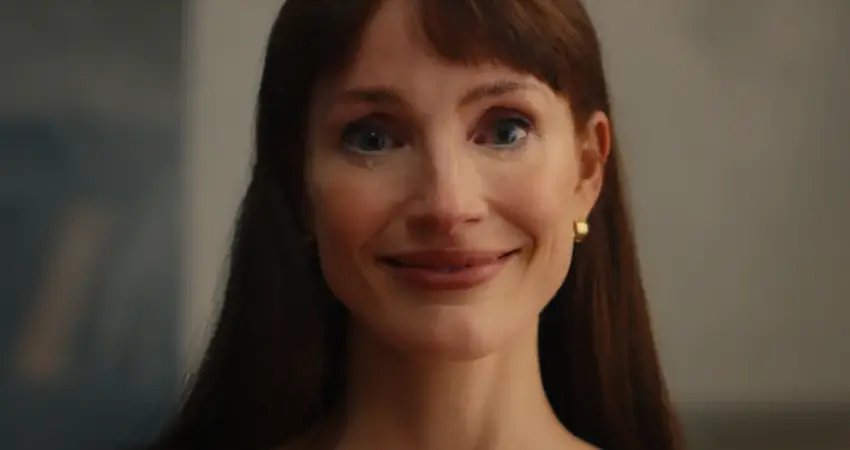
Decades later, the horror film Other Mommy, directed by Rob Savage and starring Academy Award winner Jessica Chastain, utilizes this historical precedent as a thematic foundation. Unlike the prolonged skepticism found in early Sesame Street, Other Mommy chooses a path of immediate validation. When seven-year-old Bela, portrayed by Arabella Olivia Clark, reports the presence of a supernatural entity in her room, her parents, Ursula (Chastain) and Russ (Jay Duplass), do not dismiss her. Instead, they react with a mixture of terror and instinctual protection, acknowledging the entity’s presence almost instantly. This narrative choice serves as the starting point for a complex exploration of domestic discord, the corruption of innocence, and the heavy burden of parental secrets.
From Page to Screen: The Genesis of Other Mommy
Other Mommy is an adaptation of the 2024 novel Incidents Around the House by Josh Malerman, the acclaimed author of Bird Box. The story centers on a young girl named Bela and her family, who are haunted by a malevolent entity Bela refers to as "Other Mommy." The entity is not merely a ghost or a poltergeist in the traditional sense; it is a parasitic force that seeks "carnation"—a child’s phonetic misunderstanding of "incarnation." The entity’s ultimate goal is to possess Bela, a process it claims requires only a "hug" or an invitation into her heart.
The film, directed by Rob Savage—who gained notoriety for the pandemic-era hit Host and the Stephen King adaptation The Boogeyman—elevates the source material by grounding the supernatural horror in the tangible decay of a modern marriage. The screenplay emphasizes the entity as a manifestation of the household’s internal rot. Ursula is depicted as a mother struggling with the constraints of her role; she works late, harbors deep-seated regrets about motherhood, and is engaged in an extramarital affair with her husband’s best friend, Frank (Adrian Moayed). The horror of the film is thus twofold: the external threat of the entity and the internal threat of a family unit built on deception.
The Psychological Weight of the Parentified Child
A central theme in Other Mommy is the concept of "parentification," a psychological phenomenon where a child is forced to take on the emotional or practical responsibilities of an adult. Throughout the film, Ursula and Russ are frequently depicted as overwhelmed and indecisive, often turning to seven-year-old Bela for guidance on how to navigate the haunting. By asking the child how to defeat or appease the entity, the parents effectively abdicate their roles as protectors, leaving Bela to negotiate with a predator on her own.

This dynamic is highlighted by Bela’s heightened awareness of her parents’ secrets. In one poignant scene, Bela remarks to Ursula, "You smell like someone else," after Ursula returns home from an encounter with her lover. The film suggests that children are inherently "switched-on" to the discord in their homes, even when parents believe they are successfully hiding their failings. The entity, Other Mommy, feeds on this discord, literalizing the "Other" version of Ursula—the one who wishes to escape her life—into a terrifying physical presence.
Allegory and the Subtext of Abuse
While the film does not explicitly state that Bela has been a victim of sexual abuse, the subtext is woven into the narrative’s visual and linguistic fabric. The entity’s methods of grooming Bela mirror the tactics used by real-world predators. Other Mommy attempts to lure the child with "sparkles" and "balloons," and at one point, the entity bleeds glitter, a surreal and unsettling perversion of childhood wonder.
One of the most harrowing sequences involves the entity attempting to drown Bela in a ball pit. The brightly colored spheres, usually associated with play and safety, become a claustrophobic trap. Critics and analysts have noted that these elements—the lures, the requests for "hugs," and the invasion of personal space—evoke the "grooming" process. The entity’s insistence that "all it takes is a hug" to let her in serves as a chilling metaphor for the violation of physical boundaries.
The film further complicates this by having the entity shapeshift into the men in Bela’s life, including her father, her babysitter Kelvin (Sean Kaufman), and her mother’s lover, Frank. An early scene featuring Frank coaxing Bela into a hug is framed with the uncomfortable tension often associated with "creepy uncle" archetypes. By the time the entity uses the same tactic in the climax, the film has firmly established a parallel between supernatural possession and the violation of a child’s bodily autonomy.
Chronology of Development and Cultural Context
The production and release of Other Mommy coincide with a broader trend in the horror genre that uses "elevated horror" to discuss trauma and parenting.
- 1971–1985: The "Imaginary Snuffy" era of Sesame Street reflects a period of cultural naivety regarding child disclosure.
- 1985: Sesame Street pivots to make Snuffy visible, responding to the national conversation on child abuse (highlighted by events like the McMartin preschool trial).
- 2024: Josh Malerman releases Incidents Around the House, providing a modern literary framework for the "invisible" predator within the home.
- 2024/2025: Rob Savage’s film adaptation is released, starring Jessica Chastain, whose career has frequently explored the darker facets of womanhood and maternal instinct (seen in films like Mama and The Zookeeper’s Wife).
The film’s arrival comes at a time when digital safety and the "sharenting" culture have made the boundaries of childhood more porous than ever, adding another layer of relevance to its themes of privacy and invasion.

Data and Industry Response
Horror films centered on domestic trauma have historically performed well at the box office and with critics when they lean into psychological realism. According to industry data, "domestic horror"—films where the threat originates from within the family unit—has seen a 15% increase in production over the last decade. This shift reflects a growing audience interest in narratives that use the supernatural to process real-world anxieties.
Early reactions to Other Mommy have praised Arabella Olivia Clark’s performance as Bela, noting the difficulty of portraying a child who must be both vulnerable and exceptionally perceptive. Jessica Chastain’s portrayal of Ursula has also been lauded for its lack of vanity; she plays a mother who is fundamentally flawed, making the entity’s manifestation feel earned rather than arbitrary.
Broader Implications: The Importance of Belief
The ultimate resolution of Other Mommy hinges on the "corruption of innocence" as a tool for survival. The entity is defeated not through a traditional exorcism, but through the delivery of a painful truth. Ursula eventually confesses to Bela that her conception was a "mistake" and that Russ is not her biological father. This revelation shatters Bela’s naivety, but it also provides her with the clarity needed to reject the entity’s false promises.
The film posits that while "getting hurt is part of being human," as Bela’s grandmother suggests, the most significant damage occurs when children are forced to navigate that pain in isolation or silence. The entity’s power is derived from the "unsaid" things in the household. Once the secrets are out, the entity loses its grip.
In a broader societal context, Other Mommy serves as a stark reminder of the lessons learned by the creators of Sesame Street in 1985. The most effective defense a child has against a predator—whether supernatural or human—is a parent who listens, observes, and, above all, believes them. By validating Bela’s fear from the opening frame, the film shifts the narrative from a question of "is this real?" to "how do we survive this together?" It is a harrowing, modern take on the responsibility of care, suggesting that the true horror is not what lurks in the shadows, but what we refuse to see in the light.

0 Comments