
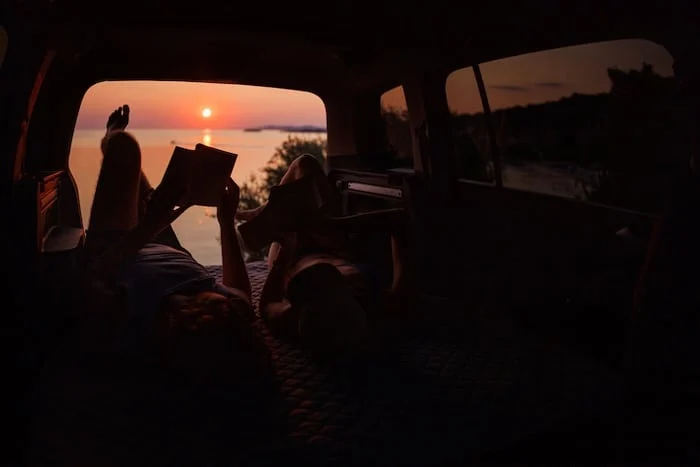
The American road trip has long occupied a central position in the national consciousness, serving as a primary vehicle for themes of self-discovery, cultural observation, and the pursuit of individual liberty. While the physical act of traversing the continent via automobile became a middle-class reality in the post-World War II era, its transformation into a literary archetype required a specific blend of philosophical inquiry and narrative structure. Despite the ubiquity of the journey in Western literature—ranging from Homeric epics to medieval pilgrimages—the specific subgenre of the "road trip novel" remains a relatively modern phenomenon, inextricably linked to the development of the United States’ highway infrastructure and the mid-century transition toward a mobile society.
The literary landscape of the road trip is defined not by the destination, but by the "liminal space" between points of departure and arrival. This transitionary period allows for the suspension of social norms and the exploration of internal psychological states. This report examines five seminal works—ranging from 1950s memoirs to contemporary historical fiction—that have fundamentally shaped the public’s understanding of the open road and its role in the American identity.
Historical Context: The Infrastructure of American Narrative
The rise of road trip literature is directly proportional to the expansion of the United States’ transportation network. The most significant catalyst for this movement was the Federal Aid Highway Act of 1956, signed into law by President Dwight D. Eisenhower. This legislation authorized the construction of 41,000 miles of the Interstate Highway System, a project that fundamentally altered the American landscape and the way citizens interacted with their environment.

Prior to the 1950s, cross-country travel was a grueling endeavor characterized by unpaved roads and unreliable services. The transition to a high-speed, standardized network of thoroughfares created a new kind of "American space." Literary critics argue that this shift necessitated a new form of storytelling—one that captured the speed, the transience, and the existential weight of a nation in constant motion. The books selected for this analysis represent different stages of this cultural evolution, capturing the transition from the ruggedness of early transcontinental travel to the philosophical reflections of the modern driver.
Chronology of the Literary Road Trip: 1953–Present
To understand the impact of these works, it is necessary to view them through a chronological lens, as each reflects the socio-political climate of its era.
1953: The Presidential Departure
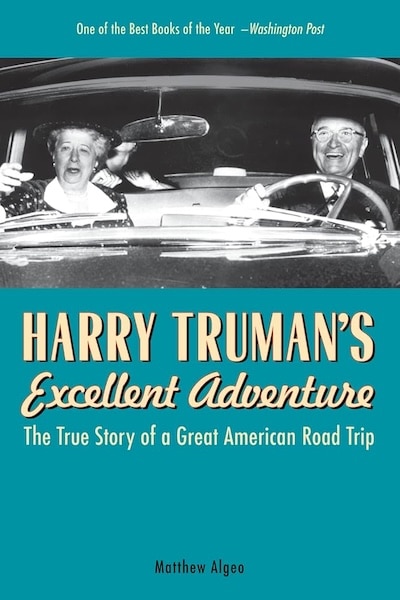
In the summer of 1953, Harry S. Truman, having recently completed his term as the 33rd President of the United States, embarked on an unpublicized road trip from Independence, Missouri, to Washington, D.C., and New York City. Accompanied by his wife, Bess, and driving a 1953 Chrysler New Yorker, Truman’s journey represented a unique historical moment: the attempt of a former world leader to reintegrate into the fabric of ordinary American life. This event is documented in Matthew Algeo’s Harry Truman’s Excellent Adventure.
Historians note that Truman’s trip occurred just before the implementation of the Secret Service protection details that now accompany former presidents for life. Algeo’s work highlights a period where the barrier between the executive branch and the citizenry was still permeable. The road trip served as Truman’s primary form of recreation, a stark contrast to the highly managed travel of the modern political era.
1957: The Beat Generation’s Manifest
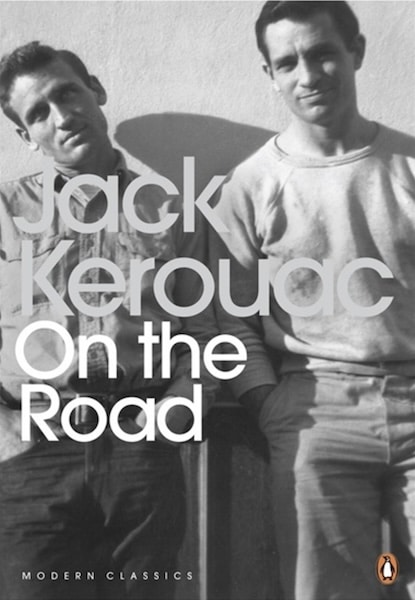
The publication of Jack Kerouac’s On the Road in 1957 marked a turning point in American fiction. Written on a 120-foot scroll of teletype paper to maintain a "spontaneous" prose style, the novel follows the semi-autobiographical exploits of Sal Paradise and Dean Moriarty. The work captured the restlessness of a post-war generation that felt alienated by the burgeoning consumerism and suburbanization of the 1950s.
Data from literary archives indicates that On the Road underwent significant editorial revisions before its release, yet its impact remained raw. It became the defining text of the Beat Generation, advocating for a life of "it"—a moment of pure existence found through speed, jazz, and the avoidance of domestic permanence.
1960: Observations of a Changing Nation
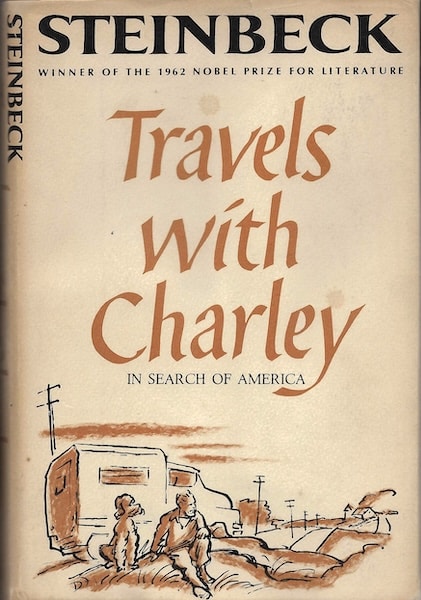
By 1960, the Interstate Highway System was well underway, and regional identities were beginning to fade into a more homogenized national culture. John Steinbeck, an established giant of American letters, sought to document this change in Travels with Charley. Traveling in a custom-built camper named Rocinante with his French poodle, Steinbeck traversed the perimeter of the country.
While later scholarship, including investigations by The New York Times, suggested that many of the encounters in the book were fictionalized or highly stylized, the work remains a vital historical document. It captures the tension between the "romance" of the old American road and the "reality" of a modernizing, increasingly divided nation on the eve of the Civil Rights movement.
1974: The Philosophical Journey
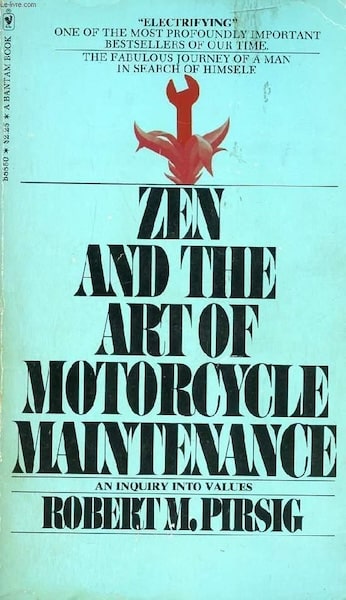
Robert Pirsig’s Zen and the Art of Motorcycle Maintenance, published in 1974, expanded the genre into the realm of the philosophical treatise. Following a 17-day motorcycle journey from Minnesota to California, the book uses the mechanics of the vehicle as a metaphor for the "Quality" of life and work. Pirsig’s work arrived during a period of national disillusionment following the Vietnam War and the Watergate scandal, offering a rigorous intellectual framework for personal restoration.
2021: Modern Historical Reflection
Amor Towles’ The Lincoln Highway, set in 1954, represents a modern literary return to the origins of the road trip. By focusing on the Lincoln Highway—the first transcontinental road for automobiles in the U.S., dedicated in 1913—Towles examines how the road acts as a moral compass. The novel’s commercial success (debuting at #1 on The New York Times Best Seller list) underscores the enduring public fascination with the mid-century American journey as a site of moral and personal transformation.
Supporting Data: The Economics and Popularity of Road Travel
The enduring popularity of these books is mirrored by the persistent role of the road trip in American tourism. According to data from the American Automobile Association (AAA), road trips remain the most popular form of vacation for U.S. citizens.
- Tourism Trends: In 2023, AAA reported that 44% of Americans planned to take a road trip, a figure that has remained consistent despite fluctuations in fuel prices and the rise of low-cost air travel.
- Infrastructure Impact: The Interstate Highway System now spans over 48,000 miles. However, literary interest often focuses on "Blue Highways" or historic routes like Route 66 and the Lincoln Highway, which offer the "unexpected and out-of-the-way" experiences cited by authors.
- Book Sales: Classic titles like On the Road and Zen and the Art of Motorcycle Maintenance continue to sell tens of thousands of copies annually, decades after their initial publication, indicating their status as "evergreen" titles in the publishing industry.
Analysis of Literary Implications and Cultural Impact
The road trip genre functions as a uniquely American form of the Bildungsroman (coming-of-age story). Literary analysts suggest that the "freedom of the road" is a mythic extension of the 19th-century frontier. When the physical frontier was closed, the highway became the new territory for exploration.
A common thread across these five works is the rejection of the "destination-oriented" mindset. In Pirsig’s work, the arrival is secondary to the maintenance of the machine and the mind. In Kerouac’s narrative, the characters are in a state of perpetual motion, suggesting that the "truth" is found in the velocity itself. This reflects a broader cultural implication: the American identity is defined not by where it has settled, but by its capacity for movement and change.
Furthermore, these books serve as a critique of technological progress even as they utilize its fruits. Steinbeck’s lament for the loss of regional speech and Truman’s desire for the anonymity of the roadside diner both point to a sense of loss that accompanies modernization. The "liminal space" of the car allows for a degree of introspection that is often lost in the "normal routines of life."
Broader Impact and Future Outlook
As the United States moves toward a future defined by autonomous vehicles and electric infrastructure, the nature of the road trip—and the literature it inspires—is likely to undergo another significant shift. The "breathless prose" of Kerouac or the mechanical intimacy of Pirsig may be replaced by narratives that reflect a different relationship with speed and technology.
However, the core elements identified in these five works—the pursuit of "Quality," the search for national identity, and the moral choices presented by the "wrong turn"—remain universal. The road trip novel continues to provide a framework for understanding the complexities of the American experience. As long as the highway exists as a space between the familiar and the unknown, it will continue to serve as a primary setting for the nation’s most enduring stories.
In conclusion, the works of Kerouac, Pirsig, Algeo, Steinbeck, and Towles do more than describe a journey from one geographic point to another. They document the evolution of the American soul through the lens of the windshield, reminding readers that in the conflict between "reality and romance," the road remains one of the few places where the latter can still be found.

0 Comments