
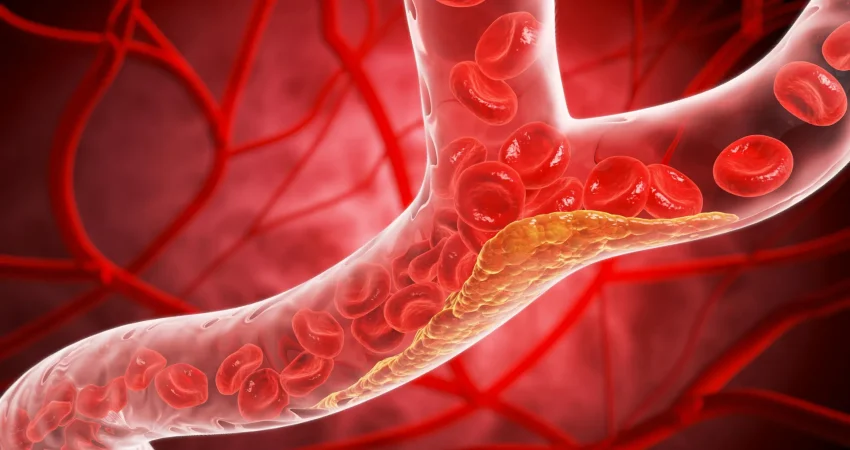
A groundbreaking international study, presented at the prestigious ESC Congress 2026 and simultaneously published in The New England Journal of Medicine, has unveiled a startling reality about cardiovascular health: atherosclerosis, the insidious buildup of plaque in arteries that underpins the vast majority of heart disease, is far more prevalent and begins much earlier in life than previously understood. The findings from the first phase of the REACT (Risk of Atherosclerosis in a Comprehensive Trajectory) study suggest that this hidden disease is already present in a significant proportion of seemingly healthy young adults, necessitating a radical shift in how cardiovascular risk is assessed and managed.
Unveiling a Silent Epidemic: The REACT Study’s Groundbreaking Findings
Led by Professor Henning Bundgaard of Rigshospitalet in Copenhagen, Denmark, and Dr. Borja Ibáñez, Scientific Director of the Centro Nacional de Investigaciones Cardiovasculares Carlos III (CNIC) and a leading cardiologist in Spain, the REACT study has charted a new course in understanding the early stages of atherosclerosis. The initial phase, encompassing over 16,000 asymptomatic participants aged 18 to 70 across Denmark and Spain, revealed that an astonishing 57.1% harbored atherosclerotic plaques in their arteries. This figure dramatically challenges existing paradigms that often rely on estimations of risk rather than direct detection of the disease itself.
The study’s ambitious vision, as articulated by Professor Bundgaard, is to "transform primary cardiovascular prevention through a precision medicine approach based on the early identification of atherosclerosis." This initiative, generously supported by the Novo Nordisk Foundation with up to EUR 23 million for its first phase, aims to move beyond traditional risk factor assessment to a model where direct imaging of arterial health guides intervention strategies.
A Paradigm Shift: From Risk Estimation to Disease Detection
For decades, the medical community has relied on a constellation of risk factors—such as elevated blood pressure, high cholesterol levels, smoking habits, diabetes, and family history—to estimate an individual’s likelihood of developing cardiovascular disease (CVD). While these factors remain crucial, the REACT study highlights their limitations. "The REACT study is based on a simple but revolutionary idea: moving from the current model, which estimates the probability of cardiovascular disease on the basis of traditional risk factors… towards a new paradigm in which the disease is detected directly through imaging before it causes symptoms," explained Dr. Ibáñez.
This new paradigm proposes that preventive interventions and the management of risk factors should be guided by the actual presence of silent atherosclerosis, rather than solely by an indirect assessment of risk. The first step in this ambitious endeavor, as reported by the REACT team, was to establish the true prevalence of silent atherosclerosis across all major vascular territories and throughout the adult lifespan.
Mapping Atherosclerosis Across the Lifespan: Early Onset and Rapid Progression
The REACT-DETECT phase, which commenced in 2024, has provided an unprecedentedly comprehensive picture of where silent atherosclerosis appears, how common it is at different ages, and how its prevalence differs between men and women. Participants underwent advanced imaging techniques to identify plaque in the carotid arteries (neck), femoral arteries (legs), and coronary arteries (heart). Beyond imaging, extensive data was collected on cardiovascular risk factors, blood biomarkers, and retinal images, creating one of the most detailed atherosclerosis databases ever assembled.
The findings regarding early onset are particularly striking. Approximately 1 in 13 participants between the ages of 18 and 29 exhibited signs of atherosclerosis in at least one arterial region. This indicates that the disease process can initiate in early adulthood, long before any noticeable symptoms manifest. As individuals age, the prevalence escalates sharply. Among participants aged 60 to 70, an overwhelming majority—approximately 9 in 10—were found to have atherosclerosis. This steady increase underscores the progressive nature of the disease and the cumulative impact of time and potentially modifiable risk factors.
The Interconnectedness of Arterial Health: A Key to Simplified Screening
A significant observation from the imaging data was the strong correlation between the presence of atherosclerosis in different arterial beds. A substantial majority of participants with plaque in their coronary arteries also displayed evidence of plaque in either the carotid or femoral arteries. This interconnectedness has profound implications for the future of cardiovascular screening.
Imaging the carotid and femoral arteries using ultrasound is considerably less invasive, quicker, and more accessible than performing CT scans of the coronary arteries. Dr. Ibáñez envisions a future where "portable ultrasound devices usable by any healthcare professional will become the standard tool for atherosclerosis screening from the early stages of adult life." This potential for simpler, widespread screening could democratize early detection and intervention.
Gendered Differences in Atherosclerosis Development
The REACT study also illuminated notable disparities in the development of atherosclerosis between men and women. Men in the study cohort began to show an increase in prevalence at younger ages, with their overall pattern of atherosclerosis appearing approximately five to ten years earlier than in women. Women, on the other hand, experienced their sharpest increase in prevalence between the ages of 40 and 60. This period notably overlaps with the menopausal transition, a time of significant hormonal shifts that may influence cardiovascular health.
These distinct patterns emphasize the critical need for tailored cardiovascular prevention strategies that account for both sex and life stage. Understanding these differences can lead to more personalized risk assessments and interventions, potentially improving outcomes for both genders.
Traditional Risk Scores Fall Short: Identifying Undetected Disease
One of the most consequential revelations from the REACT study concerns the efficacy of current cardiovascular risk assessment tools. Conventional methods, including widely used risk scores like SCORE2, identified only a fraction of individuals who were already exhibiting silent atherosclerosis. This stark finding suggests that a person can appear to have a relatively low cardiovascular risk based on traditional metrics, while the disease process is actively underway within their arteries.
Dr. Ibáñez powerfully articulated this point: "For decades, we have estimated cardiovascular risk using factors such as age, blood pressure and cholesterol. This study shows that we can now go one step further and detect the disease directly before it causes a heart attack or stroke." The implication is clear: relying solely on risk factor estimation may lead to a false sense of security for many, delaying crucial interventions.
The Promise of Precision Medicine in Cardiovascular Prevention
The REACT study’s findings lay the groundwork for a future of more precise and personalized cardiovascular prevention. "The future of cardiovascular prevention must be more precise and personalized," stated Dr. Ibáñez. "If we identify atherosclerosis in its earliest stages, we will be able to intervene sooner, tailor treatment more effectively and reduce the burden of cardiovascular disease."
Professor Bundgaard echoed this sentiment, suggesting that the study offers an opportunity to fundamentally rethink how cardiovascular prevention is approached. "Until now, preventive decisions have been based on an estimate of risk, but we did not know whether the disease was already present. REACT shows that atherosclerosis can be detected decades before clinical manifestations appear and provides the most comprehensive atlas of the evolution of the disease across adult life."
The Next Frontier: Proving the Efficacy of Early Detection
The current findings from REACT-DETECT provide the essential scientific foundation for the next critical step: testing whether this proposed preventive approach, guided by early detection, actually improves health outcomes. Professor Bundgaard emphasized that "identifying and treating silent atherosclerosis as early as possible is essential to reducing the global burden of cardiovascular disease."
If future funding is secured, the planned REACT-PROTECT phase (2027-2032) will directly address this question. Researchers intend to launch a large-scale randomized clinical trial to determine whether prevention strategies guided by imaging, including the use of accessible ultrasound technology, can effectively slow or reduce the systemic progression of atherosclerosis. The ultimate goal is to ascertain if this precision medicine approach can prevent heart attacks, strokes, and other cardiovascular events more effectively than current standard practices.
Global Reach and Future Directions: Expanding the REACT Initiative
The REACT initiative is not confined to Europe. The research team is actively working to expand the study’s reach to diverse populations globally to validate these findings. Collaborations have been established with institutions in India, Singapore, Tanzania, and Mexico, aiming to assess the prevalence and patterns of atherosclerosis across different ethnicities and environmental contexts.
This endeavor builds upon earlier seminal work, such as the PESA-CNIC-Santander study, led by Dr. Valentin Fuster, Director General of CNIC. The PESA study demonstrated the presence of atherosclerosis in middle-aged adults and its association with lifestyle patterns. REACT extends this investigation to much younger age groups, aiming to pinpoint the earliest origins of the disease.
Dr. Fuster, a key figure in both PESA and REACT, highlighted the continuum of research: "PESA has shown us that atherosclerotic disease is present in many middle-aged people and is associated with lifestyle patterns. In REACT, we wanted to investigate how it emerges at much younger ages. For years, we have proposed that early intervention in atherosclerosis could not only prevent its progression but might even make it possible to cure the disease. REACT will answer this question."
The REACT study represents a monumental leap forward in our understanding of atherosclerosis. By revealing its widespread presence in young, asymptomatic adults and highlighting the limitations of traditional risk assessment, it compels a reevaluation of cardiovascular prevention strategies. The future of heart health may well lie in a proactive, imaging-guided approach, transforming the fight against the world’s leading cause of death from a reactive battle against symptoms to a precise, personalized strategy of early detection and intervention.

0 Comments