
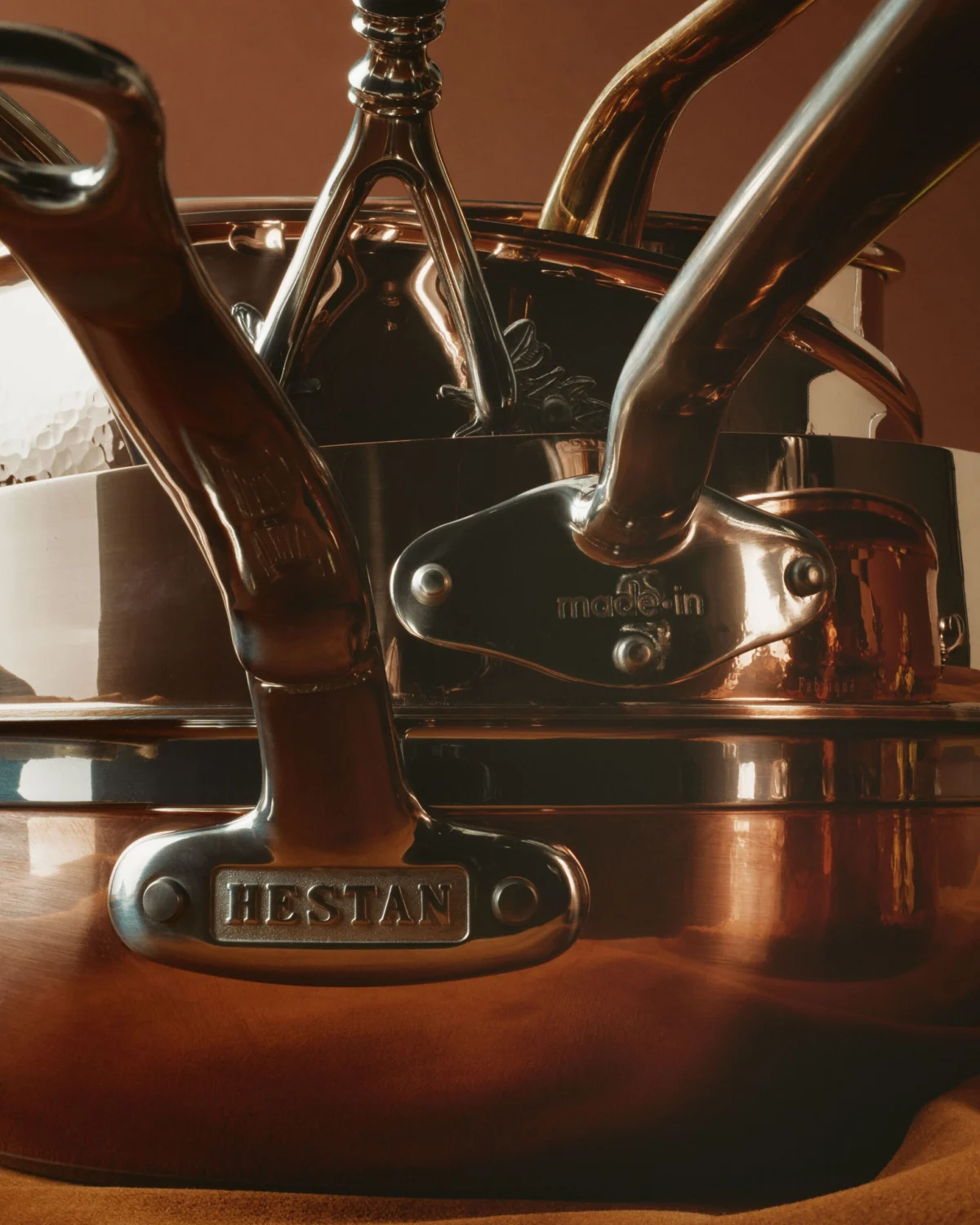
Copper cookware has long been a symbol of culinary prestige, gracing the kitchens of renowned chefs and appearing in iconic cinematic portrayals of gastronomic excellence. From the opulent dining rooms of Babette’s Feast to the bustling culinary world of Ratatouille, the gleaming allure of copper pots and pans has been inextricably linked with haute cuisine and the art of fine cooking. This association is not merely aesthetic; copper’s exceptional thermal conductivity makes it a favored material for professional kitchens due to its ability to heat evenly and respond swiftly to temperature changes, crucial for delicate preparations like sauces and custards. However, the perception of copper’s inherent superiority in performance is not always matched by reality, leading to questions about which copper cookware truly delivers on its promise.
The mystique surrounding copper cookware stems from its historical significance and its unparalleled heat-handling properties. For centuries, copper has been recognized as one of the most efficient conductors of thermal energy among common cookware metals. This characteristic allows for remarkably uniform heat distribution across the cooking surface, minimizing hot spots and preventing scorching. Furthermore, copper’s responsiveness means that adjustments in heat can be made instantaneously, a critical factor for chefs who require precise control over their cooking. This combination of even heating and rapid temperature adjustment is particularly beneficial for techniques that demand meticulous attention to detail, such as the creation of delicate custards, the reduction of complex sauces, or the precise searing of proteins.
Despite its esteemed reputation, the market is saturated with copper cookware that may not live up to these performance claims. The presence of copper in a pan’s construction does not automatically guarantee superior cooking results. Often, copper is used as an outer layer or a core component in a multi-ply construction, with stainless steel or aluminum forming the interior cooking surface and exterior. While these composite designs aim to leverage copper’s thermal advantages while mitigating its reactivity and cost, the effectiveness of this integration varies significantly between manufacturers and product lines. Without rigorous testing, discerning the functional difference between copper used for its aesthetic appeal and copper actively contributing to superior cooking performance can be challenging for consumers.
This article delves into the science behind copper cookware and presents findings from a comparative analysis of various copper-based pans to answer the crucial question: which copper pans are genuinely worth the investment for their performance, not just their appearance?
Understanding the Metallurgy of Cookware
To appreciate the nuances of copper cookware, it’s essential to understand the properties of the metals typically employed in its construction. Michael Tarkanian, MS, a senior lecturer in material science and engineering at MIT, provided expert insight into these materials. Cookware is often constructed from multiple layers of different metals, each chosen to complement the others and achieve a desired balance of properties.
-
Stainless Steel: This is a ubiquitous material in modern cookware, valued for its durability, non-reactivity, and resistance to corrosion. However, stainless steel possesses low thermal conductivity and high heat capacity, meaning it heats slowly and is sluggish to respond to temperature changes. Purely stainless steel pans are rare precisely because of these limitations. Its density also contributes to a heavier final product.

-
Aluminum: Renowned for its excellent thermal conductivity and relatively low density, aluminum heats consistently and reacts quickly to changes in temperature. It is also a cost-effective material. The primary drawback of aluminum is its reactivity with acidic foods, which can lead to metal leaching into the food and altering its flavor. Consequently, aluminum is most frequently used as a core layer in clad cookware, sandwiched between layers of stainless steel to harness its thermal properties without direct contact with food.
-
Copper: Copper stands out for its exceptional thermal conductivity, surpassing that of aluminum. It also boasts a lower heat capacity than aluminum, making it highly responsive to heat adjustments. This responsiveness is a key reason for its prevalence in professional kitchens. However, copper is reactive and can leach into food, posing potential health risks, which is why copper cookware is invariably lined with a non-reactive material. Copper’s density also makes copper cookware significantly heavier than alternatives made from lighter metals. Furthermore, its high cost is a primary factor limiting its widespread adoption.
-
Tin: Traditionally used as a lining for copper cookware, tin offers a balance of desirable properties. It is non-reactive, lightweight, possesses decent thermal conductivity, and has a low heat capacity, contributing to excellent responsiveness. However, tin’s low melting point and softness make it less durable than stainless steel, and it requires more careful handling and maintenance.
The interplay of these materials in a pan’s construction—the thickness of each layer, their order, and the overall manufacturing quality—dictates its performance, durability, and ultimately, its value.
A Comparative Study of Copper Cookware Performance
To empirically evaluate the performance claims of copper cookware, a series of tests were conducted using a selection of commercially available pans. The methodology focused on assessing heat distribution and responsiveness.
Testing Protocol:
A controlled experiment was designed to measure the thermal performance of various copper cookware pieces. The selection included:

- Hestan CopperBond: A modern construction featuring a copper core sandwiched between stainless steel.
- All-Clad Copper Core: Another multi-ply pan with a copper core layer.
- Ruffoni Opus Cupra: A solid copper pan with a stainless steel interior lining.
- Mauviel M’Heritage M’150: A high-end solid copper pan with a stainless steel interior.
- Made In: A copper-clad pan, also featuring a multi-ply construction.
- Ruffoni Historia: A traditional, tin-lined solid copper pan.
As a baseline for comparison, an All-Clad D3 chef’s pan—a tri-ply stainless steel pan with an aluminum core—was included in the testing.
The core of the experiment involved preheating each pan over a burner for two minutes before being removed from the heat source. Surface temperature readings were taken from the center and the edge of the cooking surface using two calibrated surface temperature thermometers. These readings were recorded at the two-minute mark of heating and then at one-minute intervals for an additional four minutes after the heat was removed. This process was repeated to measure how quickly the temperature differential between the center and edge of the pan diminished, indicating evenness of heat distribution.
Furthermore, a practical cooking test was performed by searing chicken thighs in each pan to assess browning quality, evenness of cooking, and any issues with food adhesion.
Experimental Findings: Decoding Copper’s True Performance
The results of the thermal testing and cooking trials provided significant insights into the actual performance of the tested copper cookware.
Heat Distribution: Evenness Under Scrutiny
The primary objective was to determine if copper cookware truly heats more evenly than its stainless steel counterparts. The data revealed a surprising trend:
-
Ruffoni Historia (Tin-Lined): This traditional pan emerged as the standout performer, demonstrating significantly faster and more even heating compared to the All-Clad D3 control pan. Shortly after being removed from the heat, the temperature differential across its cooking surface reduced to near zero, indicating exceptional heat evenness.

-
All-Clad D3 (Aluminum Core): The control pan performed admirably, showing good heat distribution and evening out its temperature approximately two minutes after being removed from heat.
-
Other Copper Pans: The majority of the other copper cookware tested, including those with copper cores or layers sandwiched between stainless steel, failed to achieve the same level of even heating as the Ruffoni Historia or even the All-Clad D3. After four minutes off the heat, these pans still exhibited noticeable temperature variations across their surfaces.
This finding strongly suggests that stainless steel cladding, while offering durability and ease of maintenance, can significantly dampen the inherent thermal conductivity advantages of copper. The insulating properties of stainless steel appear to counteract the rapid and uniform heat dispersal that is copper’s hallmark.
Heat Responsiveness: The Speed of Heating and Cooling
The speed at which a pan heats up and cools down is a critical indicator of its responsiveness. This was assessed by monitoring temperature changes under direct heat and after removal.
-
Ruffoni Historia (Tin-Lined): This pan once again demonstrated superior performance. Its high thermal conductivity and low heat capacity allowed it to heat up and cool down faster than all other tested cookware. This responsiveness is crucial for precise cooking techniques.
-
Mauviel M’Heritage M’150: Among the pans with stainless steel interiors, the Mauviel M’Heritage showed a level of responsiveness notably greater than the All-Clad D3.

-
All-Clad D3 (Aluminum Core): The aluminum-cored stainless steel pan performed consistently, offering a good balance of heating speed and responsiveness.
-
Hestan CopperBond and Made In: These pans, featuring copper in their construction, performed less impressively in terms of responsiveness compared to the All-Clad D3. The Made In pan, despite having the thickest copper layer tested (1.8mm), exhibited sluggish performance, indicating that simply increasing copper thickness in a clad construction does not automatically translate to better responsiveness.
Key Takeaways: Navigating the Copper Cookware Landscape
The experimental results offer crucial insights for consumers considering the purchase of copper cookware.
1. The Copper Core Versus Aluminum Core Debate
A significant finding is that a stainless steel pan with a copper core does not necessarily offer a superior cooking experience compared to a pan with an aluminum core. The All-Clad Copper Core, while heating marginally faster than the All-Clad D3, exhibited greater temperature variability across its cooking surface. This suggests a potentially more volatile cooking environment, prone to scorching, compared to its more affordable aluminum-cored counterpart.
The density of materials also plays a role. Aluminum, while not as conductive as copper, is significantly less dense, leading to lighter and more manageable cookware. The weight difference between comparable pans highlights this advantage. For instance, a 3-quart D3 sauté pan weighs approximately 14% less than its Copper Core equivalent. Online discussions often emphasize the importance of thick copper layers (2.5mm or more) for optimal performance. However, the testing indicated that even a substantial copper layer, as seen in the Made In pan, did not guarantee superior responsiveness when integrated into a clad construction. This suggests that ease of use and maneuverability should not be overlooked when evaluating cookware, and lighter options can be just as effective.
2. The Undeniable Performance of Tin-Lined Pans
For those seeking the quintessential copper cookware experience—quick, responsive, and even heating—traditional tin-lined pans are the clear winners. Tin, as a non-reactive lining, offers superior thermal efficiency compared to stainless steel. It is lighter, heats more rapidly, and responds more readily to temperature adjustments.

Historically, tin was the standard lining for copper cookware. However, modern manufacturers have largely transitioned to stainless steel due to its greater durability. Tin has a relatively low melting point (around 450-475°F), meaning it can be damaged by overheating. Given copper’s exceptional thermal efficiency, high heat is rarely necessary, but users must be mindful of this limitation, especially if kitchen equipment is shared with less experienced cooks. Tin linings can also wear down over time and may require periodic re-tinning. While defenders argue that with proper care, tin-lined pans can last for many years, their lifespan and durability are generally less than that of stainless steel, which can endure for a lifetime.
Recommendations for Purchasing Copper Cookware
The decision of which copper cookware to buy ultimately hinges on the consumer’s primary motivation.
-
For Aesthetic Appeal: If the primary draw of copper cookware is its visual appeal, then selecting a set based on personal preference for design and finish is a reasonable choice. The worst-case scenario is acquiring a pan that performs comparably to a good stainless steel-clad pan but is aesthetically superior.
-
For Performance: For those who prioritize cooking performance and are drawn to copper for its renowned thermal properties, the recommendation leans towards traditional tin-lined pans. These offer the most authentic and effective demonstration of copper’s capabilities.
-
Cookware to Approach with Caution: The testing suggests that predominantly stainless steel cookware featuring a copper layer or core may not offer a significant performance advantage over simpler aluminum-cored designs. As the saying goes, "Sometimes, things that are expensive…are worse." Investing heavily in a copper-clad pan solely for its copper content, without understanding the construction and its implications for heat transfer, might lead to disappointment.
Expert Insights and Broader Implications
Michael J. Tarkanian, MS, a senior lecturer in material science and engineering at MIT, emphasizes that the effectiveness of any cookware material is determined by its inherent properties in conjunction with its application within the pan’s structure. "It’s a complex interplay," Tarkanian stated. "The thermal conductivity, heat capacity, reactivity, and density of each metal contribute to the overall performance. For copper to truly excel, its integration into the pan’s design must be optimized to leverage its strengths while mitigating its weaknesses."

The findings from this study have broader implications for the cookware industry and consumer purchasing decisions. It underscores the importance of transparency in manufacturing and the need for consumers to look beyond superficial branding and marketing claims. The experiment demonstrates that while copper possesses exceptional thermal properties, its efficacy in a piece of cookware is heavily dependent on its construction and the materials it is paired with. For the discerning home cook seeking superior performance, a deep understanding of cookware metallurgy and a willingness to consider traditional designs, such as tin-lined copper, may lead to a more rewarding culinary experience.
Featured Product: The Ruffoni Historia Hammered Copper 7-Piece Cookware Set
Among the tested cookware, the Ruffoni Historia Hammered Copper 7-Piece Cookware Set with Acorn Knobs stands out as a prime example of traditional tin-lined copper cookware. Available at Williams Sonoma, this set exemplifies the artisanal craftsmanship associated with high-end copper cookware. Its hammered finish not only adds to its visual appeal but is characteristic of traditional manufacturing techniques. The set includes essential pieces for a well-equipped kitchen, and its performance in the tests confirmed its ability to deliver the responsive and even heating that copper is celebrated for. While a significant investment, its demonstrated performance suggests it offers tangible benefits for cooks who value precision and control in their culinary endeavors.
This article was researched and written by Wilder Davies, a cookware tester with extensive experience in evaluating kitchen tools for major publications. His expertise is complemented by the technical insights of Michael J. Tarkanian, MS, a materials science and engineering expert from MIT.

0 Comments