
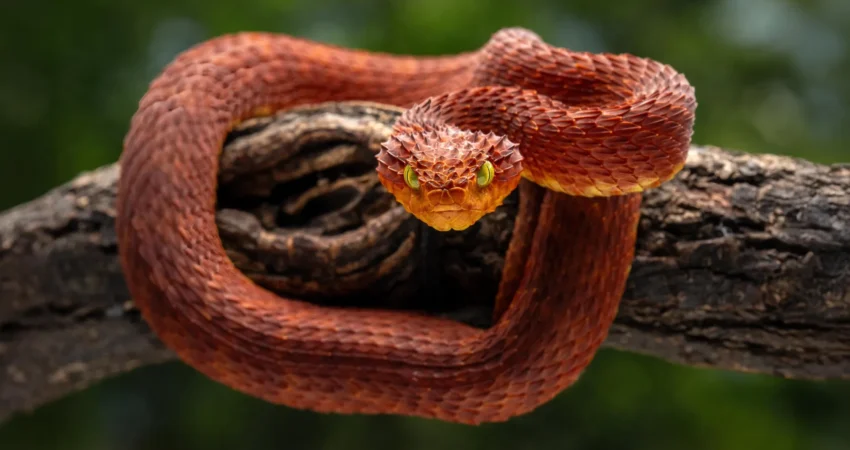
University of Maryland researchers have unveiled a groundbreaking approach to treating venomous snakebites, drawing inspiration from the sophisticated defense mechanisms evolved by snakes themselves. By harnessing toxin-blocking proteins found in the blood of western diamondback rattlesnakes, scientists have achieved unprecedented protection against the venoms of several dangerous snake species. This pioneering research, published in the esteemed journal Proceedings of the National Academy of Sciences, offers a beacon of hope in the global fight against snakebite envenomation, a persistent and often neglected public health crisis.
Distinguished University Professor of Biology Sean B. Carroll, who also holds the Andrew and Mary Balo and Nicholas and Susan Simon Endowed Chair at UMD, spearheaded this transformative study. "This is one of those great stories when nature has already solved a problem we’ve been grappling with for decades," Professor Carroll stated, highlighting the profound elegance of finding a solution in the very organisms that pose the threat. This discovery has the potential to revolutionize antivenom development, offering a safer, more effective, and potentially more accessible alternative to current treatments.
The Devastating Global Impact of Snakebites
Snakebite envenomation is recognized by the World Health Organization (WHO) as one of the world’s most serious neglected tropical diseases. The statistics are stark and alarming: an estimated 80,000 to 140,000 people die annually from venomous snakebites, with hundreds of thousands more suffering permanent disabilities such as amputation, blindness, and chronic pain. The vast majority of these tragic incidents occur in rural areas of Africa, Asia, and Latin America, where access to timely and effective medical care, including antivenom, is severely limited. The economic burden is also substantial, with lost productivity and long-term disability impacting individuals, families, and communities.
The current gold standard for snakebite treatment, antivenom, has been a life-saving intervention for over a century. However, its production and efficacy are fraught with challenges. Traditional antivenoms are produced by injecting horses, sheep, or other large animals with small, gradually increasing doses of venom from specific snake species. The animals’ immune systems then generate antibodies, which are harvested from their blood, purified, and processed into antivenom. This process is not only costly and time-consuming but also has significant limitations:
- Variability in Quality and Potency: The effectiveness of antivenom can vary widely depending on the manufacturing process, the health of the donor animals, and the specific venom used.
- Limited Spectrum of Activity: Antivenoms are typically species-specific or regional, meaning an antivenom developed for a rattlesnake bite in the United States may not be effective against a viper bite in Africa. This necessitates a vast array of antivenoms, which is logistically challenging and expensive to maintain.
- Adverse Reactions: Antivenoms, being derived from animal proteins, can trigger severe allergic and immunological reactions in humans, ranging from mild rashes to life-threatening anaphylaxis. This necessitates careful administration and monitoring, often unavailable in remote settings.
- Cost and Accessibility: The high cost of production and distribution often makes these life-saving treatments inaccessible to the very populations that need them most.
These inherent drawbacks have spurred intensive research into developing novel antivenom strategies that are more potent, broader in their activity, safer, and more economically viable.
Unlocking Nature’s Blueprint: The Rattlesnake’s Own Defense
For decades, scientists have observed that vipers, including rattlesnakes, appear remarkably resistant to their own venom. This anecdotal evidence suggested the presence of natural protective agents within the snakes’ physiology. However, the precise molecular mechanisms underlying this resistance remained elusive until recently.
In a significant breakthrough in 2022, Professor Carroll’s laboratory identified a key player in this natural defense system: a protein family named FETUA-3. Their initial research demonstrated that FETUA-3 possesses the remarkable ability to neutralize a significant portion of the toxins found in western diamondback rattlesnake venom, specifically metalloproteinases. Crucially, this protein also exhibited inhibitory effects on toxins from the venoms of several other rattlesnake species, hinting at a broader protective role.
"Here was evolution’s way for snakes to protect themselves from accidental self-envenomation," Professor Carroll explained. The question then arose: if nature has already developed such an effective antidote, why rely solely on antibodies harvested from other animals? This fundamental query propelled the research towards investigating the synergistic potential of these naturally occurring snake proteins.
The Power of Combination: Synergistic Protein Action
The latest study, co-authored by Elda Sánchez, director of the National Natural Toxins Research Center at Texas A&M University-Kingsville, delves deeper into the specific contributions of individual FETUA proteins. The research team meticulously examined how each protein in the FETUA family interacts with venom components. They discovered that while individual proteins could counteract certain venom effects – for instance, one might reduce the hemorrhagic activity of a venom, while another could interfere with enzymatic degradation – none of them, when used alone, could confer complete protection against a lethal dose of venom.
The pivotal finding emerged when researchers began combining different FETUA proteins. The results were nothing short of spectacular. These carefully curated mixtures demonstrated a dramatically enhanced ability to neutralize venom’s harmful effects compared to any single protein. This synergistic effect is critical, as snake venom is an incredibly complex cocktail, often containing upwards of 100 different protein toxins belonging to numerous families. The composition of venom also varies significantly not only between different snake species but even within populations of the same species, driven by millions of years of evolutionary adaptation.
"The ingredients are there," Professor Carroll emphasized, "We just have to keep testing various mixtures." This iterative process of identifying, isolating, and combining these naturally occurring inhibitors is the core of the new therapeutic strategy.
Quantifiable Efficacy: Outperforming Current Standards
In rigorous laboratory experiments, optimized combinations of these FETUA proteins proved to be approximately ten times more potent than a current sheep-derived rattlesnake antivenom. These protein mixtures not only completely neutralized the lethal effects of rattlesnake venom in animal models but also provided broad-spectrum protection against the venoms of multiple viper species. This broad efficacy is particularly significant, as it extends to species that have diverged over 50 million years of evolutionary history.
The remarkable conservation of these inhibitory protein components over such vast evolutionary timescales underscores their fundamental importance in the snake’s survival. Professor Carroll theorizes that this intrinsic resistance is a vital evolutionary adaptation, protecting snakes from accidental self-envenomation during feeding, territorial disputes, or even cannibalism. The exact mechanisms and frequency of such accidental envenomations in snakes are still areas of active investigation.
A New Generation of Antivenoms on the Horizon
The current research has primarily focused on metalloproteinases, a significant class of venom toxins responsible for tissue damage and bleeding. However, the UMD team is actively applying the same fundamental strategy to target other major toxin families present in viper venoms, such as serine proteases and phospholipases.
"We’re getting remarkably close to having effective solutions for the three major toxin families in vipers," Professor Carroll announced with optimism. He expressed strong confidence that the knowledge gained from this research, coupled with ongoing investigations, is paving the way for the development of "nature-based recombinant [lab-produced] antivenoms" that are within reach.
The potential applications of this "nature’s antivenom" are far-reaching. Professor Carroll anticipates that the initial commercial applications may emerge in veterinary medicine, offering improved treatments for pets and livestock that have been bitten by venomous snakes. Human antivenom applications are expected to follow, potentially offering a paradigm shift in snakebite management.
The envisioned future antivenoms promise several advantages over current treatments:
- Broader Spectrum of Activity: By targeting multiple toxin families, these new antivenoms could offer protection against a wider range of venoms, reducing the need for highly specific and numerous treatments.
- Enhanced Safety Profile: Being derived from carefully engineered proteins rather than animal antibodies, these recombinant antivenoms are likely to elicit fewer and less severe adverse immune reactions.
- Cost-Effectiveness and Scalability: Recombinant production in laboratory settings offers the potential for significantly lower manufacturing costs and the ability to scale up production rapidly to meet global demand. This could dramatically improve accessibility, especially in resource-limited settings.
- Improved Stability and Shelf-Life: Lab-produced proteins can be engineered for greater stability, potentially leading to longer shelf-lives and easier storage and transportation.
"We could make train cars-worth of this stuff and help solve a massive global health problem," Professor Carroll asserted, painting a picture of a future where the debilitating consequences of snakebites are significantly reduced. He concluded with a sentiment echoing the profound power of natural discovery: "Many of our most important medicines have come from nature. I’m delighted that the components for a better-than-commercial antivenom were in these snakes all along."
The research team at the University of Maryland included Department of Biology visiting faculty specialists Fiona Ukken and Yetunde Ayinuola, who contributed significantly to the study. This vital research was made possible through funding from the Howard Hughes Medical Institute and the Viper Resource Center (Grant #P40OD01960-22). While this article reflects the findings and perspectives presented by the researchers, it is important to note that it does not necessarily represent the official views of the funding organizations. This discovery marks a significant leap forward in our understanding of venomous snakebites and heralds a promising new era in the development of effective and accessible treatments for this persistent global health challenge.

0 Comments