
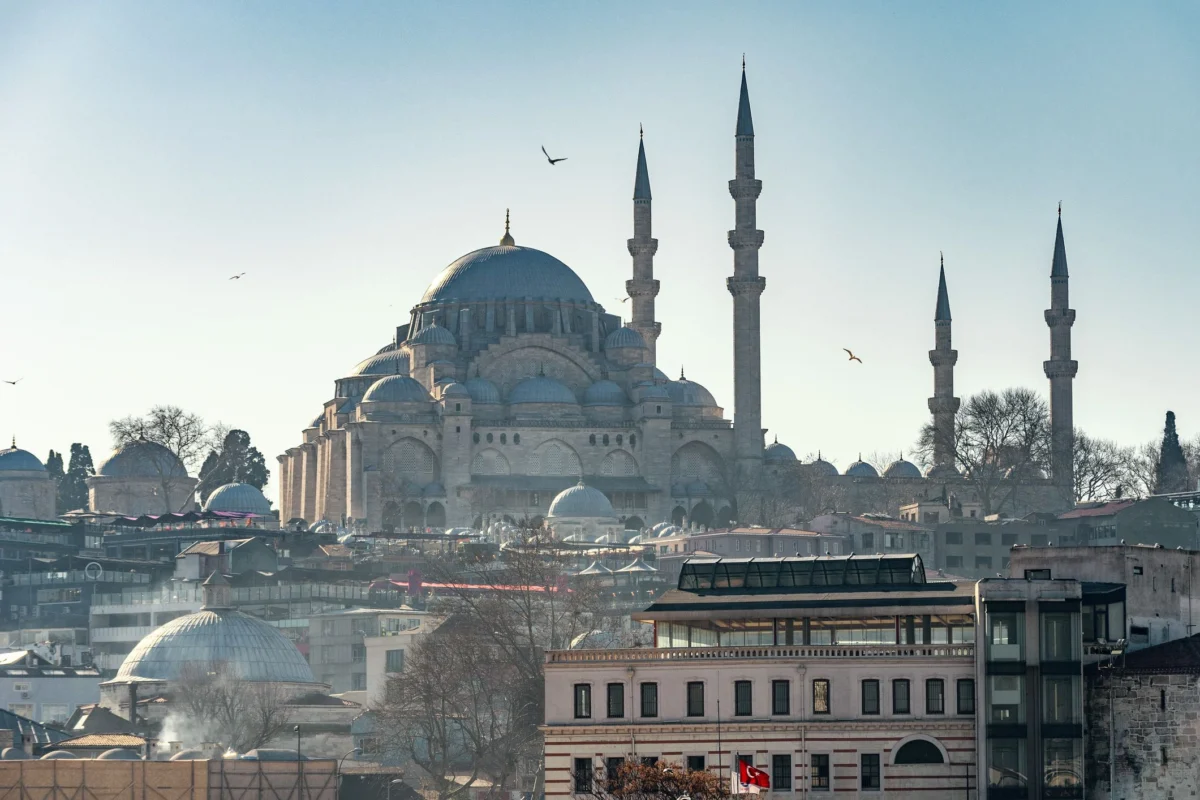
The United States Department of State has officially elevated its travel advisory for southeast Türkiye to Level 4, the highest possible warning level, explicitly instructing American citizens "do not travel" to the region. This significant escalation in security protocol comes in response to the heightening tensions between the United States and Iran, which have increasingly spilled over into Turkish territory. While the southeastern provinces face severe warnings due to the risk of terrorism and direct involvement in armed conflict, the remainder of the country, including major tourism hubs such as Istanbul, Ankara, and the Aegean coast, remains under a Level 2 "exercise increased caution" status.
According to the updated advisory released by the Bureau of Consular Affairs, the shift in security posture was necessitated by a series of hostile exchanges that began in late February. The State Department noted that since the onset of hostilities between the United States and Iran on February 28, there has been a persistent and credible threat of Iranian missile attacks targeting locations within southeast Türkiye. The advisory specifically urges any Americans currently residing in or visiting the affected provinces to depart immediately while commercial options remain available.
Geographical Scope of the Level 4 Advisory
The "Do Not Travel" zone encompasses a vast area of southeast Türkiye, much of which shares borders with Iran, Iraq, and Syria. The specific provinces listed under the Level 4 mandate include Adana, Adiyaman, Batman, Bingol, Bitlis, Diyarbakir, Elazig, Gaziantep, Hakkari, Hatay, Icel, Kilis, Kahramanmaras, Malatya, Mardin, Mus, Osmaniye, Siirt, Sanliurfa, Sirnak, Tunceli, and Van.
This region is geographically and strategically distinct from the western and northern parts of the country. While the southeast is characterized by its rugged terrain and proximity to geopolitical flashpoints, the western regions serve as the primary engines for Türkiye’s multi-billion-dollar tourism industry. The State Department’s decision to maintain a Level 2 advisory for the rest of the country suggests a targeted approach, acknowledging that while the regional conflict is severe, it has not yet compromised the safety of the broader Turkish state. For context, a Level 2 advisory is currently applied to other major global destinations, including France and Egypt, indicating a standard level of caution regarding general security concerns rather than an imminent threat of war.
Chronology of the Conflict and Recent Missile Interceptions
The current crisis traces its roots to a sharp escalation in US-Iran hostilities on February 28. Since that date, the Turkish military has been on high alert, frequently activating its air defense systems to protect its sovereign airspace and the personnel stationed within its borders.
- February 28: Hostilities between the United States and Iran escalate, leading to the first recorded threats against regional infrastructure. The US State Department begins monitoring the situation for potential impacts on NATO allies.
- March 4: The Turkish Ministry of National Defense confirms that NATO-integrated air defense systems successfully intercepted and destroyed a missile fired from Iranian territory. The missile was reportedly heading over the Mediterranean, potentially targeting maritime assets or coastal infrastructure.
- March 9: In response to the deteriorating security environment, the US Consulate in Adana officially suspends all public services. Staffing is reduced to essential personnel only, and American citizens are redirected to the embassy in Ankara for emergency assistance.
- March 13: The Turkish government reports the third successful interception of an Iranian missile since the conflict began. The Ministry of National Defense issues a statement via social media confirming the interception and stating that no injuries or fatalities were recorded on Turkish soil.
The Turkish Defense Ministry has emphasized that its air defense network, which includes both domestic systems and NATO-provided assets, remains fully operational. However, the frequency of these incidents has raised concerns about the potential for "kinetic" spillover—accidental or intentional strikes that could result in civilian casualties or infrastructure damage.
Strategic Significance of Adana and Incirlik Air Base
The inclusion of Adana in the Level 4 advisory is particularly significant due to the presence of the Incirlik Air Base. Located just outside the city center, Incirlik is a joint US-Turkish military installation that serves as a critical hub for NATO operations in the Middle East. The base houses a significant contingent of US Air Force personnel and is widely understood to be a strategic asset for regional power projection.
Because of its military importance, Adana is viewed by security analysts as a high-priority target for retaliatory strikes. The suspension of consular services in the city reflects the US government’s assessment that the risk to diplomatic personnel and private citizens in the vicinity of the base has reached an unacceptable level. Analysts suggest that Iran’s targeting of the southeast is a calculated move to pressure NATO members and disrupt US logistics without triggering a full-scale conventional war with Türkiye itself.
Regional Context: Dubai and Cyprus Under Fire
The conflict’s impact is not limited to the Turkish border. Recent weeks have seen drone and missile activity affecting other traditionally safe havens in the Eastern Mediterranean and the Persian Gulf. In Dubai and Cyprus, reports have emerged of falling debris from intercepted drones causing localized fires and damage to luxury hotels and airport peripheries.
These incidents have sent shockwaves through the international travel community. Cyprus, a member of the European Union, and Dubai, a global financial and tourism hub, have rarely faced direct military threats of this nature. The fact that Türkiye—a founding member of the NATO alliance—is now intercepting missiles on its own soil marks a significant turning point in the conflict. It represents the first time a NATO member’s domestic airspace has been directly violated by Iranian munitions during this specific cycle of hostilities, raising complex questions about collective defense under Article 5 of the NATO treaty.
Impact on the Turkish Tourism Sector and Travel Logistics
Despite the dire warnings for the southeast, travel specialists emphasize that the vast majority of Türkiye remains open for business. The Turkish tourism industry, which contributed approximately $54 billion to the national economy in 2023, relies heavily on the safety and accessibility of cities like Istanbul and resorts in Antalya and Bodrum.
Chris Bazos, a travel specialist and president of the agency Travelous, noted that the atmosphere in the country’s tourist centers remains stable. "The consensus on the ground in Türkiye is the same as both Egypt and Jordan," Bazos stated. "In the major cities and coastal resorts, all is well, and it’s business as usual."
However, the "Level 4" designation for the southeast creates significant logistical and financial hurdles for travelers. Most standard travel insurance policies contain exclusions for regions under a government-issued "Do Not Travel" advisory. This means that travelers who had planned to visit historic sites in Mardin or Gaziantep may find themselves unable to recover costs if they choose to cancel.
Furthermore, the State Department has clarified that because the Level 4 advisory is region-specific rather than country-wide, airlines are not currently mandated to offer full refunds for flights to Istanbul or other Level 2 areas. Travelers are advised to contact their insurance providers and airlines directly to discuss "cancel for any reason" (CFAR) upgrades or potential rebooking options.
Consular Operations and Emergency Assistance
The suspension of services at the US Consulate in Adana has created a vacuum for American citizens in the southeast. For those remaining in the region, the US Embassy in Ankara and the Consulate General in Istanbul have taken over all emergency consular functions.
The State Department has issued the following directives for Americans in Türkiye:
- Avoid the Southeast: Do not travel to any of the 22 listed provinces.
- Enroll in STEP: All travelers are encouraged to sign up for the Smart Traveler Enrollment Program (STEP) to receive real-time security updates and make it easier for the embassy to locate them in an emergency.
- Maintain Communication: Ensure that family and friends are aware of your location and travel plans.
- Monitor Local Media: Stay informed via Turkish news outlets and official government announcements regarding airspace closures or regional curfews.
Broader Geopolitical Implications and NATO Stability
The targeting of southeast Türkiye poses a delicate challenge for the NATO alliance. While Türkiye has successfully intercepted the incoming threats, the persistent nature of the attacks tests the limits of regional containment. If an Iranian missile were to cause significant civilian casualties or damage a major Turkish city, the pressure on Ankara to invoke NATO’s collective defense mechanisms would increase substantially.
For now, the Turkish government has maintained a measured response, focusing on defense rather than escalation. By highlighting the success of its interceptions, the Turkish Defense Ministry aims to project strength and reassure the public that the "business as usual" environment in the west is secure.
However, the economic implications cannot be ignored. The longer the Level 4 advisory remains in place for the southeast, the more likely it is that the region’s burgeoning cultural tourism industry will suffer long-term damage. Provinces like Sanliurfa and Diyarbakir, which had seen a surge in international interest due to archaeological discoveries like Göbeklitepe, now face a period of prolonged isolation.
As the situation continues to develop, the international community remains focused on whether the conflict can be contained to the border regions or if the "Level 4" zone will expand. For the millions of travelers who visit Türkiye annually, the message from both the US State Department and travel experts is one of cautious bifurcation: the southeast is currently a conflict zone to be avoided at all costs, while the cultural and coastal heartlands of the country continue to operate under a standard of vigilance common to much of the modern world.

0 Comments