
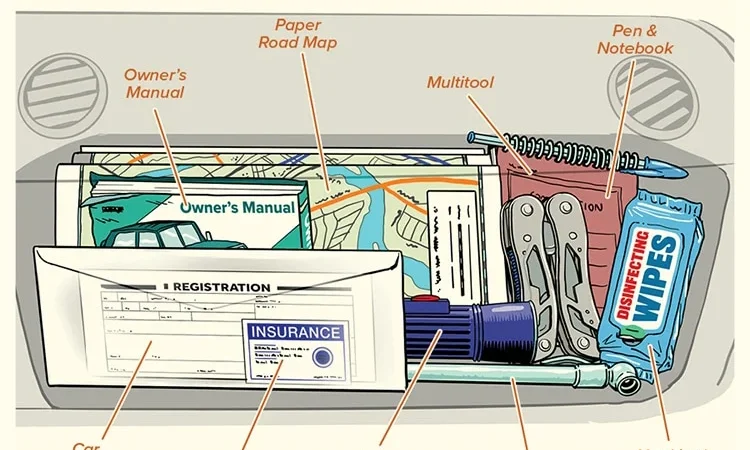
The glove compartment, often colloquially referred to as the "junk drawer" of the modern automobile, serves as a critical repository for essential documentation and emergency tools that can determine the outcome of a roadside incident. While the compartment’s name originates from an era when drivers required heavy leather gloves to operate unheated steering wheels, its contemporary function has evolved into a high-priority storage zone for legal compliance and safety preparedness. Experts in automotive safety and law enforcement emphasize that a disorganized glove box is more than a minor inconvenience; it can lead to increased stress during police interactions, delays in receiving emergency medical care, and the inability to perform basic roadside repairs.
The Historical Evolution of Automotive Storage
The transition of the glove box from a functional necessity to a storage catch-all began in the early 20th century. In the pioneering days of motoring, vehicles lacked enclosed cabins and heating systems. Drivers and passengers were exposed to the elements, making heavy gloves an essential piece of equipment for every journey. Dorothy Levitt, a racing pioneer and author of "The Woman and the Car" (1909), was among the first to suggest a dedicated "secret drawer" in the dashboard for essentials.
By the mid-1930s, as vehicle designs became more streamlined and enclosed, the glove compartment became a standard feature in American manufacturing. Packard is frequently credited with being one of the first manufacturers to integrate a locking door onto the dashboard storage area. As the decades progressed, the necessity of driving gloves waned due to the advent of climate control and power steering, yet the name remained. Today, the glove box is a specialized space designed to withstand the vibrations of travel while keeping critical items within the driver’s reach.
Legal Compliance and Documentation Requirements
The most vital function of the glove box is the secure storage of legal documents. In the United States, failure to produce valid vehicle documentation during a traffic stop can result in citations, fines, or vehicle impoundment. Law enforcement officials recommend a "three-point check" for every driver’s glove box:
- Vehicle Registration: This document serves as proof that the vehicle is properly registered with the state. Keeping it in a clear, protective sleeve prevents degradation from heat or moisture.
- Proof of Insurance: While many states now accept digital versions of insurance cards on mobile devices, the National Association of Insurance Commissioners (NAIC) continues to recommend keeping a physical copy. Mobile devices may suffer from dead batteries, broken screens, or lack of cellular reception in rural areas, making the physical card a necessary backup.
- Vehicle Owner’s Manual: Often the bulkiest item in the compartment, the manual contains essential data regarding fuse box locations, tire pressure specifications, and the meaning of various dashboard warning lights.
According to data from the National Highway Traffic Safety Administration (NHTSA), organized documentation can significantly reduce the duration of a traffic stop. When a driver can quickly produce the required paperwork, it signals to the officer that the driver is responsible and prepared, often de-escalating the tension inherent in roadside encounters.
Essential Safety and Utility Inventory
Beyond the legal requirements, a well-equipped glove box should contain a curated selection of tools designed for utility and minor emergencies. Safety advocates recommend the following inventory:
High-Efficiency Lighting: A small, high-lumen LED flashlight is indispensable. Unlike the flashlights on smartphones, dedicated LED torches offer superior battery life and can be mounted or held in the mouth during hands-free operations, such as changing a tire or checking engine fluids at night. Experts recommend using lithium batteries, as they perform better in the extreme temperature fluctuations common inside a vehicle.
Tire Pressure Gauge: Statistics from the Rubber Manufacturers Association indicate that nearly 25% of cars on the road have at least one significantly underinflated tire. Maintaining proper tire pressure is critical for fuel efficiency, tire longevity, and braking performance. A manual or digital gauge allows for immediate checks without relying on potentially faulty gas station equipment.
Multi-Tool or Swiss Army Knife: A compact multi-tool provides a range of capabilities, from cutting through a jammed seatbelt to tightening a loose battery terminal. This tool bridges the gap between having no equipment and having a full mechanical toolkit in the trunk.
Emergency Contact and Medical Information: In the event of an accident where the driver is incapacitated, first responders look for "ICE" (In Case of Emergency) information. A simple card listing emergency contacts, blood type, allergies, and current medications can save vital minutes during the "Golden Hour" of trauma care.
Data Analysis: The Impact of Roadside Preparedness
The necessity of a well-stocked glove box is underscored by roadside assistance data. AAA (American Automobile Association) reports that they respond to over 30 million calls annually. The most common reasons for these calls include flat tires, dead batteries, and lockouts.
An analysis of these calls suggests that approximately 15% of minor issues could be resolved by the driver if they had access to basic tools and information stored in the glove box. For instance, knowing the exact location of the jacking points—information found in the owner’s manual—can prevent a driver from damaging the vehicle’s frame while attempting a tire change. Furthermore, the presence of a pen and paper allows for the immediate recording of witness statements and insurance information following a collision, which is critical for insurance claims and legal protection.
Official Perspectives: Law Enforcement and First Responders
Interviews with law enforcement officers reveal a consistent theme regarding glove box organization. "When we pull a vehicle over, our primary concern is safety," says Sergeant Marcus Thorne, a veteran of highway patrol. "When a driver starts digging through a pile of napkins, old receipts, and condiment packets to find their registration, it creates a situation where we can’t see their hands clearly. An organized glove box isn’t just about convenience; it’s a safety protocol for both the officer and the citizen."
Emergency Medical Technicians (EMTs) echo this sentiment regarding medical information. "We are trained to look in the glove box or the visor for medical alerts if the patient is unresponsive," notes Sarah Jenkins, a senior paramedic. "Having a clear, labeled envelope with medical history and emergency contacts is one of the most helpful things a driver can do for us."
Maintenance Chronology: The Semi-Annual Audit
To maintain the efficacy of the glove box, automotive experts suggest a semi-annual audit. This chronology of maintenance ensures that the compartment remains a tool for preparedness rather than a storage bin for waste.
- January: Check the expiration date on the proof of insurance and registration. Replace flashlight batteries to ensure they haven’t leaked during the winter cold.
- July: Verify that medical information is up to date. Remove any items that may have been affected by summer heat (such as certain medications or adhesive bandages in a small first aid kit).
- Ongoing: Immediately discard any non-essential items, such as fast-food receipts or expired coupons, that have migrated into the space.
Broader Implications for Road Safety
The contents of a man’s glove box reflect a broader philosophy of personal responsibility and civic preparedness. In an era where digital solutions are often prioritized, the reliance on physical backups in the automotive context remains a cornerstone of safety. The "glove box" serves as a microcosm of a driver’s readiness to face the unpredictability of the road.
Furthermore, as vehicle technology moves toward autonomous systems and integrated digital dashboards, the physical glove box remains one of the few areas where the driver retains total control over their environment. It acts as a manual failsafe against the failure of electronic systems.
In conclusion, the glove box should be treated as a strategic asset. By moving beyond its reputation as a "junk drawer" and curating its contents to include legal documentation, utility tools, and emergency information, drivers can significantly improve their safety profile. The transition from a cluttered compartment to an organized emergency hub is a simple yet profound step in automotive ownership, ensuring that when the unexpected occurs, the solution is always within arm’s reach.

0 Comments