
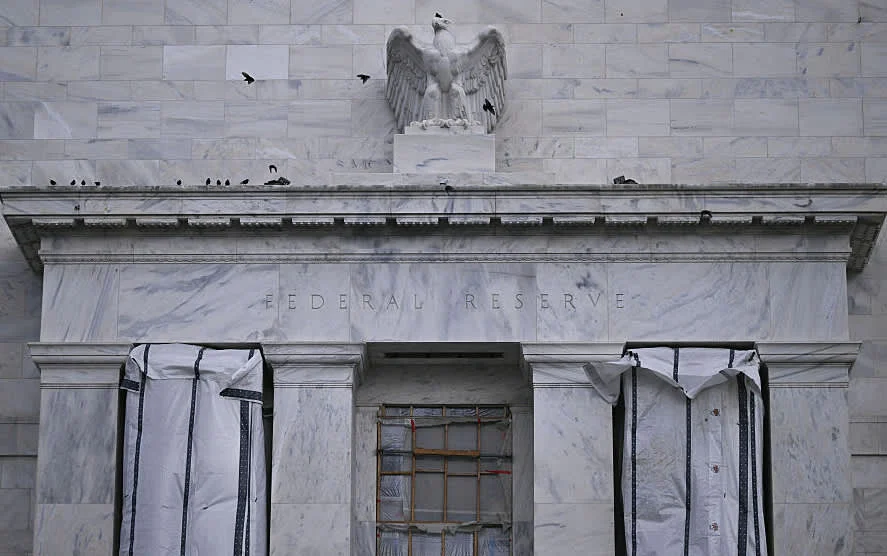
A hotter-than-expected wholesale inflation reading for February has dramatically reshaped market expectations, leading traders to contemplate the unsettling possibility that the Federal Reserve might not implement any interest rate reductions throughout the entirety of 2026. This stark shift in sentiment follows a pivotal report from the Bureau of Labor Statistics indicating that the Producer Price Index (PPI) registered its most significant gain in a year, sending ripples of uncertainty across financial markets just hours before the Federal Open Market Committee (FOMC) was slated to release its latest interest rate decision and economic projections. The sudden recalibration of outlook underscores the persistent inflationary pressures confronting the U.S. economy, challenges exacerbated by geopolitical events, ongoing supply chain adjustments, and resilient domestic demand for services. Construction work continues at the Marriner S. Eccles Federal Reserve building in Washington, D.C., a constant backdrop to the evolving economic landscape and the critical policy deliberations unfolding within its walls.
The February PPI Shockwave and Its Market Repercussions
The core of the market’s unease stems from the February 2026 Producer Price Index report, which serves as a crucial leading indicator for consumer inflation, tracking the average changes in selling prices received by domestic producers for their output. The reported surge, which marked the largest monthly increase in a year, signaled that inflationary pressures are not only enduring but may be intensifying at the wholesale level. This unexpected acceleration in producer prices suggests that businesses are facing higher input costs, a phenomenon that often translates into higher prices for consumers down the line, thereby undermining the Federal Reserve’s efforts to steer inflation back to its target 2% rate.
In the immediate aftermath of the PPI data release, futures markets rapidly adjusted, effectively pushing any realistic probability of an interest rate cut off the table until at least December. Prior to this report, market participants had largely priced in the likelihood of multiple rate reductions beginning as early as June or September. However, the unexpected inflation surge compelled a drastic reassessment. According to the CME’s FedWatch Tool, which calculates probabilities based on 30-day fed funds futures contracts, the odds for a June cut plummeted to a mere 18.4%, down significantly from previous weeks when they often exceeded 50%. Similarly, expectations for a July cut fell to 31.5%, and September’s prospects dwindled to 43.6%. Even the likelihood of a rate reduction at the final Fed meeting of the year in December saw its probabilities slide to approximately 60%, a level indicative of a cut but reflecting a notably low degree of conviction among traders. This uncertainty points to a challenging environment where even a perceived majority outcome is met with considerable doubt. The futures market is now implying a fed funds rate of 3.43% by the end of 2026, a modest decrease from the current level of 3.64%, suggesting that if any cuts occur, they will likely be minimal.
The Federal Reserve’s Enduring Dilemma: Inflation vs. Employment
The Federal Reserve operates under a dual mandate from Congress: to achieve maximum employment and maintain stable prices. The recent PPI data significantly complicates the latter, placing immense pressure on the central bank to justify its current restrictive monetary policy stance. For months, the Fed has been navigating a delicate balance, aiming to cool inflation without tipping the economy into a recession and causing undue job losses. The "higher for longer" narrative, initially a cautious forecast, has now gained considerable traction as persistently elevated inflation figures challenge the Fed’s confidence in its disinflationary trajectory.
Eugenio Aleman, chief economist at Raymond James, encapsulated this sentiment, stating that the wholesale inflation reading "likely reinforces a hold decision by the Federal Reserve later today but tilts the risk toward a more hawkish tone in today’s FOMC" statement. He further predicted that "even if rates are left unchanged and we see multiple dissents, the messaging may lean toward ‘higher for longer,’ especially with energy inflation set to re-enter the picture in coming months." This highlights the potential for the FOMC’s communication to signal a continued vigilance against inflation, even if the policy rate remains unchanged. A hawkish tone would indicate that the committee members are more concerned about inflation risks and less inclined to consider easing monetary policy in the near term.
Unpacking the Drivers of Persistent Inflation
The factors contributing to this stubborn inflation are multifaceted and interconnected, creating a complex web of challenges for policymakers. The article specifically identifies three primary drivers: tariffs, the Iran war, and elevated services costs.
-
Tariffs: Trade tariffs, imposed on imported goods, directly increase the cost of those goods for domestic businesses and consumers. While intended to protect domestic industries, they can also act as a significant inflationary force by raising input costs for manufacturers and reducing overall supply. Furthermore, retaliatory tariffs from other nations can disrupt global supply chains and lead to higher prices for exported goods, affecting overall economic efficiency and contributing to a general upward pressure on prices. The long-term implications of these trade barriers continue to be a source of inflationary concern.
-
The Iran War: The outbreak of the Iran war on February 28 has introduced a major new geopolitical risk into the global economy, with immediate and profound implications for energy markets. The Middle East is a critical region for global oil and gas production and transit. Any conflict in this area invariably leads to heightened uncertainty, supply disruptions, and speculative trading that drives up crude oil and natural gas prices. Given that energy costs are embedded throughout the economy – from transportation and manufacturing to heating and electricity – a sustained increase in oil prices can quickly translate into broader inflation across various sectors, impacting everything from food prices to consumer goods. The mention of "energy inflation set to re-enter the picture" directly links this conflict to future inflationary expectations.
-
Elevated Services Costs: Unlike goods inflation, which can be more volatile due to supply chain issues and commodity prices, services inflation tends to be stickier and more resistant to decline. This is largely because services are labor-intensive, and their costs are closely tied to wage growth. A tight labor market, characterized by low unemployment and strong demand for workers, typically leads to higher wages as businesses compete for talent. These increased labor costs are then passed on to consumers through higher prices for services ranging from healthcare and education to dining out and personal care. Despite some recent moderation in certain segments of the labor market, overall wage growth has remained robust, sustaining upward pressure on services prices.
Beyond these identified factors, other underlying currents may also be contributing. Post-pandemic supply chain issues, though largely resolved in many sectors, still present vulnerabilities. Strong consumer demand, fueled by excess savings and a generally healthy job market (despite recent softening in some indicators), also provides businesses with the ability to pass on higher costs.
Chronology of Economic Events and Fed Policy Shifts
To fully appreciate the current dilemma, it’s crucial to consider the sequence of events that have shaped the Federal Reserve’s policy trajectory.
- 2022-2023: Aggressive Rate Hikes: Faced with multi-decade high inflation in 2022, the Fed embarked on an aggressive campaign of interest rate hikes, lifting the federal funds rate from near zero to its current range of 3.50%-3.75% (as per the implied rate in the article, or assuming a 25-basis point hike at the mentioned FOMC meeting from the 3.64% current level mentioned). This rapid tightening was unprecedented in its speed and scale, aimed squarely at bringing inflation under control.
- Late 2023: Policy Pause and Data Dependency: Towards the latter half of 2023, as inflation showed signs of moderating and the labor market exhibited some cooling, the Fed entered a period of pause, holding rates steady. This phase was characterized by a strong emphasis on "data dependency," with policymakers repeatedly stating that future decisions would hinge on incoming economic data, particularly inflation and employment reports.
- Early 2026: Anticipation of Cuts: Entering 2026, buoyed by several months of seemingly favorable inflation data and some softening in the labor market, market analysts and traders began to widely anticipate rate cuts. Projections for cuts in June and September became prevalent, driven by the belief that the Fed had successfully tightened monetary policy enough to bring inflation towards its target and could now pivot to support economic growth.
- February 2026: Key Economic Reports:
- Labor Market Reports: While the article notes Governors Miran and Waller advocating for cuts due to job losses in February, suggesting some weakening, other labor market indicators might have remained robust, painting a mixed picture.
- Iran War Erupts (Feb. 28): The geopolitical landscape shifted dramatically, injecting new inflationary risks, particularly in energy markets.
- February PPI Report (March 2026 Release): This report, with its "biggest gain in a year," served as the decisive blow to earlier rate cut expectations, immediately preceding the FOMC meeting.
- March 2026: FOMC Meeting: The Federal Open Market Committee convened, tasked with assessing the latest economic data, including the surprising PPI surge, and making its interest rate decision. The market now widely expects a "hold" decision, but with a potentially more hawkish accompanying statement.
Internal Fed Debates: Hawks vs. Doves
The Federal Reserve is not a monolithic entity; its twelve-member FOMC (seven governors of the Federal Reserve System, the president of the Federal Reserve Bank of New York, and presidents of four other Federal Reserve Banks on a rotating basis) often harbors diverse viewpoints on the appropriate course of monetary policy. These internal debates typically fall along the lines of "hawks" and "doves."
- Hawks: These members prioritize controlling inflation and are generally more willing to tolerate higher interest rates or a slower economic growth to achieve price stability. They often emphasize the risks of entrenched inflation and the importance of maintaining the Fed’s credibility.
- Doves: These members tend to place a greater emphasis on maximizing employment and supporting economic growth. They are often more inclined to consider interest rate cuts to stimulate the economy, even if it means tolerating slightly higher inflation in the short term.
The article highlights a clear division within the current FOMC. Governors Stephen Miran and Christopher Waller have been vocal advocates for immediate interest rate cuts. Their stance likely stems from concerns about a potential over-tightening of monetary policy, which could lead to an unnecessary slowdown in economic activity and job losses. Their arguments would likely point to recent softening in certain labor market indicators (like the aforementioned job losses in February), suggesting that the economy might be more fragile than headline numbers indicate, and that proactive cuts could prevent a deeper downturn.
In contrast, the "rest of the committee" appears more inclined to "hold rates where they are until the economic picture clears." This majority view suggests a cautious, wait-and-see approach, prioritizing the definitive containment of inflation before considering any easing. Their perspective would likely emphasize the stickiness of services inflation, the new geopolitical risks, and the overall resilience of consumer spending, arguing that premature cuts could reignite inflationary pressures and undo the progress made. The possibility of "multiple dissents" in the FOMC statement, as suggested by Aleman, underscores these internal divisions, providing insight into the ongoing policy debate and the differing risk assessments among Fed officials.
Broader Impact and Implications
The shift in rate cut expectations and the "higher for longer" outlook carry significant implications across various segments of the economy:
- For Consumers: Continued high interest rates translate directly into higher borrowing costs for mortgages, auto loans, credit cards, and other forms of credit. This can reduce consumer purchasing power, delay major purchases, and increase financial strain, particularly for those with variable-rate debt. The housing market, already sensitive to interest rates, is likely to remain under pressure, making homeownership less accessible for many.
- For Businesses: Companies face higher costs for capital, impacting investment decisions, expansion plans, and hiring. Businesses reliant on borrowing for operations or growth will see their financing expenses increase, potentially squeezing profit margins. Small and medium-sized enterprises (SMEs) are often particularly vulnerable to sustained periods of high interest rates.
- For the Stock Market: Equity markets typically react negatively to the prospect of higher-for-longer interest rates, as higher rates increase the cost of capital, reduce corporate earnings potential, and make bonds more attractive relative to stocks. Sectors sensitive to borrowing costs, such as technology and growth stocks, may experience increased volatility. However, financial institutions and value stocks might fare better in such an environment.
- For the Global Economy: The Federal Reserve’s policy decisions have a profound global impact. Higher U.S. interest rates tend to strengthen the U.S. dollar, which can make imports cheaper for American consumers but makes U.S. goods more expensive for foreign buyers, potentially affecting trade balances. A strong dollar also puts pressure on emerging market economies, particularly those with dollar-denominated debt, making it more expensive to service their obligations. The synchronicity or divergence of global central bank policies will be a key factor in international economic stability.
- For Government Debt: Sustained high interest rates also increase the cost of financing government debt, potentially exacerbating fiscal challenges for nations with large national debts.
The Road Ahead: Data Dependency Remains Paramount
As the Federal Reserve grapples with these complex dynamics, its policy remains staunchly data-dependent. Upcoming economic reports will be scrutinized with intense focus, particularly the Consumer Price Index (CPI) for February and subsequent months, personal consumption expenditures (PCE) inflation data (the Fed’s preferred gauge), and further labor market statistics. Any signs of sustained disinflation or significant weakening in the labor market could prompt a reconsideration of the current stance. Conversely, continued inflationary surprises or robust economic activity could solidify the "higher for longer" narrative, potentially pushing rate cuts even further into the future.
The current environment underscores the inherent uncertainty in economic forecasting and monetary policy. Policymakers must weigh the risks of acting too soon against the risks of acting too late, all while navigating an increasingly unpredictable global landscape marked by geopolitical tensions and evolving economic structures. The construction work at the Marriner S. Eccles Federal Reserve building continues, a physical manifestation of the ongoing efforts to build and maintain economic stability amidst these formidable challenges. The path forward for the Federal Reserve and the U.S. economy remains fraught with significant challenges, demanding careful analysis, flexible policy, and clear communication to maintain market confidence and steer towards long-term prosperity.

0 Comments