
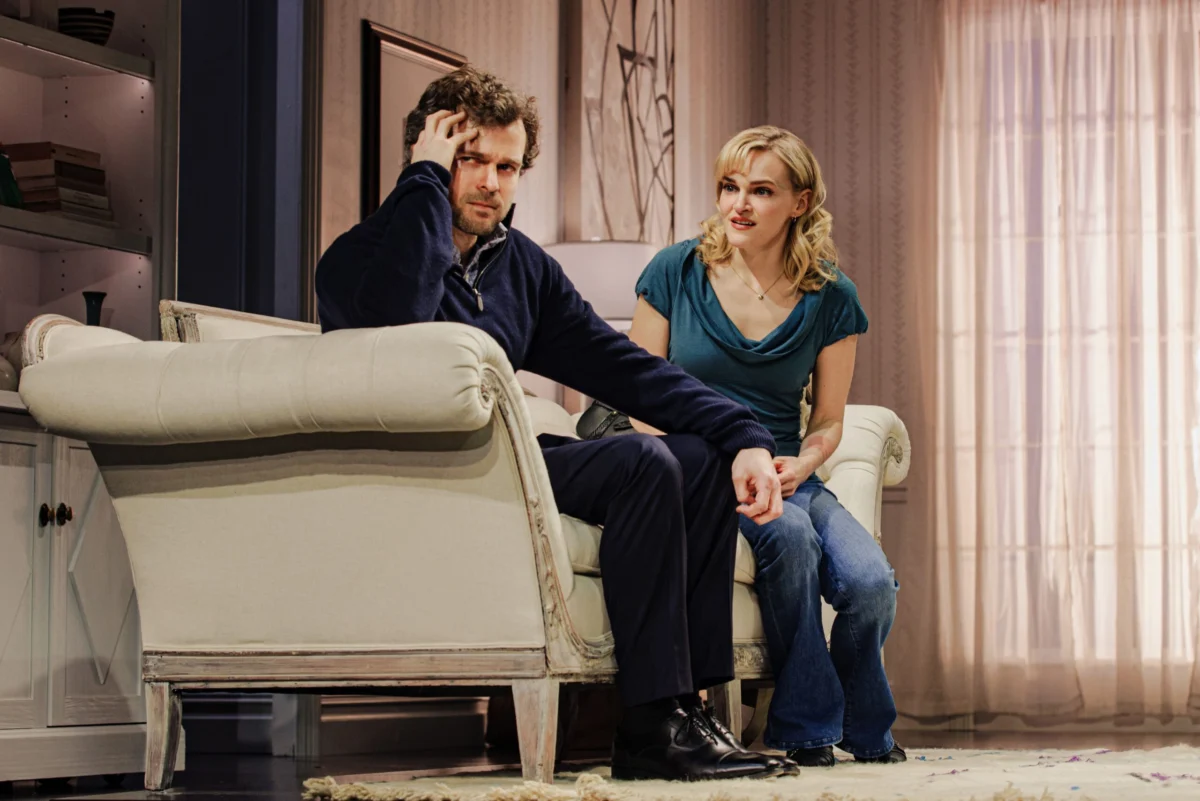
The production, a limited-run engagement presented by Second Stage Theater, marks a significant milestone for the play, which first gained national attention nearly two decades ago. Directed by Trip Cullman, the revival officially opened on April 6 to critical acclaim, reintroducing audiences to the acerbic wit and moral ambiguity that defined Gionfriddo’s work during its initial debut. The play, a finalist for the 2009 Pulitzer Prize for Drama, continues to resonate for its unflinching look at the transactional nature of human relationships and the often-blurry line between victimhood and opportunism.
Production History and the Path to Broadway
Becky Shaw originally premiered at the Humana Festival of New American Plays at Actors Theatre of Louisville in 2008. It quickly transitioned to an off-Broadway run at Second Stage’s uptown home, where it solidified Gionfriddo’s reputation as one of the leading voices in contemporary American drama. The 2009 Pulitzer Prize committee recognized the play as a finalist, ultimately awarding the prize to Lynn Nottage’s Ruined, but the nomination catapulted Gionfriddo into the upper echelon of playwrights known for "comedy of manners" with a dark, modern twist.
The current Broadway revival at the Helen Hayes Theatre represents the play’s first major New York mounting since its original run. Director Trip Cullman, known for his ability to navigate the nuances of ensemble-driven dramas, has assembled a cast of seasoned stage and screen veterans. The production serves as a centerpiece for Second Stage’s current season, highlighting the company’s commitment to reviving modern classics that challenge contemporary social norms.
Narrative Structure and Literary Foundations
The plot of Becky Shaw centers on a disastrous blind date that serves as the catalyst for a series of escalating interpersonal crises. The title character, Becky Shaw—portrayed in this revival by Madeline Brewer—is a 35-year-old woman struggling with financial instability and a history of failed romances. Her attempt to secure her future through "marrying up" leads her to Max, a cynical and financially successful money manager played by Alden Ehrenreich.
The setup is orchestrated by Becky’s coworker, Andrew (Patrick Ball), whose altruistic intentions are met with skepticism by his wife, Suzanna (Lauren Patten), and her mother, Susan (Linda Edmond). As Becky and Max’s interaction spirals out of control, the play expands into a broader interrogation of the characters’ lives, revealing a web of mail fraud, family secrets, and psychological manipulation.
Gionfriddo has noted that the play was loosely inspired by William Makepeace Thackeray’s 19th-century novel Vanity Fair. Specifically, the character of Becky Shaw is a modern-day iteration of Becky Sharp, Thackeray’s social-climbing anti-heroine. By transplanting the themes of hypergamy and social mobility into the 21st century, Gionfriddo explores how modern sensibilities—such as the "savior complex" and the therapeutic language of the 2000s—intersect with age-old mercenary instincts.

The Playwright’s Perspective and Creative Process
Gina Gionfriddo’s career has been defined by a dual presence in the worlds of prestige theater and procedural television. Her writing credits include significant contributions to the Law & Order franchise, FBI: Most Wanted, and the political drama House of Cards. This background in crime-related storytelling is evident in the taut, high-stakes dialogue of Becky Shaw.
During the rehearsal process for the current revival, Gionfriddo remained deeply involved in the production. Residing on the Upper West Side, she was able to attend the majority of the three-week rehearsal period and provide input on casting and tonal adjustments. She has described the casting process as uniquely challenging, noting that the roles require actors who are comfortable portraying characters that the audience may find inherently unlikable.
Gionfriddo’s brand of humor, which she describes as "cracking jokes to keep despair at bay," was influenced by the works of gay playwrights who wrote during the height of the AIDS crisis. This stylistic choice—using caustic wit to mask profound pain—is a hallmark of her most famous works, including After Ashley and Rapture, Blister, Burn.
Thematic Analysis: Morality and the Sphere of Responsibility
At its core, Becky Shaw asks difficult questions about human obligation. A central debate in the play involves the "sphere of responsibility." The character Max argues that an individual’s moral duty is limited to their immediate circle—their "plot of land"—rather than the world at large. He posits that tending to one’s own life and family is the definition of a virtuous existence, a stance that stands in direct opposition to Andrew’s more expansive, if perhaps misguided, sense of charity toward strangers.
This theme reflected the zeitgeist of 2008, when the Iraq War dominated American moral discourse. Gionfriddo has pointed out that the dialogue in the play originally mirrored the anxieties of that era, specifically the question of how individuals can justify personal happiness and mundane concerns in the face of global conflict. In the 2024 context, these questions remain relevant as audiences grapple with new international crises and the feeling of helplessness that often accompanies them.
The play also scrutinizes the concept of victimhood. The character Susan, the family matriarch, provides a chillingly objective assessment of Becky Shaw in the play’s final moments, suggesting that Becky may be a genuine victim or a calculating con artist—or, most likely, something in between. By refusing to provide a definitive answer, Gionfriddo forces the audience to confront their own biases regarding class, gender, and social behavior.
Performance and Casting Data
The revival benefits from a cast with significant commercial and critical pedigree:

- Madeline Brewer (Becky Shaw): Best known for her roles in The Handmaid’s Tale and Orange Is the New Black, Brewer brings a sense of desperate shrewdness to the title role.
- Alden Ehrenreich (Max): Following his roles in Solo: A Star Wars Story and Oppenheimer, Ehrenreich’s portrayal of Max captures the character’s "acid-tongued" pragmatism.
- Lauren Patten (Suzanna): A Tony Award winner for Jagged Little Pill, Patten anchors the production’s emotional core.
- Linda Edmond (Susan): A veteran of the stage and screen (The Gilded Age, Death of a Salesman), Edmond’s performance has been highlighted by critics for its sharpness and gravitas.
- Patrick Ball (Andrew): Ball portrays the well-meaning but ultimately destructive coworker whose desire to "fix" Becky sets the plot in motion.
The creative team includes scenic design by David Zinn, costume design by Kaye Voyce, and lighting design by Ben Stanton, all of whom have worked to create an environment that reflects the play’s shift from suburban domesticity to psychological chaos.
Industry Impact and Broader Implications
The success of the Becky Shaw revival points to a continued interest in "difficult" theater on Broadway. While large-scale musicals often dominate the commercial landscape, Second Stage Theater has carved out a niche for mid-sized dramas that prioritize complex character studies over spectacle.
The play’s reception in 2024 suggests that audiences have become more accustomed to—and perhaps even appreciative of—moral "nastiness" in entertainment. Gionfriddo noted that the production team initially feared audiences might recoil from the humor’s coarseness. However, the positive response indicates that in a world increasingly characterized by polarized discourse and digital cynicism, the blunt honesty of Becky Shaw provides a form of catharsis.
Furthermore, the revival highlights the enduring nature of Gionfriddo’s writing. While some contemporary plays lose their edge as social mores shift, Becky Shaw’s focus on the fundamental flaws of human nature—greed, vanity, and the desire for security—ensures its longevity. The play does not offer a traditional resolution or a moral lesson; instead, it leaves its characters in a state of perpetual motion, continuing to navigate the messy reality of their choices long after the curtain falls.
As the limited run continues at the Helen Hayes Theatre, Becky Shaw stands as a testament to the power of dark comedy to illuminate the darker corners of the human experience. It remains a definitive work on the complexities of what we owe to ourselves, what we owe to our families, and the inherent danger of trying to save those who may not want to be saved.

0 Comments