
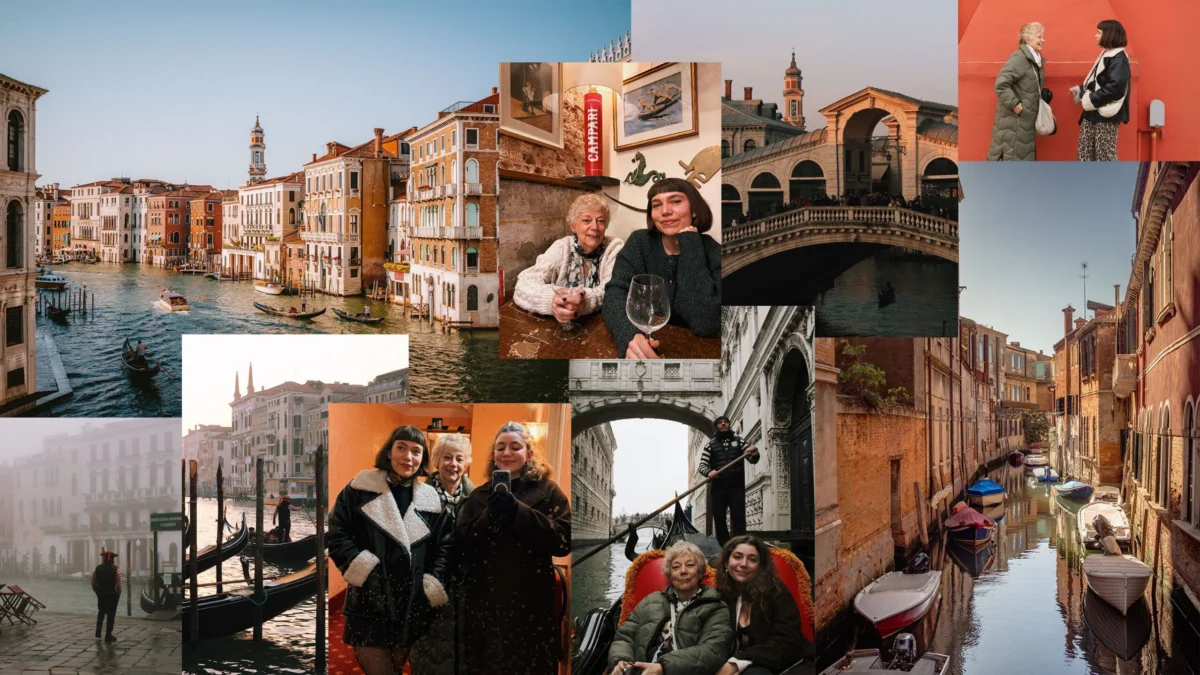
The landscape of global tourism is undergoing a significant demographic shift as intergenerational travel, particularly among female family members, emerges as a dominant market force. This trend is exemplified by a recent analytical case study involving the James family—Sarah James, her sister Emily, and their mother Diana—who embarked on a collaborative journey to Venice, Italy. This excursion serves as a microcosm for broader sociological and economic shifts within the travel industry, highlighting how shifting family roles and the pursuit of shared "aesthetic experiences" are redefining the traditional family vacation. While the concept of the "family trip" often evokes a mixture of sentimental anticipation and logistical apprehension, current market data suggests that adult children traveling with aging parents is a rapidly growing sector, driven by a desire to consolidate familial bonds before life stages or health concerns limit mobility.
The James family’s journey to Venice represents a departure from their historical travel patterns. Previously, Sarah James had navigated separate travel trajectories: weeks in Paris and New York with her sister Emily, and luxury-oriented professional assignments with her mother, Diana, including stays at Le Manoir aux Quat’Saisons and journeys on the Venice Simplon-Orient-Express. However, the 2024 Venice expedition marked the first time the trio traveled without a paternal figure since the daughters’ teenage years. This shift underscores a broader trend identified by travel industry analysts: the rise of the "matriarchal getaway," where women across different age cohorts—in this case, the 30s and 70s—seek to navigate international destinations autonomously.
The Socio-Economic Context of Intergenerational Travel
According to data from the Family Travel Association, multi-generational travel remains one of the top trends in the industry, with approximately 50% of travelers planning trips that include three or more generations. However, the specific subset of "adult-only" intergenerational travel—where parents in their 70s travel with adult children in their 30s or 40s—is seeing a particular uptick. This is attributed to the "sandwich generation" seeking to maximize quality time with aging parents while they remain active. For the James family, the decision to lock in dates for Venice was driven by the realization that future logistical hurdles, such as expanding families or the health requirements of a septuagenarian traveler, could eventually impede such spontaneous "long weekends on the continent."

Venice, a city that has recently implemented a pilot program for a "Venice Access Fee" to manage over-tourism, remains a primary destination for these groups. The city’s infrastructure, while challenging due to its aquatic nature, offers a high density of cultural and aesthetic landmarks that appeal to the "silver traveler" (those over 60) and the "millennial traveler" alike. Industry reports suggest that female travelers are responsible for approximately 85% of all consumer travel decisions, representing a spending power of over $125 billion annually. The James family’s itinerary—focusing on local cuisine (cichetti), artisanal crafts (Murano glass), and historical cafes—aligns perfectly with the high-yield, experiential travel currently being courted by European tourism boards.
Chronology of the Venetian Expedition and Role Reversal
The logistics of the trip revealed a fascinating evolution of domestic roles. Historically, family travel often relies on a "chief organizer," a role frequently filled by a patriarch or a designated lead. In the absence of Sarah’s father, the three women adopted a collaborative management style that reflects modern findings on the "mental load" of travel. Emily, the elder sister, assumed the administrative responsibilities traditionally held by her father, including linguistic mediation and financial transactions. Sarah, despite self-identified directional challenges, utilized digital tools like Google Maps to serve as the primary navigator and documentarian. Diana, the matriarch, leveraged her experience to manage the complex water-based transportation network of Venice, including gondolas and water taxis.
This distribution of labor highlights a significant psychological shift. In their youth, adult children often resist parental oversight; however, the James case study suggests that in adulthood, there is a "relaxation into the mindlessness of someone else taking care of things." This collaborative autonomy allows for a more efficient travel experience, often bypassing the conflicts that arise in more rigid, traditional family structures. The trio utilized a "majority vote" system for decision-making, a democratic approach that industry experts suggest reduces the "travel friction" often cited in horror stories of family vacations.
Cultural and Environmental Observations in the Venetian Lagoon
The itinerary focused heavily on the aesthetic and historical depth of the Venetian archipelago. A significant portion of the trip was dedicated to the islands of Murano and Burano. Murano, world-renowned for its glass-blowing heritage dating back to the 13th century, and Burano, famous for its lace-making and vibrant, multi-colored residential facades, provided the "frivolous and aesthetic" backdrop that current tourism marketing emphasizes for female-centric groups.

A notable environmental occurrence during the trip was the sighting of a dolphin in the Grand Canal. While rare, such sightings have been documented with increasing frequency since the 2020 lockdowns, which led to a temporary decrease in water traffic and improved water clarity. From a journalistic perspective, this event underscores the fragile intersection of Venice’s natural ecosystem and its status as a global tourism hub. For the travelers, it served as a unique "peak experience"—a term used in tourism psychology to describe moments that solidify the emotional value of a trip.
The Significance of Caffè Florian: A Case Study in Heritage Tourism
The culmination of the journey was a visit to Caffè Florian in Piazza San Marco. Founded in 1720, Caffè Florian is recognized as the oldest continuously operating coffee house in Italy and one of the oldest in the world. For the James family, the visit served as a pre-celebration of Mother’s Day, highlighting the importance of "occasion-based" travel in the luxury sector.
The experience at Caffè Florian—characterized by high-service standards, including waiters in white dinner jackets and the consumption of traditional Venetian delicacies—illustrates the "experience economy." Despite the high price point and its status as a "tourist hotspot," the café provides a sense of continuity and grandeur that appeals to the 70+ demographic while offering the "Instagrammable" content sought by younger generations. Diana’s reflection during the visit—speculating that her daughters might one day bring their own children to the same location—points to the "legacy" aspect of travel, where destinations serve as anchors for family history across decades.
Broader Implications for the Global Travel Industry
The James family’s experience provides several key takeaways for the broader travel industry:

- Demand for Specialized Intergenerational Packages: There is a clear market for travel products that cater to the varying mobility and interest levels of different age groups within the same family. Hotels and tour operators that can balance "high-energy" navigation with "high-comfort" relaxation will likely see increased loyalty from this demographic.
- The Digital-Physical Hybrid: The reliance on Google Maps by one generation and physical tickets/pre-researched logistics by another highlights the need for travel providers to maintain both robust digital interfaces and traditional, tangible service elements.
- The "Aesthetic Economy": The success of the Venice trip was largely rooted in the appreciation of beauty—from the colors of Burano to the frescoed ceilings of Caffè Florian. Tourism boards are increasingly focusing on "visual storytelling" to attract female travelers who prioritize these sensory experiences.
- Resilience of Legacy Destinations: Despite the rise of "hidden gem" tourism, iconic cities like Venice continue to thrive because they offer a reliable sense of wonder that can bridge the generational gap. The historical significance of these locations provides a shared language for family members who may have little else in common in their daily lives.
In conclusion, the evolution of the "girls’ trip" into a cross-generational phenomenon represents a sophisticated maturation of the travel market. As demonstrated by the James family, when the traditional roles of parent and child are replaced by a collaborative partnership, the resulting travel experience can transcend the typical stresses of family life. The journey to Venice was not merely a vacation but a strategic investment in familial heritage, proving that the "cream-on-top" joys of travel are most potent when shared across the lifespan. As the global population ages and the "silver economy" grows, the industry must prepare for more trios like Diana, Emily, and Sarah—travelers who are seeking not just a destination, but a way to navigate their changing relationships through the lens of the world’s most beautiful places.

0 Comments