
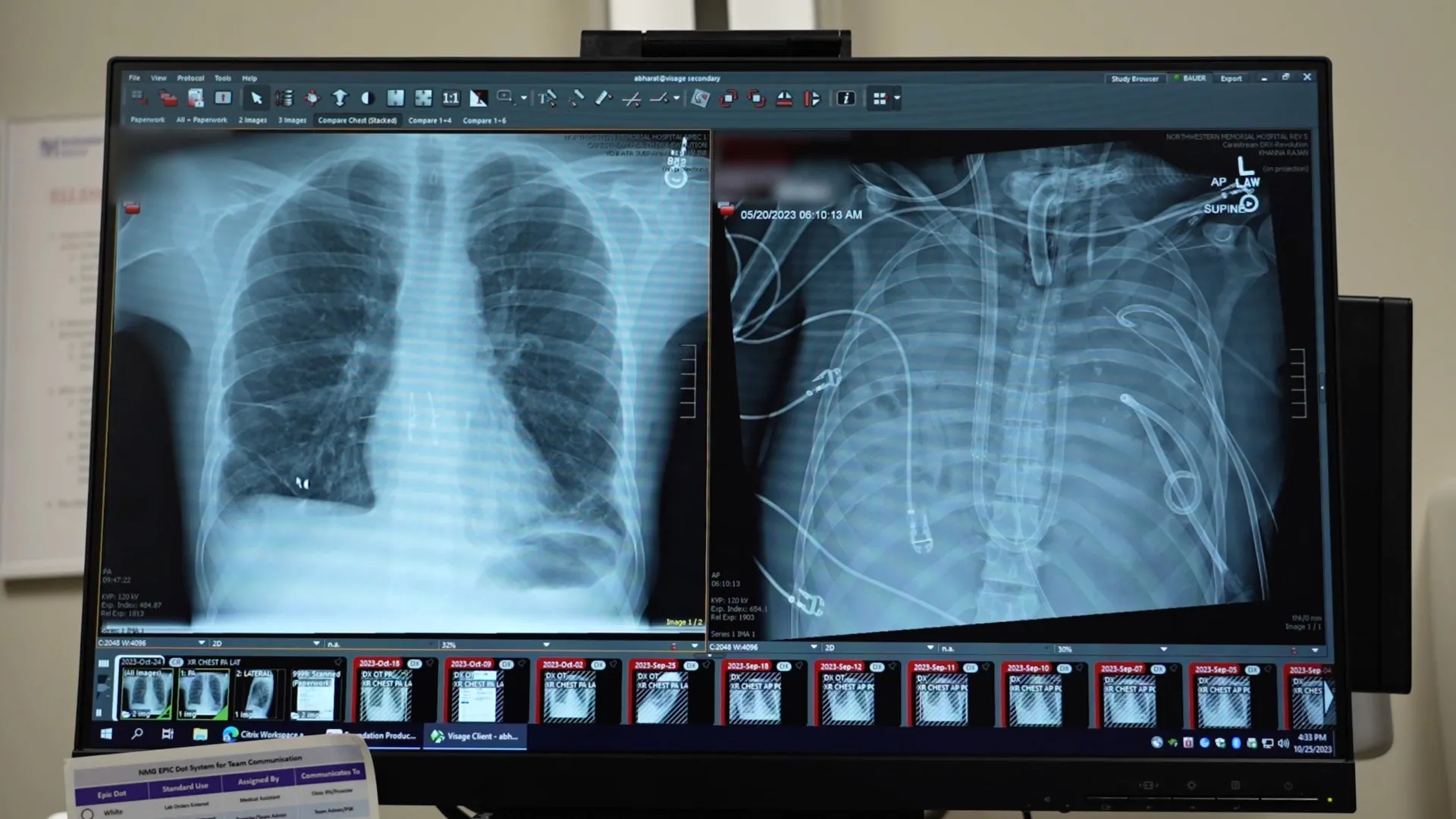
In a medical breakthrough that pushes the boundaries of human survival, a 33-year-old man has successfully lived for 48 hours without lungs, a feat previously considered impossible. This extraordinary case, detailed in the latest issue of the Cell Press journal Med, involved the complete removal of the patient’s severely infected lungs and their temporary replacement by an advanced artificial lung system. This innovative approach served as a critical bridge, sustaining the patient’s life until a life-saving double lung transplant could be performed, offering a beacon of hope for individuals facing catastrophic respiratory failure.
The patient’s ordeal began with a seemingly common influenza infection, which rapidly escalated into a severe case of acute respiratory distress syndrome (ARDS). This life-threatening condition, characterized by widespread inflammation and infection within the lungs, quickly overwhelmed the organ’s ability to oxygenate the blood. Compounding the ARDS, the patient developed a secondary bacterial pneumonia, leading to a cascade of organ failure affecting his heart and kidneys. By the time he arrived at the hospital, his condition was dire, necessitating immediate cardiopulmonary resuscitation (CPR) due to cardiac arrest.
The Precipice of Organ Failure and the Desperate Need for Intervention
Dr. Ankit Bharat, a thoracic surgeon at Northwestern University and lead author of the study, described the patient’s initial presentation as critically ill. "His heart stopped as soon as he arrived. We had to perform CPR," Dr. Bharat stated. "When the infection is so severe that the lungs are melting, they’re irrecoverably damaged. That’s when patients die." This grim assessment highlighted the advanced stage of his illness, where the lungs were not only failing to function but were actively contributing to a systemic infection that threatened to consume his entire body.
The severity of the infection had rendered the patient’s lungs beyond repair. They were described as "melting," indicating extensive tissue destruction and irreversible damage. In such a scenario, the lungs become a source of ongoing sepsis, a life-threatening response to infection that can lead to organ failure. However, the patient’s overall physiological state was too unstable to immediately undergo a complex double lung transplant. Surgeons faced a critical dilemma: the lungs had to be removed to halt the infection, but without them, sustaining life was an unprecedented challenge.
Bridging the Gap: The Ingenuity of the Artificial Lung
The interconnectedness of the heart and lungs presents a formidable obstacle in cases of complete lung removal. "The heart and lungs are intrinsically connected," Dr. Bharat explained. "When there are no lungs, how do you keep the patient alive?" To overcome this seemingly insurmountable hurdle, the medical team devised and implemented a sophisticated artificial lung system. This device was engineered to perform the essential functions of healthy lungs, including oxygenating the blood and removing carbon dioxide. Crucially, it also provided support for circulation, ensuring that the heart and other vital organs continued to receive the necessary oxygenated blood to function.
This artificial lung system acted as a temporary, external respiratory and circulatory support mechanism. It was integrated into the patient’s circulatory system, drawing deoxygenated blood, infusing it with oxygen, removing waste carbon dioxide, and returning the now oxygenated blood to the body. This allowed the patient’s failing organs, particularly the heart, to recover from the immediate shock of the infection and the stress of CPR.
A Chronology of Survival and Recovery
The timeline of this remarkable medical intervention is as follows:
- Initial Presentation: The 33-year-old patient arrived at the hospital in critical condition, suffering from ARDS, bacterial pneumonia, and multiple organ failure. He experienced cardiac arrest upon arrival and required immediate CPR.
- Diagnosis and Decision: Medical professionals determined that the patient’s lungs were irreversibly damaged and actively contributing to a life-threatening infection. A double lung transplant was identified as the only potential for survival.
- Pre-Transplant Stabilization: Due to the patient’s extreme instability, immediate transplantation was not feasible. The decision was made to surgically remove the infected lungs and connect the patient to an artificial lung system to sustain him.
- The 48-Hour Window: For two days, the artificial lung system successfully maintained the patient’s vital functions. During this period, his condition began to stabilize. Blood pressure improved, his other organs started to show signs of recovery, and the systemic infection was brought under control.
- The Transplant: After 48 hours of reliance on the artificial lung, donor lungs became available. Surgeons performed a successful double lung transplant, replacing the patient’s diseased organs with healthy ones.
- Post-Transplant Recovery: Following the transplant, the patient continued to recover. More than two years after the procedure, he is reportedly living a normal life with fully functional lungs, a testament to the success of the intervention.
New Insights into Irreversible Lung Damage
Historically, lung transplantation has been primarily reserved for patients with chronic, progressive lung diseases such as interstitial lung disease or cystic fibrosis. The prevailing medical understanding often assumed that in cases of acute ARDS, supportive care would eventually allow the lungs to heal. However, the examination of the patient’s explanted lungs provided compelling new evidence that challenges this assumption.
Molecular analysis of the removed lung tissue revealed extensive scarring and significant damage to the immune system’s cellular components within the lungs. These findings were interpreted as clear biological indicators that the lung tissue was beyond any possibility of recovery. This detailed pathological examination offers a critical insight: for a subset of patients experiencing severe ARDS, particularly those with overwhelming infection and rapid tissue destruction, a lung transplant may not just be an option, but the only path to survival.
"For the first time, biologically, we are giving molecular proof that some patients will need a double lung transplant, otherwise they will not survive," Dr. Bharat emphasized. This scientific validation could lead to a re-evaluation of transplant eligibility criteria for patients with severe acute lung injury, potentially saving lives that might otherwise be lost due to delayed or missed transplant considerations.
Implications for Critical Care and Future Transplant Strategies
While this groundbreaking approach represents a significant advancement, it is currently limited to highly specialized medical centers equipped with the advanced technology and experienced multidisciplinary teams required to manage such complex cases. The artificial lung system, often referred to as extracorporeal membrane oxygenation (ECMO) when used for respiratory support, demands constant monitoring and expert intervention.
Despite these limitations, Dr. Bharat and his team are optimistic about the future. They envision the development of more standardized artificial lung systems and protocols that could be more widely implemented. The ultimate goal is to create a reliable "bridge to transplant" for critically ill patients who would otherwise have no chance of survival while awaiting a donor organ.
The broader implications of this case extend to the field of critical care medicine. Dr. Bharat noted with concern that "in my practice, young patients die almost every week because no one realized that transplantation was an option." This suggests a potential gap in awareness and timely referral for lung transplantation in acute settings. This case underscores the critical importance of considering lung transplantation not only for chronic conditions but also for acute, life-threatening lung damage caused by severe infections, including those from respiratory viruses.
The success of this intervention highlights the evolving landscape of organ transplantation and life support technologies. It demonstrates that even in the face of seemingly irreversible organ failure, innovative medical strategies can offer a pathway to survival. As research and technology advance, such artificial organ systems are poised to play an increasingly vital role in saving lives and expanding the possibilities of medical intervention for the most critically ill patients. The 48 hours this patient lived without lungs is not merely a medical anomaly; it is a powerful testament to human ingenuity and the relentless pursuit of life against overwhelming odds.

0 Comments