
As millions of Americans congregate at pools, lakes, rivers, and coastal beaches to escape rising summer temperatures, public health officials are issuing urgent warnings regarding the escalating risks of water-based activities. According to the Centers for Disease Control and Prevention (CDC), more than 4,000 individuals succumb to unintentional drowning in the United States annually, a figure that averages out to approximately 11 fatalities per day. Drowning remains a leading cause of accidental death across the country, particularly among children, yet many of these tragedies occur because bystanders are unable to recognize the emergency or lack the specific training required to intervene safely.
The gravity of the situation is compounded by a general lack of public awareness regarding the physiological realities of a person in distress. Contrary to the dramatic depictions often seen in film and television, drowning is frequently a silent and swift event. To mitigate these risks, water safety experts and emergency responders emphasize a standardized protocol designed to maximize the victim’s chances of survival while minimizing the danger to the rescuer.
The Instinctive Drowning Response: Identifying the Emergency
The primary obstacle in most water rescue scenarios is the failure of bystanders to identify that a person is actually drowning. The "Instinctive Drowning Response," a term coined by Dr. Francesco A. Pia, describes the involuntary physiological reactions that occur when a person is struggling to stay afloat.
In a true drowning emergency, the victim is rarely able to call for help. The respiratory system is biologically prioritized for breathing; speech is a secondary function. When a person is drowning, their mouth sinks below and reappears above the surface of the water quickly, leaving only enough time to exhale and inhale before they submerge again. Furthermore, a drowning person cannot wave for attention. Nature instinctively forces them to extend their arms laterally and press down on the water’s surface to leverage their bodies upward for air.
Key indicators of a person in distress include a vertical body position with no evidence of a supporting kick, tilted head with the mouth at water level, and eyes that appear glassy or unable to focus. Recognizing these signs within the critical window of 20 to 60 seconds—the duration a person can typically struggle on the surface before submersion—is the first and most vital step in any rescue operation.
The Hierarchy of Rescue: Reach, Throw, Row, Go
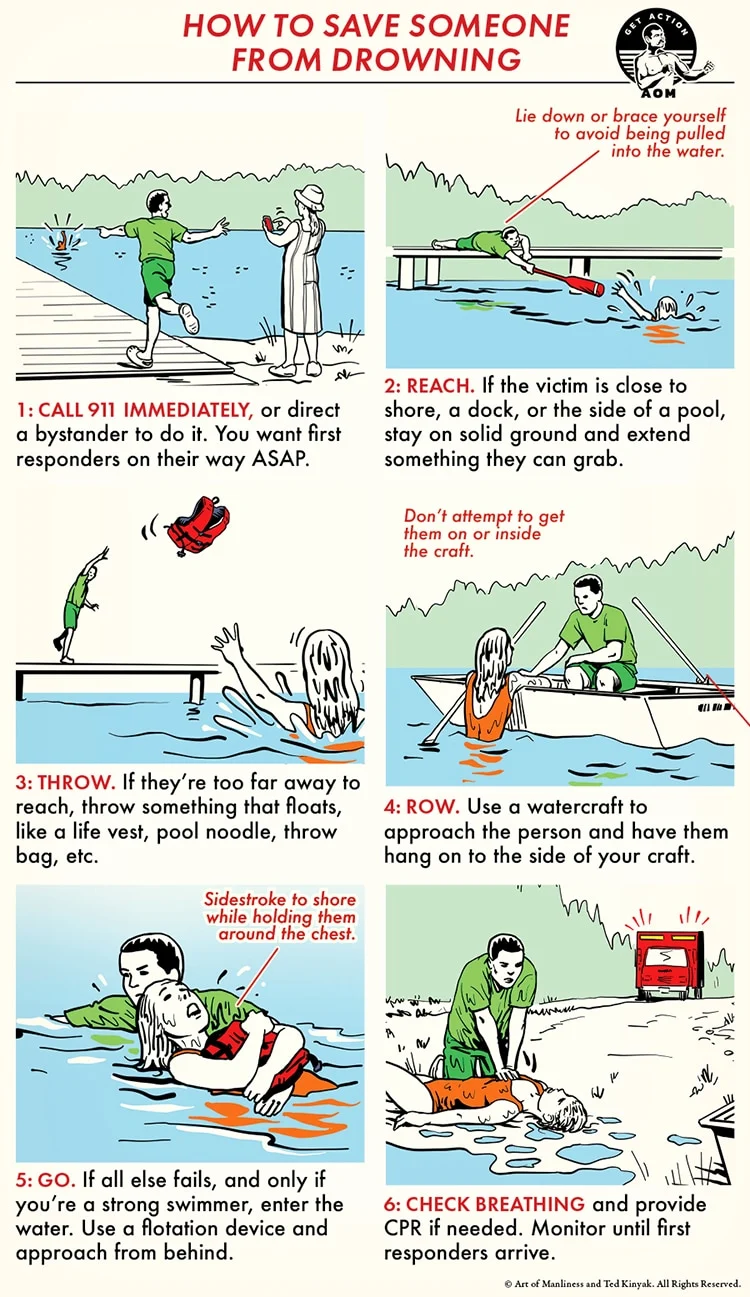
Once an emergency is identified, rescuers are urged to follow a specific tactical framework known as "Reach, Throw, Row, Go." This sequence is designed to prioritize the safety of the rescuer, as panicked victims often pose a significant physical threat to those attempting to save them. Data from various life-saving organizations indicate that dozens of "would-be" rescuers perish each year when they are pulled underwater by the person they are trying to help.
Reach: Maintaining a Safe Distance
The safest method of rescue involves staying on solid ground or a stable dock. If the victim is close enough to the edge, the rescuer should attempt to reach out with a long object. This can be a pool hook, a sturdy branch, an oar, or even a towel. Experts advise that the rescuer should lie prone (flat on their stomach) on the deck or ground to lower their center of gravity. This prevents the rescuer from being pulled into the water if the victim lunges or pulls forcefully on the object.
Throw: Utilizing Buoyancy
If the victim is beyond reach, the next step is to throw a flotation device. Most public pools and managed beaches are equipped with ring buoys or "throw bags" containing rope. The rescuer should aim the device just past the victim, allowing them to grab it as it is pulled back toward them. If no professional equipment is available, any buoyant object—such as a cooler, a life jacket, or even a sealed plastic jug—can provide the necessary lift to keep the victim’s airway above the water while a more permanent solution is found.
Row: Bridging the Gap
When the victim is too far for a throw, the rescuer should look for a vessel. Rowing a boat, paddling a kayak, or even using a surfboard allows the rescuer to reach the victim while maintaining a physical barrier between themselves and the panicked individual. Upon reaching the victim, the rescuer should not attempt to pull them into a small craft immediately, as this may capsize the vessel. Instead, have the victim grab the side or the stern while the rescuer paddles toward safety.
Go: The Final Resort
Entering the water to perform a swimming rescue is the most dangerous option and should only be attempted by those with strong swimming abilities and, ideally, formal lifeguard training. If "Go" is the only remaining option, the rescuer should take a flotation device with them to keep between themselves and the victim.
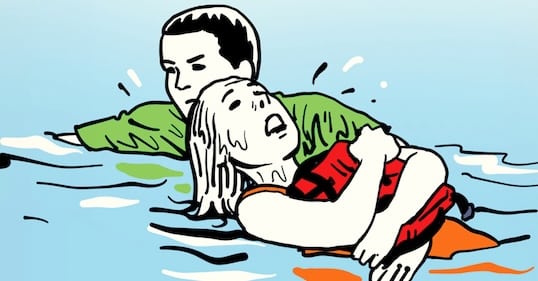
Professional protocols suggest a "rear approach" to avoid being grabbed. By approaching from behind, the rescuer can secure the victim under the armpits or across the chest in a "cross-chest carry," keeping the victim’s face out of the water while swimming toward shore. If the victim turns and attempts to grab the rescuer, the rescuer is taught to "tuck and dive," pushing the victim upward while submerged to break the grip.
Statistical Context and Demographic Vulnerabilities
The urgency of these rescue techniques is underscored by recent data from the CDC and the World Health Organization (WHO). Drowning is the leading cause of death for children aged 1 to 4 in the United States, excluding birth defects. For this demographic, drowning often occurs in residential swimming pools and is frequently the result of a brief lapse in supervision.
For older children and adults, the risk shifts toward natural bodies of water, such as lakes and rivers, where currents, underwater debris, and cold-water shock play significant roles. Statistics show that nearly 80% of people who die from drowning are male, a trend attributed to higher rates of risk-taking behavior and a lower likelihood of wearing life jackets.
Furthermore, there are significant socioeconomic disparities in drowning rates. According to the CDC, drowning rates for Black Americans are 1.5 times higher than those for White Americans, with the disparity reaching a factor of 5.5 for Black children aged 5 to 19 in swimming pools. Experts point to historical lack of access to swimming lessons and public pools as a primary driver of these statistics, emphasizing the need for community-based water safety education.
Professional Responses and Public Health Implications
In response to the rising trend in drowning incidents, organizations like the American Red Cross and the YMCA have called for a renewed focus on "water competency." This involves not just the ability to swim, but the knowledge of how to recognize hazards and how to perform a safe rescue.
"Drowning is a preventable public health issue," states a spokesperson for the National Drowning Prevention Alliance. "The ‘Reach, Throw, Row, Go’ method is a fundamental component of water safety literacy. If every person visiting a body of water this summer understood this hierarchy, we could drastically reduce the number of double-drowning incidents where the rescuer also becomes a victim."
Emergency medical services (EMS) also highlight the importance of post-rescue care. Even if a victim appears fine after being pulled from the water, they may have inhaled small amounts of liquid, which can lead to delayed respiratory distress—a condition sometimes referred to in clinical settings as pulmonary edema. Official medical protocols mandate that any person who required rescue and exhibited signs of respiratory struggle should be evaluated at a hospital.
Analysis of Environmental Factors
The recent uptick in drowning deaths is also being analyzed through the lens of environmental change. Record-breaking heatwaves have driven larger crowds to unsupervised "wild swimming" spots where professional lifeguards are not present. Additionally, changes in weather patterns have led to more volatile river currents and "rip currents" at beaches, which can overwhelm even experienced swimmers.
As municipalities grapple with lifeguard shortages—a persistent issue since the COVID-19 pandemic—the responsibility of water safety is increasingly falling on the shoulders of the general public. This shift necessitates a broader dissemination of the "Reach, Throw, Row, Go" protocol as a standard piece of first-aid knowledge, akin to the Heimlich maneuver or CPR.
Conclusion: The Necessity of Preparedness
The ability to save someone from drowning depends less on heroic strength and more on the application of calm, methodical techniques. By understanding the silent nature of the Instinctive Drowning Response and adhering to the safety-first hierarchy of rescue, bystanders can intervene effectively without becoming casualties themselves.
As the summer season continues, the data remains clear: water demands respect, and preparedness is the only effective defense against the inherent risks of aquatic environments. The "Reach, Throw, Row, Go" framework serves as a vital tool in the national effort to reverse the trend of unintentional drowning and ensure that trips to the water remain safe for all.

0 Comments