
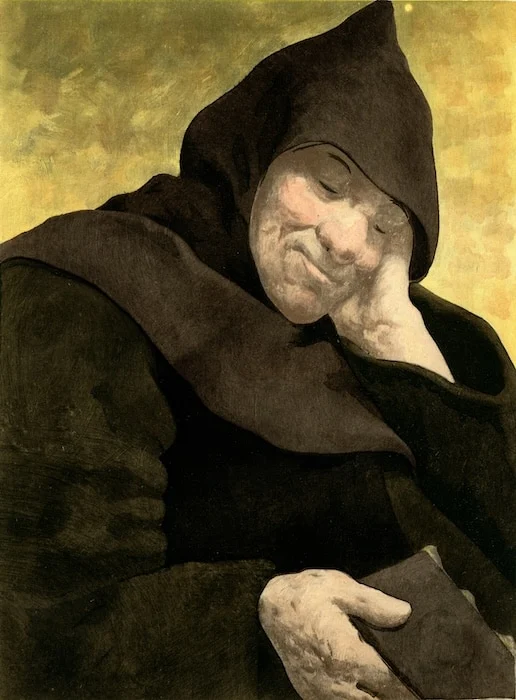
Thomas Merton, the renowned Trappist monk, author, and theologian, provided a unique perspective on the intersection of spiritual discipline and physiological rest through a visualization technique designed to combat insomnia. While Merton is primarily celebrated for his deep explorations of solitude and silence in his 1948 spiritual autobiography, The Seven Storey Mountain, his personal journals and published works also reveal a practical methodology for achieving rapid sleep through a process of systematic somatic negation. This technique, which Merton refined during his undergraduate years at Columbia University in the mid-1930s, involves a focused mental exercise where the practitioner systematically imagines their body parts disappearing into the air. By occupying the mind with a repetitive, low-stakes cognitive task while simultaneously inducing deep muscle relaxation, the method addresses the psychological roots of sleeplessness that continue to affect millions of individuals in the modern era.
The Origins and Development of Merton’s Visualization Technique
The historical context of Merton’s sleep method dates back to a transformative period in his life during the 1930s. Before his conversion to Catholicism and subsequent entry into the Abbey of Gethsemani, Merton was a student at Columbia University, where he engaged deeply with a wide array of philosophies, including Marxism and what was then categorized as "Oriental mysticism." It was during this period of intellectual and spiritual restlessness that Merton began experimenting with various forms of meditation and Eastern philosophy. While he would later view much of his early dabbling as superficial, the specific sleep technique he acquired during this time remained a permanent fixture in his personal routine.
In The Seven Storey Mountain, Merton describes a process that mirrors what modern psychologists now refer to as progressive muscle relaxation (PMR) or "cognitive shuffling." The method requires the individual to lie flat on their back without a pillow, extending the limbs straight and placing the arms at the sides. The practitioner then begins a mental monologue, starting at the feet and moving upward, repeating phrases such as "Now I have no feet" and "Now I have no legs." The goal is to visualize each body part turning into air and vanishing until the physical sensation of the body is entirely replaced by a feeling of weightlessness. Merton noted that the effectiveness of the routine was such that he rarely reached his torso before falling into a deep sleep.
The Physiological and Psychological Mechanisms of Somatic Negation
To understand why Merton’s method remains effective, it is necessary to examine the physiological mechanisms of sleep onset. Most forms of insomnia are classified not as primary physical ailments, but as manifestations of "psychophysiological insomnia," where the brain’s inability to disengage from ruminative thought patterns keeps the body in a state of high arousal. Merton’s technique functions as a form of cognitive interference. By providing the brain with a specific, repetitive, and non-stimulating task, the "vanishing body" visualization crowds out the stressful "mental chatter" that typically prevents the transition from wakefulness to sleep.
From a clinical perspective, this method aligns with the principles of the parasympathetic nervous system (PNS) activation. When a person focuses on relaxing specific muscle groups and visualizes their disappearance, they are effectively signaling to the brain that the body is no longer in a state of "fight or flight." This reduction in muscular tension leads to a decrease in heart rate and cortisol levels, facilitating the release of melatonin. Furthermore, the use of auto-suggestion—the act of telling oneself that a body part is "gone"—utilizes the power of the placebo effect and hypnotic induction to bridge the gap between conscious intent and subconscious rest.
Comparative Analysis: The Monk’s Method vs. The Military Method
Merton’s approach shares significant similarities with other historically documented sleep techniques, most notably the "Military Method" developed during World War II. As documented by Lloyd Bud Winter in the book Relax and Win: Championship Performance, the United States Navy Pre-Flight School developed a routine to help aviators fall asleep in under two minutes, even under the stress of combat or loud environments.
While Merton’s method begins at the feet and moves upward, the Military Method typically starts at the head. In the naval version, pilots were taught to relax the muscles in their face—including the tongue, jaw, and the muscles around the eyes—before moving down the body. The fundamental difference lies in the visualization: Merton focused on "disappearing," whereas the military focused on "going limp." However, both techniques rely on the same core principle: systematic physical relaxation combined with a mental "lockdown" on a single, boring thought.
Recent data suggests that these methods are more relevant today than ever. According to the Centers for Disease Control and Prevention (CDC), approximately one-third of American adults report that they do not get enough sleep on a regular basis. The economic impact of sleep deprivation in the United States is estimated to be over $411 billion annually due to lost productivity and healthcare costs. Consequently, the revival of low-cost, non-pharmacological interventions like Merton’s has gained traction among wellness practitioners and sleep researchers.

Chronology of Sleep Visualization in Modern Literature
The evolution of these techniques can be traced through several key milestones in the 20th and 21st centuries:
- 1930s: Thomas Merton experiments with Eastern-inspired relaxation techniques while a student at Columbia University.
- 1941–1945: The U.S. military implements rigorous relaxation training for pilots to combat combat-induced insomnia.
- 1948: The publication of The Seven Storey Mountain brings Merton’s method to a mainstream Western audience.
- 1981: Relax and Win by Bud Winter formalizes the "Military Method" for the public.
- 2010s–Present: The rise of mindfulness-based stress reduction (MBSR) and sleep apps reintroduces "body scanning" to a digital-native generation.
Scientific Data and the Efficacy of Progressive Relaxation
Contemporary sleep studies provide empirical support for the efficacy of the methods Merton described. A study published in the journal Psychological Bulletin analyzed the impact of progressive relaxation on various forms of anxiety and insomnia, finding that consistent practice significantly reduced sleep latency (the time it takes to fall asleep).
Supporting data from sleep research indicates:
- Cognitive Shuffling: Researchers at Simon Fraser University have found that "cognitive shuffling"—scrambling thoughts to mimic the randomness of pre-sleep imagery—can effectively "trick" the brain into sleep. Merton’s repetitive "vanishing" mantra serves a similar purpose.
- Muscle Tension: Chronic insomniacs often carry sub-threshold muscle tension that they are unaware of. Merton’s requirement to lie flat and address each limb helps identify and release this "hidden" tension.
- The "Head" Barrier: Merton noted that if he reached his head without falling asleep, he would often become wide awake. This phenomenon is supported by neurology, as the face and head have a higher density of sensory receptors and a larger representation in the motor cortex, making them harder to "shut down" than the extremities.
Expert Perspectives and Clinical Implications
While Merton was a theologian and not a physician, his observations align with modern clinical advice regarding sleep hygiene. Sleep experts often recommend that if a person cannot fall asleep within 20 minutes, they should engage in a quiet, non-stimulating activity. Merton’s method provides an internal version of this advice, allowing the individual to engage in a "quiet activity" without leaving their bed.
Dr. Herbert Benson, founder of the Mind/Body Medical Institute at Massachusetts General Hospital, has spent decades researching the "relaxation response." According to Benson’s research, the repetition of a word, sound, or phrase—much like Merton’s "no feet, no legs" mantra—is one of the two essential steps to eliciting the relaxation response, which results in decreased oxygen consumption, lower heart rate, and increased alpha brain waves associated with deep relaxation.
Broader Impact on Public Health and Mental Well-being
The implications of adopting such techniques extend beyond mere convenience. Chronic sleep deprivation is linked to a host of severe health issues, including obesity, cardiovascular disease, and impaired immune function. Furthermore, the psychological toll of insomnia often leads to a cycle of anxiety, where the fear of not sleeping becomes the primary barrier to rest.
By utilizing Merton’s method, individuals can regain a sense of agency over their own physiological state. Unlike sedative medications, which can have side effects and lead to dependency, visualization techniques are free, safe, and can be performed anywhere. In an era characterized by digital overstimulation and "blue light" exposure, the return to a monastic-inspired focus on the inner life offers a potent antidote to the stresses of modern existence.
As society continues to grapple with a "sleep loss epidemic," the insights of a 20th-century monk provide a bridge between ancient meditative practices and modern psychological needs. Thomas Merton’s simple trick for falling asleep serves as a reminder that sometimes the most effective solutions to complex problems are found in the quiet, disciplined application of the mind. By imagining the body vanishing, the modern sleeper may find the very peace that Merton sought in the silence of the monastery.

0 Comments