
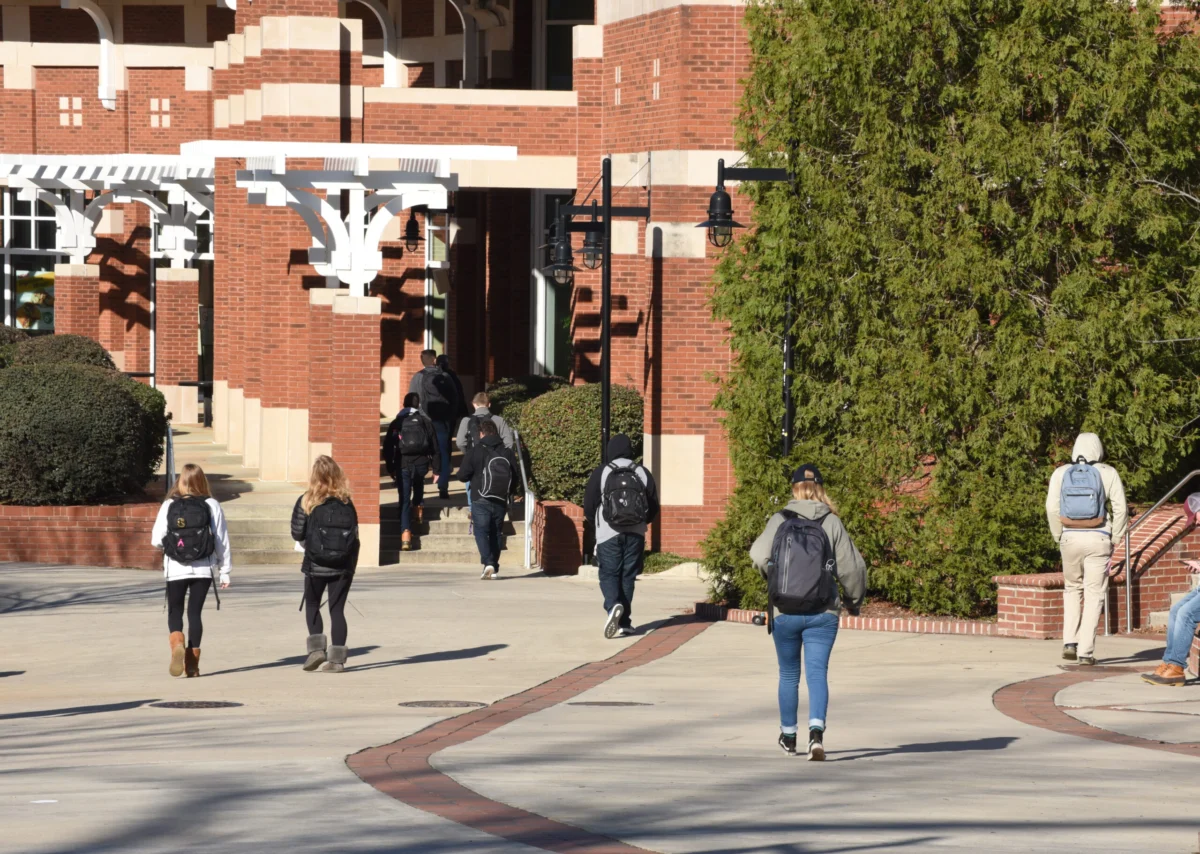
As the calendar approaches May 1, widely recognized across the United States as National College Decision Day, millions of high school seniors and their families face the culmination of a high-pressure admissions cycle. Traditionally, this date marks the deadline for students to commit to four-year institutions, submit non-refundable deposits, and solidify their trajectory toward a bachelor’s degree. However, a growing segment of the American population is beginning to challenge the long-standing societal mandate that a university education is the sole precursor to a successful adult life. Recent trends suggest a significant shift in how young adults and their parents view higher education, favoring immediate workforce entry, vocational training, and experiential learning over traditional academic pursuits.
This shift is increasingly visible in the lived experiences of families who have opted out of the conventional collegiate pipeline. A case study of this trend can be found in the narrative of a contemporary American family where all three children chose distinct, non-academic paths following high school. Their decisions—spanning the trades, specialized certifications, and international agricultural work—reflect a broader national movement toward pragmatic and debt-free career development.
The Evolution of the Non-Traditional Path: A Chronological Case Study
The transition away from the "college for all" mentality often begins with a single family member challenging the status quo. In the case of one family, the eldest son initiated this shift by expressing a desire to enter the plumbing trade, following in the footsteps of his father. Despite both parents holding college degrees—an English degree for the mother and a business degree for the father—the son resisted the traditional academic route. His reasoning was rooted in a preference for kinesthetic, hands-on learning and a rejection of the sedentary classroom environment that had defined his primary and secondary education.
By the time his younger sister reached graduation two years later, the family’s perspective had shifted from skepticism to support. The daughter opted to bypass university applications in favor of remaining in the workforce to save capital for a specialized career as a certified esthetician and lash technician. This decision highlighted a growing preference among Gen Z for specific, skill-based certifications that offer a direct and rapid return on investment (ROI) compared to the broad and often expensive curricula of liberal arts programs.
The trend culminated with the youngest sibling, who accelerated his high school graduation to pursue international experiential learning. Eschewing formal education entirely, he utilized the World Wide Opportunities on Organic Farms (WWOOF) network to work on organic farms in exchange for room and board. This choice underscores a burgeoning interest in global citizenship and sustainable agriculture, areas where practical experience is often valued as highly as, if not more than, academic credentials.
Statistical Analysis of the Declining Value of the Bachelor’s Degree
The individual decisions of these young adults are mirrored by national data indicating a cooling sentiment toward higher education. According to a 2024 study by the Pew Research Center, only one in four U.S. adults believes that a four-year college degree is "extremely" or "very" important for securing a well-paying job in the modern economy. This represents a significant departure from the early 2000s, when the bachelor’s degree was viewed as an essential ticket to the middle class.
Several economic factors contribute to this changing perception:
- Rising Costs and Student Debt: The cost of college tuition has outpaced inflation for decades. With the average federal student loan debt hovering around $37,000 per borrower, many young people view the financial burden as a barrier to major life milestones such as homeownership or starting a family.
- Wage Growth for Non-Degree Holders: Pew Research found that after decades of stagnation, wages for young workers (ages 25 to 34) without a bachelor’s degree have seen a measurable increase over the last ten years. This "blue-collar boom" has made vocational paths more financially competitive.
- The ROI Gap: In certain sectors, such as the skilled trades, workers can begin earning a full-time salary immediately through apprenticeships, whereas college students face four years of lost opportunity costs in addition to tuition expenses.
The Skilled Trades and the "New Collar" Workforce
The resurgence of interest in the trades—often referred to as "New Collar" jobs—is a direct response to the labor shortages in essential industries. Plumbing, electrical work, HVAC, and construction are facing a massive wave of retirements, leaving a vacuum that young workers are beginning to fill.
Vocational training offers a distinct advantage in terms of job security. Unlike many white-collar roles that are currently vulnerable to automation and artificial intelligence, the physical labor and complex problem-solving required in the trades remain difficult to replicate with technology. For the eldest son in the aforementioned case study, the decision to become a plumber was not merely a rejection of school, but a strategic move into a high-demand, recession-proof industry.

Similarly, the daughter’s pursuit of an esthetician certification reflects the growth of the "gig economy" and personal service industries. By focusing on a specific, marketable skill set, she is able to enter the workforce with minimal debt and the potential for entrepreneurship, a key motivator for Gen Z workers who value autonomy and flexibility.
Experiential Learning and the Rise of the Gap Year
While some students opt for the trades, others are choosing to delay or replace college with experiential learning. The youngest son’s involvement with WWOOF is representative of a larger trend where young adults seek to build "soft skills"—such as adaptability, cultural competency, and problem-solving—through travel and volunteerism.
Educational consultants note that "gap years" or alternative paths are no longer seen as a sign of academic failure, but rather as a period of "intentional growth." Organizations like WWOOF provide a structured environment for this growth, allowing young people to explore interests in botany, agriculture, and environmental science without the financial pressure of a university setting. For many, these experiences provide more clarity regarding their future goals than a general education requirement at a university ever could.
Parental Perspectives and Societal Expectations
The shift in student behavior is also forcing a recalibration of parental expectations. For decades, the societal narrative suggested that "good parenting" involved preparing children for university from a young age. Parents who see their children choose alternative paths often report initial feelings of anxiety or "second-guessing," particularly when compared to peers whose children are celebrating college acceptances.
However, as the success of these alternative paths becomes more evident, parental sentiment is shifting toward a more holistic definition of success. The "outside the box" approach is increasingly recognized as a valid, and often superior, response to the current economic landscape. Experts suggest that the normalization of these choices is crucial for the mental health of young adults, who face unprecedented levels of stress and burnout associated with the traditional academic track.
Broader Economic and Societal Implications
The movement away from the four-year degree has profound implications for the American economy. A more diversified workforce, with a healthy balance of degree holders and skilled tradespeople, is essential for national infrastructure and economic resilience.
Furthermore, the "degreeless" trend is forcing universities to rethink their value proposition. Some institutions are beginning to integrate more vocational and technical training into their liberal arts curricula, while others are focusing on "micro-credentials" to compete with shorter, cheaper certification programs.
The student loan crisis also plays a pivotal role in this evolution. As the national conversation around debt forgiveness and the cost of education intensifies, more families are concluding that the financial risk of a degree is simply too high. By opting for paths like plumbing or esthetics, young adults are entering their 20s with positive net worths, a stark contrast to the debt-laden profiles of many of their college-educated peers.
Conclusion: A New Paradigm of Success
National College Decision Day will likely remain a significant milestone in the American cultural landscape for years to come. However, its dominance as the singular "correct" path for high school graduates is fading. The stories of young adults who choose the trades, certifications, or global volunteerism are no longer outliers; they are part of a growing movement that prioritizes practical skills, financial independence, and personal fulfillment over academic prestige.
As Gen Z continues to enter the workforce, their rejection of traditional educational norms is creating a new paradigm. Success is increasingly defined not by the name of the institution on a diploma, but by the ability to thrive in a chosen field, contribute to the community, and maintain financial stability. For the parents and students navigating these choices, the "atypical path" is proving to be a robust and rewarding alternative to the status quo.

0 Comments