
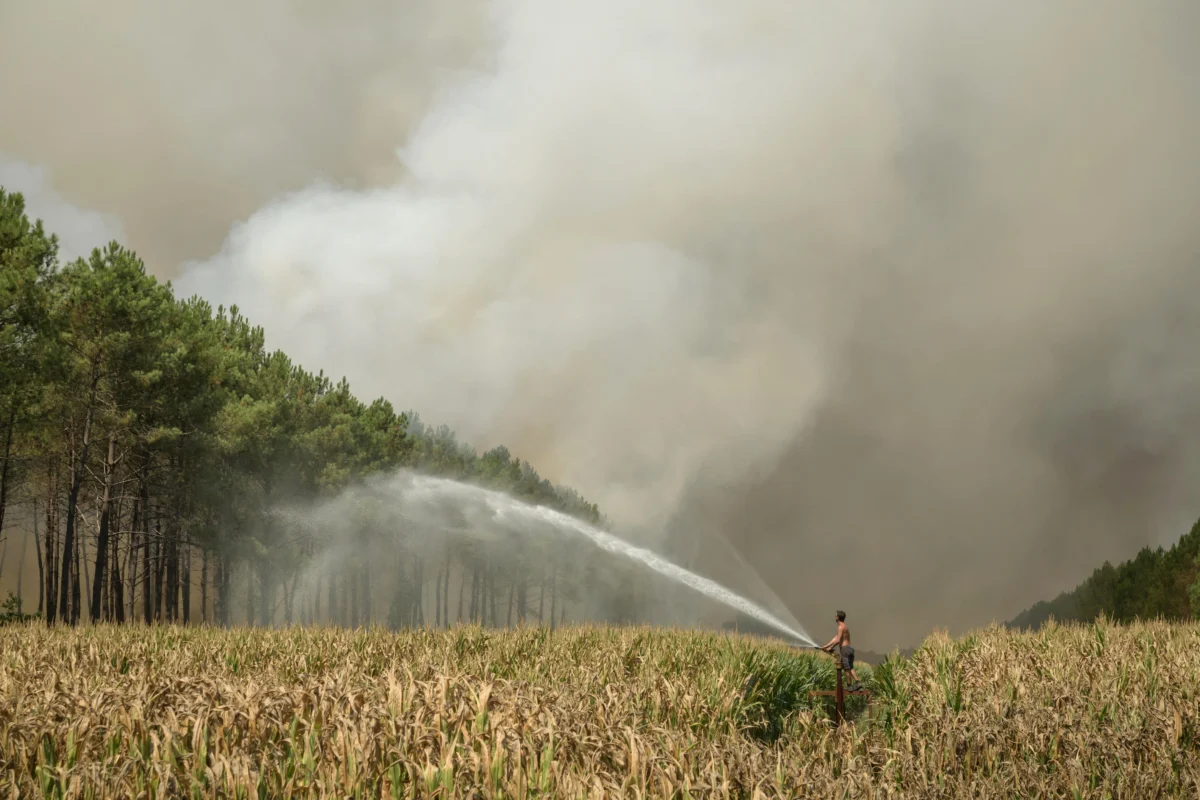
The iconic wine region of Bordeaux, renowned globally for its unparalleled vintages, finds itself grappling with an ecological and environmental catastrophe as ferocious wildfires, ignited on July 22nd, continue to ravage the Atlantic coast. Within a mere three days, the skies above this storied landscape transformed into a menacing, acrid orange, painting a grim picture of the inferno. The current burn area has expanded to an astonishing four times the size of Paris, forcing the evacuation of over 220,000 residents from western communes – a monumental undertaking representing France’s largest-ever peacetime evacuation. The situation is compounded by the ominous arrival of a fresh heatwave, with temperatures already soaring to 104°F (40°C) and climbing, threatening to turn Bordeaux into an even more volatile tinderbox and severely complicating ongoing firefighting efforts. This unfolding disaster raises profound questions about the future of the region’s celebrated wine industry, with winemakers and enthusiasts alike anxiously contemplating the fate of the 2026 vintage, and indeed, whether one will be produced at all.
A Confluence of Catastrophe: Understanding the Bordeaux Fires
The current crisis in Bordeaux is not a singular event but rather the result of a complex interplay of adverse conditions. A wet spring, which initially seemed promising, gave way to an intensely dry summer, a predicament exacerbated by a series of relentless heatwaves. This arid environment has created a fertile ground for the fires, which escalated to extreme levels over the past week, marking the worst wildfire incident in France in over seven decades.
French Prime Minister Sébastien Lecornu has unequivocally described the current fire season as "unprecedented." Echoing this sentiment, Jérôme Steffe, the mayor of Cestas, a town situated just south of Bordeaux, has characterized the blaze as "the fire of the century."
At the heart of this escalating disaster lies Bordeaux’s extensive forest cover. Historically, this dense forestry has been a significant asset, with the Landes forest, located southwest of the region, contributing profoundly to the unique terroir that defines Bordeaux wines. In recent years, significant efforts have been undertaken to plant more trees, a strategy aimed at providing increased shade for vineyards and, hypothetically, mitigating the impact of rising temperatures on grape development. However, during a fire event of this magnitude, these very trees have transformed into a dangerous fuel source, significantly increasing the material available to burn and accelerating the fire’s destructive path.
Resilience Amidst the Flames: The Grapes’ Current Status
Despite the overwhelming scale of the inferno, a critical point of concern for the wine industry is the immediate condition of the grapes. Fortunately, as of the latest reports, the vineyards themselves remain relatively unscathed. No vineyards have been directly consumed by the flames, and initial assessments of smoke levels within vineyard areas have indicated negligible levels of damage.
Nick Briggs, the winemaker at Dutcher Crossing in Sonoma, a region that has become intimately familiar with navigating extreme fire situations over the past few years, offers valuable perspective. "The potential impact depends on several factors, including the proximity of the fire, the duration of smoke exposure, and the stage of grape development," Briggs explains. Winemakers in regions like California, British Columbia, and Oregon have, out of necessity, developed considerable expertise in mitigating the effects of wildfires and smoke. Their accumulated knowledge and experience could prove invaluable to their European counterparts, who, until recently, had not been compelled to confront such existential threats.
Briggs further elaborates on the science behind smoke taint: "The compounds associated with smoke are highly volatile, so fires located closer to vineyards generally pose a greater risk than those farther away."
The immediate future for Bordeaux is marked by a palpable sense of concern, anxiety, and diligent preparation. An impending heatwave, coupled with shifting wind patterns, is poised to influence the trajectory of the fires. The ultimate outcome for the vintage, and indeed the region, hinges significantly on the direction these winds take.
Community Mobilization: A United Front Against the Blaze
In the face of this unprecedented crisis, the people of Bordeaux have demonstrated remarkable solidarity and resourcefulness. Soufflet Vigne, a prominent French agricultural supply and winemaking service company, has actively contributed by ferrying water tanks and pumps, typically used for fermentation and production, to provide crucial water sources for the firefighters.
The Bordeaux Chamber of Agriculture has established an online platform to facilitate resource sharing. This initiative allows farmers to offer their water tanks, trailers, tractors, and access to water sources – any equipment or resource that could potentially aid the overwhelmed firefighters.
Jane Anson, a leading Bordeaux journalist and author of the forthcoming Bordeaux Chronicle, highlights the industry’s collective response: "There is clear solidarity from the industry. Both Smith Haut Lafitte and Rauzan-Ségla are among the many wine estates and agricultural companies that have lent equipment such as water tanks and pumps to assist the firefighters." This collective effort underscores the deep-rooted connection between the land, its produce, and the community that sustains it.
The Shadow of Smoke Taint: A Looming Threat to Vintage Quality
While the physical destruction of vineyards has been averted thus far, the specter of smoke taint looms large as a potential, and perhaps more insidious, threat. The very future of the 2026 vintage, from a region synonymous with collector-darling wines, now appears to be precariously balanced on the whims of prevailing winds.
Morgan Maurèze, a winemaker with deep roots in Bordeaux, having worked with prestigious estates like Château Haut-Brion and Château Petrus, and now leading Napa’s Seven Apart, explains the critical factors at play: "Several factors influence this situation, including your distance from the smoke and whether you’re downwind or upwind. Being upwind is ideal because the smoke is blown away from you. However, if you’re downwind, the risk becomes severe, potentially ruining a year’s worth of work due to smoke taint."
When smoke lingers over grapes during their critical ripening phase, volatile phenols can bind with the sugars in the grape skins. This chemical reaction imparts a smoky, sanguine, or ashy flavor profile to the fruit. This is particularly problematic as many of Bordeaux’s grapes are currently undergoing veraison, the crucial stage of ripening where sugar levels increase and color develops.
Despite the increasing prevalence of fires threatening wine regions globally, effective methods for salvaging wines impacted by smoke taint remain elusive. Winemakers can employ techniques such as treating smoke-impacted wines with activated carbon, nanofiltration, untoasted oak chips, or enzymes. However, these interventions are not foolproof remedies and often struggle to fully mask the undesirable flavors.
"Very high levels make the wine extremely bitter and give it smells of ashtrays, burnt rubber, and plastics. There are very few things you can do to effectively combat smoke-tainted wine," Maurèze states grimly.
Research is ongoing to address this growing challenge. Oregon State University is investigating barrier sprays designed to coat grapes and offer protection against smoke. The USDA is providing funding for research into rapid detection tools capable of identifying smoke-impacted wines, which could allow for more targeted interventions.
Addie Dearden, assistant winemaker at Sleeping Giants in Carneros, has firsthand experience with the devastating impact of wildfires, having navigated major fire events in Napa in 2017 and 2020. "Every time we have these smoke events, we toss everything in a bucket, do a quick fermentation, send it to the lab, and you get a good perspective of what the grapes will go through and taste like," Dearden shares.
The challenge is particularly acute for Bordeaux, a region that heavily relies on red wines aged in oak. If smoke taint is prevalent, winemakers might be forced to reduce skin contact time or limit the use of new oak to mitigate the undesirable flavors. However, these adjustments can fundamentally alter the characteristic profile of Bordeaux wines, impacting their aging potential and market appeal.
The potential loss of a harvest would represent a devastating financial blow to Bordeaux, a region already contending with significant economic headwinds. In recent years, Bordeaux has experienced drastic declines in wine sales and vineyard valuations, coinciding with broader shifts in global drinking habits.
Wine Regions as Climate Bellwethers: A Global Concern
The current crisis in Bordeaux serves as a stark reminder of the increasing unpredictability of viticulture in an era of escalating climate change. Extreme heat, prolonged droughts, damaging hail, and now, widespread wildfires, are becoming increasingly common across the globe. Fires are no longer isolated incidents but rather a recurring and devastating reality for agricultural producers. Beyond the perennial concerns of producing high-quality wine, European vintners must now contend with the complex challenges of mitigating smoke taint, protecting their crops from frost, and future-proofing their vineyards against the relentless march of a rapidly changing climate.
Bordeaux has been actively seeking to adapt to these evolving conditions. In 2021, the region took a significant step by approving six new grape varieties, including heat-resistant options like Touriga Nacional and Marselan, aimed at enhancing its resilience to climate change.
Winemakers worldwide are observing these developments with keen interest, offering support and sharing their own hard-won knowledge. "We’re all just farmers trying to make sure our crop can make it to the end of its cycle," Dearden remarks, reflecting the shared struggle. "You spend all year making sure it’s perfect – all this time, attention, money, and energy. It’s heartbreaking. You want to make sure your neighbors are okay." The fires in Bordeaux are not just a regional tragedy but a potent symbol of the interconnected challenges facing agricultural communities globally, underscoring the urgent need for concerted climate action and adaptive strategies.

0 Comments