
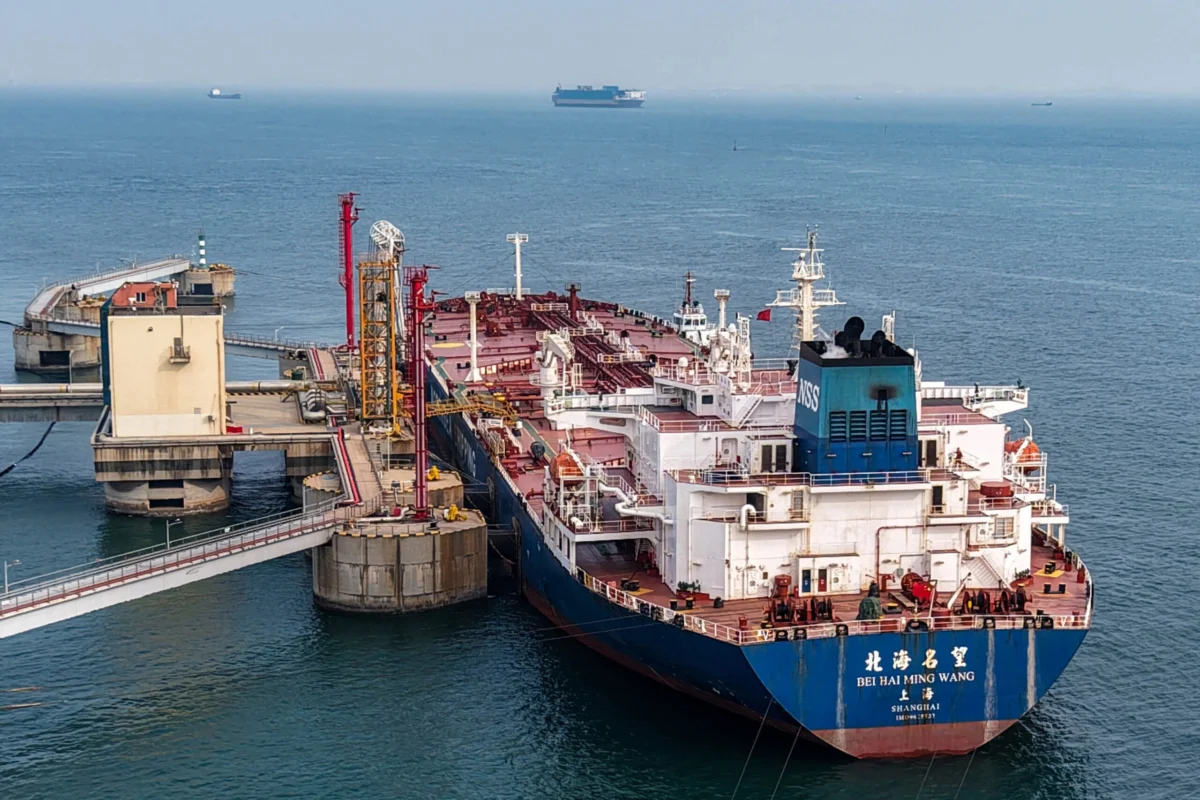
BEIJING – China on Monday firmly declared its robust energy resource capacity, asserting its resilience against the backdrop of the escalating Iran war, which has severely restricted global oil flows through the strategically vital Strait of Hormuz. The declaration comes as U.S. President Donald Trump intensifies pressure on Beijing to actively contribute to securing the critical waterway, linking such cooperation to his upcoming diplomatic engagements.
The National Bureau of Statistics (NBS) spokesperson, Fu Linghui, addressed reporters in Mandarin Chinese, a statement subsequently translated by CNBC, emphasizing that China’s energy supply is "relatively strong" and establishes a "relatively good" foundation for effectively navigating external market volatility. This assertion underscores Beijing’s confidence in its strategic reserves and domestic production capabilities, even as global energy markets grapple with unprecedented disruptions.
Escalating Tensions and Global Energy Market Volatility
The current crisis, stemming from the onset of the Iran war more than two weeks prior, has plunged global crude oil markets into turmoil. Prices have surged dramatically, surpassing $100 a barrel and reaching near four-year highs, a direct consequence of the stalled commercial oil flows through the Strait of Hormuz for most international vessels. This narrow chokepoint, through which approximately one-fifth of the world’s total oil consumption passes daily, has become a focal point of geopolitical tension and economic anxiety.
The conflict in Iran, which began in late February 2026, quickly escalated, leading to naval skirmishes and threats against international shipping lanes. While specific details of the belligerents and exact triggers remain shrouded in the fog of war, its immediate and most pronounced impact has been on maritime trade, particularly crude oil shipments through the Persian Gulf. The international community has expressed grave concerns over the potential for a wider regional conflict and its devastating economic ramifications.
In a move that has drawn international scrutiny, Iran has, remarkably, managed to dispatch over 11 million barrels of oil to China through the Strait of Hormuz since the conflict began. This selective passage highlights complex geopolitical dynamics and existing bilateral agreements, potentially signaling a unique diplomatic channel or strategic arrangement between Tehran and Beijing amidst the broader blockade.
A Chronology of Mounting Pressure and Strategic Responses
The events unfolding over the past few weeks have rapidly reshaped global energy geopolitics:
- Late February 2026: The "Iran war" commences, leading to initial disruptions and heightened security alerts in the Persian Gulf.
- Early March 2026: Naval incidents in the Strait of Hormuz escalate, leading to a de facto closure of the waterway for most commercial oil tankers. Global crude oil prices begin a rapid ascent.
- March 9, 2026: Concerns mount globally over China’s energy security, with initial analyses attempting to quantify its reliance on Hormuz.
- March 11, 2026: An oil tanker is photographed unloading crude oil in Qingdao, Shandong province, symbolizing ongoing, albeit constrained, supply. Iran reportedly ships significant oil volumes to China despite the blockade.
- March 16, 2026 (Sunday): U.S. President Donald Trump publicly links China’s cooperation in restoring oil flows through Hormuz to his planned visit to Beijing at the end of the month. He suggests a possible delay to the summit if Beijing does not assist. Trump incorrectly asserts that China receives 90% of its oil via the strait.
- March 17, 2026 (Monday): China’s National Bureau of Statistics, through spokesperson Fu Linghui, issues a definitive statement affirming the nation’s "relatively strong" energy supply, implicitly pushing back against U.S. pressure and allaying domestic concerns. The NBS also releases positive domestic crude oil production figures.
China’s Energy Resilience: Domestic Production and Strategic Reserves
Beijing’s assertion of energy self-sufficiency is underpinned by recent data from the NBS. The bureau reported a 1.9% year-on-year increase in China’s domestic crude oil production, reaching 35.73 million metric tons during the January to February period. This steady growth in indigenous output serves as a crucial buffer against external supply shocks, reducing the nation’s absolute reliance on imports. While China remains the world’s largest crude oil importer, sustained domestic production efforts are a cornerstone of its energy security strategy.
Beyond current production, China’s strategic petroleum reserves (SPR) represent a significant component of its energy resilience. As of January, Beijing was estimated to hold approximately 1.2 billion barrels of onshore crude stockpiles. This immense reserve, considered one of the largest in the world, is sufficient to meet the nation’s demand for an estimated three to four months under normal consumption patterns. Such a robust emergency buffer allows China significant flexibility to absorb short-term supply disruptions and negotiate from a position of strength during international crises.
Debunking Misconceptions: China’s True Reliance on Hormuz
A critical aspect of China’s official stance involves clarifying the actual extent of its reliance on the Strait of Hormuz. President Trump’s claim that Beijing procures 90% of its oil through the waterway has been widely refuted by energy analysts. Experts estimate that China’s reliance on the Strait of Hormuz for its seaborne oil imports is closer to 40% to 50%. Furthermore, when considering China’s total energy consumption, oil shipments transiting Hormuz account for a relatively modest 6.6%.

This distinction is crucial. China has diversified its energy import routes and sources over decades, developing extensive pipeline networks from Central Asia and Russia, expanding its liquified natural gas (LNG) infrastructure, and investing in alternative maritime routes where feasible. While Hormuz remains important, it is not the singular lifeline often portrayed in some Western narratives. This strategic diversification significantly mitigates the impact of a partial or full closure of the strait on China’s overall energy security.
Global Market Reactions and Broader Economic Implications
The surge in crude oil prices past $100 a barrel has immediate and far-reaching global economic implications. Higher oil prices translate directly into increased costs for transportation, manufacturing, and consumer goods, potentially fueling inflation and dampening economic growth worldwide. For energy-importing nations, the financial burden is substantial, risking trade deficits and currency depreciation.
Analysts at major financial institutions have warned that sustained high oil prices could trigger a global economic slowdown, impacting everything from airline travel to petrochemical industries. The uncertainty surrounding the Strait of Hormuz also introduces a significant risk premium into the market, as traders factor in potential further escalations and prolonged disruptions. This environment favors oil-exporting nations but poses considerable challenges for the global economy’s recovery and stability.
Geopolitical Chessboard: U.S. Pressure and China’s Strategic Autonomy
President Trump’s direct appeal to China to "help with efforts to restore oil flows" through Hormuz before his planned Beijing summit places an additional layer of complexity on already strained U.S.-China relations. The U.S. administration, keen to secure global energy supplies and assert its role in international security, views China as a major stakeholder with the diplomatic leverage to influence the situation in the Persian Gulf.
However, China’s response, emphasizing its internal energy strength rather than immediate commitment to U.S.-led initiatives, highlights its desire for strategic autonomy. Beijing is likely to weigh its national interests carefully, balancing the need for stable global energy markets with its own complex relationship with Iran and its long-standing policy of non-interference in internal affairs, while also considering the implications for its broader geopolitical standing. The implication that Trump might delay his China travel plans serves as a diplomatic lever, but China’s measured response suggests it will not be easily swayed into actions perceived as solely serving U.S. interests without reciprocal benefits or a clear alignment with its own strategic objectives.
China’s Long-Term Energy Strategy: Diversification and Renewables
Beyond the immediate crisis, China’s stance is rooted in a decades-long commitment to diversifying its energy mix and enhancing its self-sufficiency. This includes:
- Domestic Exploration and Production: Continuous investment in enhancing crude oil and natural gas production within its borders, including challenging offshore and unconventional reserves.
- Strategic Pipeline Networks: Development of extensive overland pipelines from Russia (e.g., Power of Siberia) and Central Asian nations, creating crucial alternatives to maritime routes.
- Global Sourcing Diversification: Cultivating robust energy partnerships with a wide array of oil and gas producers across Africa, Latin America, and other regions, reducing over-reliance on any single supplier or chokepoint.
- Strategic Petroleum Reserves: Continued expansion and management of both commercial and government-controlled crude oil and refined product reserves.
- Renewable Energy Dominance: Massive investments in solar, wind, and hydropower, positioning China as a global leader in renewable energy deployment. This long-term transition aims to gradually reduce the country’s overall dependence on fossil fuels, thereby mitigating its vulnerability to international oil market volatility.
- Nuclear Power Expansion: A significant program to build new nuclear power plants, further diversifying the energy mix and providing stable, low-carbon baseload power.
These multifaceted efforts demonstrate China’s proactive approach to energy security, recognizing the inherent vulnerabilities of a nation heavily reliant on imported resources. The current crisis in the Strait of Hormuz serves as a stark reminder of the imperative for such a comprehensive and resilient energy strategy.
Expert Outlook and Future Challenges
Energy analysts generally concur that while China faces significant challenges as a major energy consumer, its extensive strategic reserves and diversified supply chains provide a substantial cushion against short-term shocks. However, the ongoing Iran war and the instability in the Strait of Hormuz underscore the fragility of global energy supply lines.
The long-term implications for China include potentially accelerating its transition away from fossil fuels, redoubling efforts in domestic exploration, and further strengthening its overland energy connectivity. The incident may also prompt a re-evaluation of China’s role in international maritime security, particularly concerning its commercial interests.
The international community will closely watch how Beijing navigates the dual pressures of maintaining its energy security and responding to calls for greater involvement in global geopolitical crises. China’s ability to maintain its economic trajectory and social stability hinges significantly on its continued success in securing reliable and affordable energy supplies, a challenge amplified by the current volatile global landscape. The coming weeks, leading up to President Trump’s potential visit, will be critical in shaping the diplomatic and economic fallout of this complex and evolving energy crisis.

0 Comments