
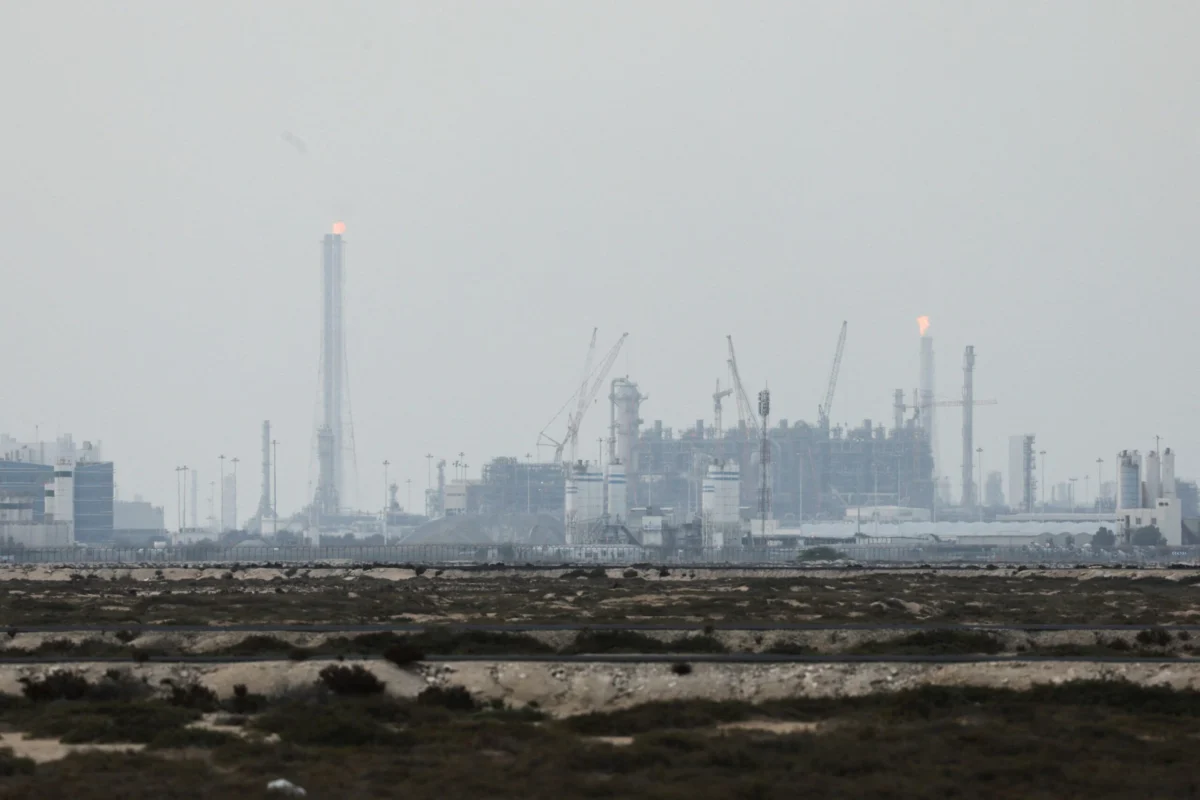
The global energy market is grappling with a profound crisis following the near standstill of traffic in the Strait of Hormuz and a subsequent halt in liquefied natural gas (LNG) production from Qatar, a critical global supplier. While crude oil prices experienced an immediate jump on Monday, March 8, 2026, the long-term implications for the LNG market are projected to be far more severe, owing to the inherent complexities of gas transportation and the highly concentrated nature of its production infrastructure. This unfolding scenario underscores a unique vulnerability in the global energy supply chain, potentially leading to sustained market volatility and significant geopolitical ripple effects.
Immediate Market Shockwaves and Price Surges
The week of March 4-8, 2026, witnessed dramatic shifts across energy markets. Crude oil prices, already sensitive to geopolitical tensions in the Middle East, surged as vessels navigating the Strait of Hormuz faced unprecedented delays and closures. However, the impact on natural gas has been even more pronounced. European natural gas benchmarks recorded an astonishing 63% increase last week, marking its largest percentage gain since March 2022, a period defined by the immediate aftermath of Russia’s full-scale invasion of Ukraine and subsequent energy supply disruptions.
In Asia, where a substantial majority of Qatari LNG is typically directed, prices escalated even further, reaching $23.40 per MMBtu (million British thermal units) by Monday morning. This significant price differential between European and Asian markets has already triggered a notable phenomenon: several LNG vessels initially en route to European ports have executed U-turns, diverting their precious cargo towards the more lucrative Asian market in an urgent attempt to compensate for lost Qatari supply. This swift re-routing highlights the acute immediate demand imbalance and the opportunistic nature of the global spot market in times of crisis.
The Geopolitical Chokepoint: Strait of Hormuz
At the heart of this unfolding crisis lies the Strait of Hormuz, a narrow maritime chokepoint connecting the Persian Gulf to the Arabian Sea and the broader global oceans. Approximately one-fifth of the world’s total LNG supply, and an even larger share of global crude oil, transits through this vital waterway. Qatar, a peninsular nation with immense natural gas reserves, relies almost exclusively on the Strait for exporting its vast LNG production. The recent disruptions, attributed to an escalation of the broader US-Israeli conflict with Iran, have paralyzed this crucial artery, triggering a cascade of economic and strategic concerns worldwide.
While Saudi Arabia and the UAE possess some pipeline infrastructure allowing them to reroute a portion of their crude oil exports, bypassing the Strait, such alternatives are virtually non-existent for natural gas. LNG, by its very nature, requires specialized vessels for long-distance transport. This fundamental difference amplifies the strategic importance of the Strait for gas-exporting nations in the region and exposes the fragility of the global LNG supply chain when this passage is compromised.
Qatar’s Pivotal Role and the Ras Laffan Halt
Qatar stands as one of the world’s leading LNG exporters, playing an indispensable role in meeting global energy demand, particularly in Asia and Europe. The country’s state-owned energy company, QatarEnergy, announced a complete halt to its LNG production last week, following an Iranian drone attack on March 2, 2026. This unprecedented shutdown occurred at the sprawling industrial complex of Ras Laffan, which consolidates Qatar’s entire LNG production capacity.
The decision to cease operations at such a critical facility underscores the severity of the perceived threat and the inherent risks to both personnel and infrastructure. The incident at Ras Laffan was not an isolated event but rather an escalation within a broader context of regional hostilities, prompting immediate and drastic measures to ensure safety and prevent catastrophic damage. This single-point failure has sent shockwaves through a market that relies heavily on Qatar’s consistent and substantial output.
Why LNG is Different: A Complex and Vulnerable Supply Chain
The distinct characteristics of LNG production and transportation render its supply chain significantly more vulnerable than that of crude oil. As Alex Munton, director of global gas and LNG research at Rapidan Energy, noted, while many states in the Middle East produce oil across numerous fields and facilities, gas production in Qatar is concentrated at one gigantic industrial complex in Ras Laffan. This centralization creates a critical single point of failure.
LNG production is an intricate industrial process involving the super-cooling of natural gas to approximately -162 degrees Celsius (-260 degrees Fahrenheit), reducing its volume by 600 times to facilitate transport in specialized cryogenic tankers. This complex liquefaction process is not easily started or stopped. Unlike oil wells that can often be shut down and restarted relatively quickly, an LNG liquefaction plant requires a meticulous, multi-stage procedure to power down safely and, more critically, to restart efficiently.
Munton elaborated on this challenge, stating that the real risk lies in the difficulty of restarting Qatar’s LNG production at Ras Laffan once traffic resumes in the Strait. "Given the complexities of cooling gas, which is fundamentally an industrial process, it will take much longer to restart than oil production." This technical reality means that even if geopolitical tensions ease and the Strait reopens, the return to full operational capacity for Qatari LNG will not be immediate.

Restart Challenges and Long-Term Outlook
Rapidan Energy predicts that LNG exports from the region will not resume until there is "100% certainty" that it is safe for ships to transit the Strait of Hormuz. This stringent requirement is driven by multiple factors, chief among them the immense financial risk associated with LNG tankers, which can cost upwards of $250 million each. Insurance premiums for such vessels would undoubtedly skyrocket or become entirely unavailable in an uncertain security environment.
Beyond the financial considerations, the operational complexities of the liquefaction process dictate that operations cannot be ramped up and down based on fluctuating perceptions of escalation or de-escalation. The entire plant has reportedly never been taken offline before, adding another layer of uncertainty to the restart procedure. Rapidan estimates that fully restarting operations would take weeks, rather than days. Munton expressed concern that "I don’t think in the first few days of this conflict – we’re only a week in – that there is an appreciation for the length of time that Qatar is going to be offline and the effect it will have on global supply and the global markets."
Further compounding the long-term outlook, Bloomberg reported on March 9, 2026, that QatarEnergy is now delaying an expansion to its gas facilities until 2027. This delay, undoubtedly influenced by the recent drone attack and heightened regional instability, suggests a strategic re-evaluation of investment timelines in light of increased operational risks. Such an expansion delay could have significant implications for future global LNG supply growth, which many countries are banking on for their energy transition strategies.
Global Supply Response and Demand Dynamics
The immediate ramifications of Qatar’s production halt are being felt worldwide. The United States, currently the world’s largest LNG exporter, is operating at near maximum capacity, leaving little room to significantly offset the lost Qatari volumes. While other major producers like Australia and Russia contribute to the global LNG market, their combined spare capacity is insufficient to absorb a sustained outage from a player of Qatar’s magnitude.
This limited global supply response capability means that market rebalancing will likely occur through "demand destruction." This term refers to the reduction in demand for a commodity due to prohibitively high prices. In the context of natural gas, this could manifest in several ways: industrial users curtailing operations, power generators switching to alternative, cheaper fuels like coal (where feasible), or governments implementing energy conservation measures. The reliance on demand destruction as a primary balancing mechanism underscores the severity of the supply shock and its potential economic consequences.
Escalation Risks and Future Security
The current situation also carries significant risks of further escalation, with potentially catastrophic long-term ramifications. Alex Munton of Rapidan Energy warned that Iran’s prior attacks against Ras Laffan might have been merely a "warning shot that wasn’t the real deal." He chillingly described the industrial complex as a "sitting duck," asserting that "If Iran wanted to do major damage to Qatar’s LNG capacity, it could… There is no way of defending completely against an Iranian attack if Iran was hell bent on damaging the plant."
This stark assessment highlights the existential threat posed to one of the world’s most critical energy infrastructures. The contrast with oil production is clear: "It’s not like one node can take out all Middle East oil production, because there’s just too many fields, there’s too many countries, there’s too many plants and facilities… but with LNG it’s one facility. It’s a gigantic complex, but it’s just one facility." This singular point of vulnerability makes the entire global LNG market susceptible to targeted geopolitical actions, raising profound questions about energy security strategies and diversification.
Broader Impact and Implications
Beyond the immediate price spikes, the crisis in the Strait of Hormuz and the halt in Qatari LNG production carry broader implications for global economics, geopolitics, and environmental policy. For energy-importing nations, particularly in Europe and Asia, the sustained disruption threatens economic stability, potentially fueling inflation and hindering industrial recovery. The imperative to secure diversified energy supplies will gain renewed urgency, possibly accelerating investments in renewables or, paradoxically, extending the life of coal-fired power plants as a stop-gap measure.
Geopolitically, the events underscore the fragile balance of power in the Middle East and the interconnectedness of regional conflicts with global energy markets. The ability of non-state actors or regional powers to disrupt critical infrastructure poses a severe challenge to international trade and security. This situation could also prompt a re-evaluation of strategic energy alliances and the role of major powers in ensuring the safety of international shipping lanes.
In conclusion, the current energy crisis, centered on the Strait of Hormuz and Qatar’s LNG facilities, represents an unprecedented challenge to global energy security. The unique vulnerabilities of the LNG supply chain, characterized by concentrated production and complex operations, mean that the market faces a protracted period of uncertainty and volatility. The duration of Qatar’s production halt, the challenges of restarting operations, and the ever-present risk of further escalation will continue to dictate the trajectory of global gas prices and, by extension, the economic fortunes of nations worldwide. The "sitting duck" analogy serves as a chilling reminder of the fragility inherent in a highly specialized, geographically concentrated energy infrastructure, demanding urgent international attention and strategic foresight.

0 Comments