
The Federal Reserve stands at a critical juncture, with all signs pointing to an unequivocal decision to maintain the federal funds rate target range between 3.5% and 3.75% at its upcoming Federal Open Market Committee (FOMC) meeting this Wednesday. This pivotal decision unfolds against a complex tapestry of global geopolitical instability, particularly escalating tensions stemming from the ongoing Iran war, persistent inflationary pressures defying earlier forecasts, and a domestic labor market that continues to send mixed signals to policymakers. Market participants, who had previously entertained prospects of earlier rate adjustments, have recalibrated their expectations dramatically, now pricing in a near-zero probability of a cut at this meeting and pushing back any potential easing well into the latter half of the year, likely September or even October, with forecasts suggesting a solitary rate reduction for 2026.
This cautious stance by the central bank reflects an environment of heightened uncertainty, where traditional economic models are challenged by exogenous shocks and entrenched domestic trends. The Fed’s dual mandate of achieving maximum employment and price stability becomes increasingly difficult to navigate when global events threaten to reignite inflation and domestic data provides insufficient clarity for a decisive shift in monetary policy.
The Immediate Decision: Standing Pat in Turbulent Waters
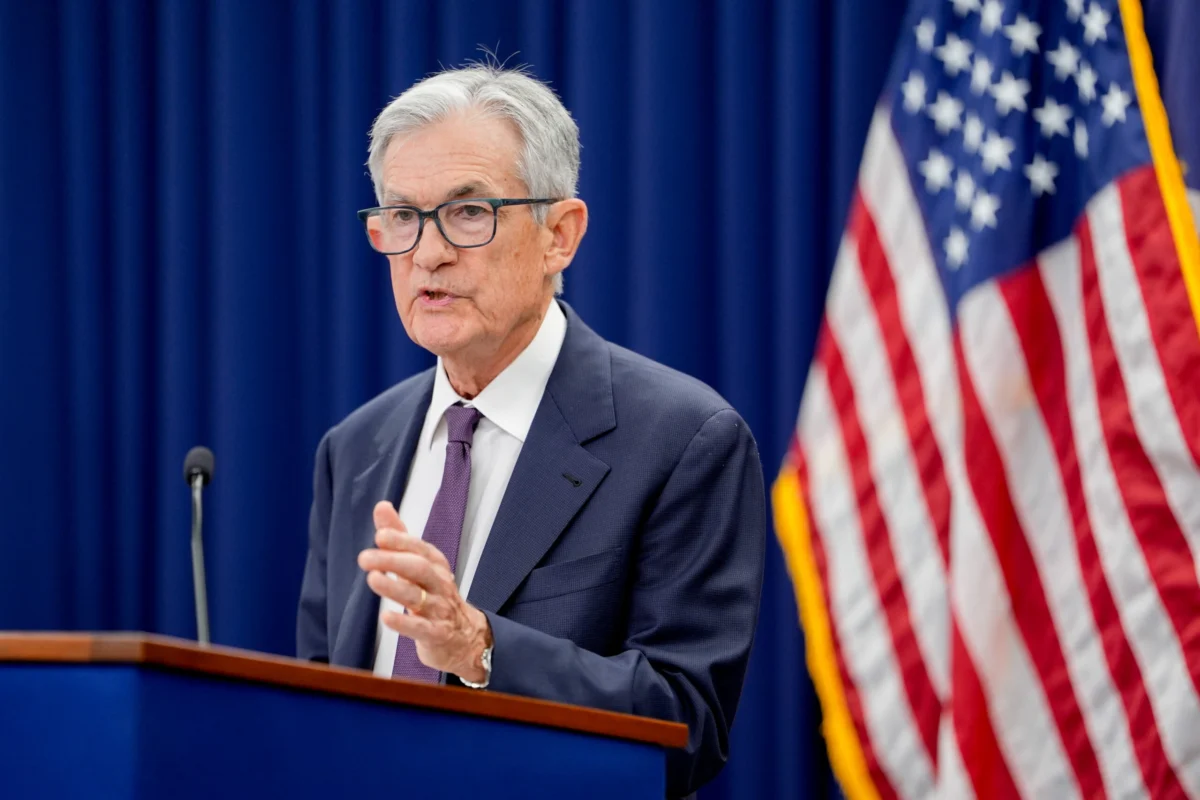
For Chair Jerome Powell and his colleagues on the FOMC, the path forward this week appears remarkably constrained. The consensus among economists and market strategists is overwhelming: a rate hold is virtually guaranteed. This predictability, however, belies the intricate deliberations taking place behind closed doors. The decision to stand pat is not merely a passive act but a strategic pause, allowing the Fed to assess the evolving economic landscape without adding further volatility through premature policy adjustments.
The target range of 3.5% to 3.75% for the federal funds rate represents the culmination of an aggressive tightening cycle initiated in 2022 to combat the highest inflation rates seen in decades, which at one point saw the Consumer Price Index (CPI) surge to 9.1% year-over-year in June 2022. After several significant hikes, bringing the policy rate from near-zero to its current restrictive level, the Fed has maintained this stance, carefully observing the lagged effects of its policy on the broader economy. Updates to the Summary of Economic Projections (SEP) and the closely watched "dot plot" of individual officials’ rate expectations are also anticipated to show minimal shifts, reinforcing the committee’s commitment to a "higher for longer" strategy until clearer evidence of sustainable disinflation emerges.
Geopolitical Headwinds: The Iran War’s Shadow on Global Energy
One of the most significant external factors currently complicating the Fed’s calculus is the escalating "Iran war" and its profound implications for global energy markets and supply chains. While the original article’s reference to an "Iran war" points to regional escalations and proxy conflicts rather than a full-scale declared war, the impact on key strategic chokepoints, particularly the Strait of Hormuz, is undeniable. This vital waterway, through which approximately one-fifth of the world’s seaborne crude oil passes daily, becomes a flashpoint during periods of heightened tension, leading to fears of supply disruptions and consequent spikes in crude oil prices.
Indeed, following recent escalations in the Middle East, global benchmark oil prices, such as Brent crude and West Texas Intermediate (WTI), have shown significant upward movement, often surging by several percentage points on news of attacks or increased hostilities. For instance, Brent crude has hovered near or above $85 per barrel at times, a level that can quickly translate into higher gasoline prices and increased costs for businesses globally. Historically, oil price shocks have been a powerful driver of inflation, feeding directly into transportation costs, manufacturing expenses, and ultimately, consumer prices. For a central bank already struggling to tame inflation, the prospect of an energy-driven inflationary surge is a major deterrent to considering rate cuts. The Fed typically aims to "look through" transient commodity price fluctuations, but persistent geopolitical risk that keeps energy prices elevated for an extended period could force a more hawkish stance. The broader implication extends beyond oil, affecting shipping insurance costs, global trade routes, and overall supply chain resilience, all of which contribute to inflationary pressures.
Inflation’s Persistent Grip: The 2% Target Remains Elusive
The primary mandate of the Federal Reserve is to maintain price stability, typically defined as a 2% annual inflation rate for the Personal Consumption Expenditures (PCE) price index. For several years now, the Fed has found itself considerably above this target, leading to concerns about the long-term credibility of its inflation objective. While headline inflation metrics have cooled significantly from their peaks in 2022, the journey back to 2% has proven more protracted and uneven than initially anticipated.

Recent economic data has highlighted this persistence. The original article notes that January core inflation (likely referring to Core CPI or Core PCE, which strips out volatile food and energy prices) was 3.1% year-over-year, significantly above the Fed’s target. The Consumer Price Index (CPI) has shown annual rates in the low to mid-3% range, while the PCE price index, the Fed’s preferred gauge, has also remained elevated, with core PCE often proving particularly sticky. Service sector inflation, in particular, remains a concern for policymakers, reflecting strong demand and wage growth in certain segments, which can be less responsive to monetary tightening. Housing inflation, measured by shelter costs, has also continued to contribute significantly to overall inflation, albeit with a lag from market rents.
Policymakers are acutely aware that easing monetary policy prematurely could risk reigniting inflationary pressures, undoing the progress made through aggressive rate hikes. Former Fed Vice Chair Roger Ferguson emphasized this concern, stating, "I’m more worried about higher inflation. You know, the Fed has a 2% target. They’ve been away from that target for multiple years now, actually. At some point, it’s going to start to come into question whether or not the 2% target is really what the Fed’s aiming at, and so I am much more worried about that." This sentiment underscores the committee’s likely cautious approach, prioritizing the long-term battle against inflation over short-term market expectations for rate cuts.
The Nuanced Labor Market: Strength Amidst Subtle Cracks
The U.S. labor market has been a remarkable pillar of strength throughout the economic recovery and subsequent period of high inflation. Robust job growth, low unemployment rates, and rising wages have defied predictions of a significant downturn, providing a strong counterpoint to recession fears. However, the labor market picture is not uniformly strong and presents its own set of complexities for the Fed.
While the unemployment rate has remained historically low, hovering around 3.7% to 3.9% in recent months – well below the long-run average – there have been subtle shifts. Job growth, while still positive, has shown signs of moderation from its blistering pace earlier in the cycle. For example, while monthly payroll gains may still be in the hundreds of thousands, they are often revised downwards in subsequent reports, and the average monthly gain has decreased from its peak. Wage growth, a key determinant of service sector inflation, has also begun to cool slightly but remains elevated in certain sectors, with average hourly earnings often rising by 4% or more year-over-year, which is considered inconsistent with a 2% inflation target in the long run. The original article cited the February 2026 jobs report as part of the mixed signals, indicating that while headline numbers might appear strong, underlying trends such as a rising labor force participation rate, increasing duration of unemployment, or shifts in full-time vs. part-time employment can provide a more nuanced picture.
The Fed’s challenge lies in discerning whether the labor market is merely normalizing to a more sustainable pace or if underlying weakness is beginning to emerge. A too-tight labor market can fuel inflation through wage-price spirals, while a rapidly cooling market could signal an impending economic slowdown. The current "mixed signals" necessitate a data-dependent approach, preventing the Fed from committing to a specific rate path until more conclusive trends emerge. The committee must weigh the risk of overtightening and triggering a recession against the risk of undertightening and allowing inflation to become entrenched.
Market Expectations and the Shifting Timeline for Cuts
The financial markets have undergone a significant reassessment of the Fed’s rate trajectory. Just a few months ago, in late 2025, traders were aggressively pricing in multiple rate cuts beginning as early as June 2026, with some forecasts suggesting as many as five to six 25-basis-point reductions by year-end. Tools like the CME Group’s FedWatch tool, which tracks probabilities of FOMC rate decisions based on futures pricing, consistently showed high chances for cuts.
However, the confluence of persistent inflation data, a resilient (if mixed) labor market, and, critically, the geopolitical escalations in the Middle East, have dramatically altered this calculus. The "Iran war" and its associated impact on oil prices and inflation expectations have acted as a powerful brake on dovish market sentiment. What was once seen as a certainty for June has now evaporated, with the market now largely anticipating the first cut no earlier than September, and potentially only a single 25-basis-point reduction for the entire year. This shift reflects a more realistic understanding of the Fed’s constraints and its unwavering commitment to its inflation target. The market’s adjustment also indicates a growing recognition that the "last mile" of disinflation is proving to be the hardest, requiring patience and sustained vigilance from the central bank.
Chair Powell’s Conundrum: Guiding Future Policy Amidst Uncertainty
Chair Jerome Powell’s press conference following Wednesday’s FOMC meeting will be under intense scrutiny. With an April cut almost entirely priced out, the market’s focus will shift entirely to his forward guidance regarding the future path of interest rates. This task is made more challenging by the inherent difficulty in conveying the committee’s collective consensus, especially when individual members may hold differing views on the appropriate timing and magnitude of future adjustments.

As Bank of America Fed-watchers noted, Powell’s ability to guide markets "depends on the extent to which they perceive his comments as representing the committee’s consensus rather than his own views." This is particularly pertinent given the upcoming leadership transition dynamics. If things proceed as currently structured, this meeting could potentially be Powell’s next-to-last as chair, adding another layer of complexity to his communication strategy. Markets might be wary of reading too much into his statements if there’s a perceived lame-duck status, making it harder for his words to carry the full weight of the committee’s future intentions.
Powell will likely reiterate the Fed’s data-dependent approach, emphasizing flexibility and the need for more conclusive evidence that inflation is sustainably moving towards 2%. He will undoubtedly acknowledge the geopolitical risks and their potential impact on the outlook. The bar for further rate cuts has indeed become "quite elevated," as BeiChen Lin, senior investment strategist at Russell Investments, observed, implying that significant and sustained improvements in inflation data, perhaps coupled with signs of substantial labor market weakening, would be required to prompt a policy shift.
The "Dot Plot" and Economic Projections: A Window into Committee Thinking
A crucial element of Wednesday’s release will be the updated Summary of Economic Projections (SEP), which includes the famous "dot plot." This grid visually represents each FOMC member’s individual forecast for the federal funds rate at various points in the future (year-end for 2026, 2027, 2028, and the longer run), as well as their projections for GDP growth, unemployment, and inflation. While not a commitment, the dot plot offers invaluable insight into the collective thinking and potential direction of monetary policy, showing the distribution of views across the committee.
Most observers expect few major changes in the SEP or the dot plot this time around. In December’s update, officials indicated a consensus for just one rate cut this year. Despite the recent economic twists and turns, this consensus is largely expected to hold, even with the occasional dissents that often accompany Fed decisions, reflecting the diverse perspectives within the FOMC. The Fed might nudge up projections for economic growth and inflation slightly, reflecting the surprising resilience of the economy and the sticky nature of prices. For instance, the December SEP projected 2026 GDP growth at around 1.4% and PCE inflation at 2.4%. These figures could see minor upward revisions. However, the core message embedded in the dot plot – a cautious approach to rate reductions – is anticipated to remain largely intact, reinforcing the "higher for longer" narrative that has now become entrenched. As David Kelly, chief global strategist at JPMorgan Asset Management, commented, "Looking at their communications, they will likely emphasize that the conflict in the Middle East has added further uncertainty to the outlook for both inflation and employment. However, their forecasts could look remarkably similar to three months ago."
Political Undercurrents and Leadership Uncertainty: A Distraction for the Fed
Beyond the purely economic factors, the Federal Reserve also operates under a persistent political gaze, which adds another layer of complexity to its decision-making. President Donald Trump has historically been a vocal critic of the central bank’s policies, particularly under Chair Powell, consistently pressing for lower interest rates. His recent statements, such as "What’s a better time to cut interest rates than now? A third-grade student would know that," underscore the external pressure on the Fed to ease policy. While the Fed prides itself on its independence from political influence, such public criticisms can nonetheless create an uncomfortable backdrop for policymakers, potentially leading to questions about the Fed’s autonomy.
Further complicating the political landscape is the unusual situation surrounding Powell’s potential successor. The original article highlights that Trump’s nomination of Kevin Warsh, a former Fed Governor, to succeed Powell in May is currently being held up. This hold-up is linked to a case being pursued by U.S. Attorney Jeanine Pirro against Powell concerning the Fed’s headquarters renovation. Senator Thom Tillis, a Republican from North Carolina, has stated he will block the Warsh nomination in the Senate Banking Committee until this legal issue is resolved. This unique blend of political pressure, legal entanglement, and leadership uncertainty creates an additional layer of distraction and potential instability for the institution, even if it does not directly sway individual rate decisions. The prospect of a prolonged transition or an uncertain future leadership could impact market confidence and the Fed’s long-term strategic planning and credibility.
Broader Economic Implications: What a Prolonged High-Rate Environment Means
A sustained period of higher interest rates carries significant implications for various segments of the U.S. and global economies.
- Consumers: Higher rates translate to increased borrowing costs for mortgages, car loans, credit cards, and other forms of consumer credit. The average 30-year fixed-rate mortgage, for example, has fluctuved significantly, often sitting above 6.5% or 7%, dampening demand and affordability. This can curtail consumer spending, particularly on big-ticket items, potentially slowing economic growth. However, savers benefit from higher returns on deposits and fixed-income investments, providing a financial cushion for some households.
- Businesses: For businesses, higher borrowing costs can curtail investment in expansion, equipment, and innovation. This can impact job creation and overall economic productivity. Smaller businesses, which often rely more heavily on variable-rate loans, can be particularly vulnerable to rising debt service costs, potentially leading to slower growth or even insolvencies. Large corporations with significant cash reserves or access to diverse financing might be more insulated.
- Housing Market: The housing market is highly sensitive to interest rates. Higher mortgage rates have significantly cooled demand, reducing affordability and slowing sales activity, although home prices have remained stubbornly high in many regions due due to persistent supply constraints and low inventory. New home construction can also be affected by higher financing costs for developers.
- Government Debt: With the U.S. national debt at record levels, currently exceeding $34 trillion, higher interest rates significantly increase the cost of servicing that debt. This can lead to a larger portion of the federal budget being allocated to interest payments, potentially crowding out other essential government spending on infrastructure, education, or social programs.
- Global Economy: The Fed’s policy decisions have profound ripple effects globally. A "higher for longer" stance can strengthen the U.S. dollar, making U.S. exports more expensive and increasing the debt burden for countries that borrow in dollars. It can also lead to capital outflows from emerging markets as investors seek higher returns in safer U.S. assets, potentially destabilizing economies

0 Comments