
A recent analysis by Pinterest, detailed in its inaugural Parenting Trend Report, reveals a significant and accelerating shift in parental priorities, with a pronounced surge in demand for screen-free activities for children. This trend, while indicative of a widespread desire to foster unplugged childhoods, also highlights a growing tension between aspirational, often elaborate, online content and the practical realities faced by parents seeking genuinely simple and effective engagement strategies. The report underscores a societal yearning for digital detox in family life, yet inadvertently exposes a potential pitfall where the pursuit of "enrichment" can become another source of parental pressure.
The Pinterest Parenting Trend Report, a pioneering deep dive into evolving family dynamics and consumer behavior on the platform, serves as a powerful barometer for current parental anxieties and aspirations. Data from the report indicates a remarkable 200% year-over-year increase in searches for "screen-free activities," signaling a clear pivot away from digital entertainment. Even more striking is the 1,070% surge in interest for "sensory play ideas" and a substantial 630% jump in searches for "DIY kids playground." These statistics collectively paint a picture of parents actively seeking to create hands-on, experience-rich environments for their children, prioritizing tactile exploration, physical activity, and imaginative engagement over passive consumption of digital media.
This trend is not isolated but rather reflective of broader societal concerns regarding the pervasive influence of screens on child development. For years, pediatric organizations globally, including the American Academy of Pediatrics (AAP), have issued guidelines on screen time for children, citing potential impacts on language development, sleep patterns, attention span, and social-emotional skills. The COVID-19 pandemic further exacerbated these concerns, as lockdowns and remote learning led to an unprecedented increase in screen exposure across all age groups. As families emerged from the pandemic, many parents expressed a renewed commitment to reducing digital dependency and fostering more traditional forms of play. The Pinterest data strongly supports this post-pandemic recalibration, indicating a collective move towards reclaiming childhood for offline experiences.
However, the very platforms that highlight these trends, such as Pinterest and Instagram, can also become a double-edged sword. While they offer a vast repository of creative ideas, they frequently showcase meticulously curated, aesthetically perfect activities that demand significant time, specialized materials, and often a dedicated "craft room" to execute. Parents, inspired by images of elaborate sensory bins filled with hand-dyed chickpeas, intricate felt food sets, or bespoke DIY play structures, can find themselves overwhelmed. The initial intention to provide enriching, screen-free play can quickly devolve into a feeling of inadequacy and increased parental stress, as the reality of setting up such activities often outweighs the fleeting attention span of a toddler. The contrast between a lovingly prepared, Instagram-worthy craft station and a child’s five minutes of engagement before moving on can be disheartening, contributing to parental burnout rather than alleviating it.
Child development experts consistently emphasize the critical role of unstructured, open-ended play in fostering creativity, problem-solving skills, and resilience. Dr. Sarah Clark, a pediatrician specializing in developmental psychology, states, "Children learn best through exploration and interaction with their environment. The most effective activities are often the simplest – those that allow children to use their imagination, experiment with materials, and direct their own play, rather than following rigid instructions." This expert consensus aligns with the sentiment that elaborate setups are often unnecessary, and sometimes even counterproductive, as they can limit a child’s imaginative scope by providing too much structure. The true value lies in the process of discovery and engagement, not in the aesthetic perfection of the activity itself.
Recognizing this critical gap between aspirational online trends and practical daily needs, a growing movement among childcare providers and experienced parents advocates for a return to genuinely low-effort, high-impact activities. These strategies prioritize simplicity, utilizing common household items, and requiring minimal setup time, thereby empowering parents to facilitate meaningful screen-free play without adding to their already substantial workload. The goal is not a meticulously curated environment, but rather an accessible one that sparks curiosity and sustains engagement, allowing children to develop essential skills while granting parents precious moments of calm.
Ten Practical Strategies for Engaging Toddlers with Minimal Effort
Drawing from the insights of experienced childcare providers and child development principles, the following activities exemplify how simplicity can be the most powerful tool in a parent’s arsenal for fostering screen-free engagement. Each requires minimal setup, utilizes readily available items, and offers significant developmental benefits, providing parents with valuable windows of sustained, independent play.
1. The Muffin Tin Sort: Cultivating Focus and Fine Motor Skills
This activity is deceptively simple yet profoundly effective for toddlers aged 1 to 4. Parents need only a standard muffin tin, a large spoon or kid-safe tongs, and a collection of small, safe household items. Dry beans, pasta shapes, pom-poms, cereal, or large buttons can be mixed in a bowl and presented for sorting into the individual muffin cups. This task engages fine motor skills, hand-eye coordination, and early mathematical concepts such as categorization and one-to-one correspondence. The quiet, repetitive nature of sorting often captivates toddlers for 20-30 minutes, offering a meditative experience that builds sustained attention without the need for intricate, store-bought manipulatives.
2. Tape Roads on the Floor: Fostering Imaginative and Gross Motor Play
Ideal for children aged 2 to 6, this activity transforms any flat surface into an interactive play zone. Using painter’s tape or colorful washi tape (a perennial favorite for its easy removal), parents can create roads, intersections, and parking spaces on hardwood, tile, or low-pile carpet. Add a few toy cars, and the play immediately takes on a life of its own. Children quickly engage in directing traffic, creating narratives, and designing their own extensions to the road network. For added complexity, shoe boxes can become tunnels or garages, and paper towel tubes can serve as culverts. This activity encourages imaginative storytelling, spatial reasoning, and gross motor skills as children move around their created world. It reliably provides extended periods of focused play, often exceeding 30 minutes, and can be easily expanded as interest grows.
3. The Washing Station: Sensory Exploration and Life Skills Practice
Suitable for toddlers from 1.5 to 5 years, the washing station offers a deeply satisfying sensory experience. A large bin or bowl filled with warm, soapy water, a sponge or rag, and a collection of "dirty" items – such as plastic animals, play food, toy cars, or even rocks collected from outside – is all that’s required. Placing a towel underneath helps contain potential splashes. Children are often mesmerized by the act of washing, scrubbing, and rinsing, engaging their senses and developing fine motor control. This activity subtly integrates practical life skills, promotes independence, and provides a calming, repetitive task that can absorb a child’s attention for an unexpectedly long duration. The built-in "cleanup" makes it particularly appealing to parents.
4. Window Drawing: Encouraging Creative Expression and Breaking Norms
For children aged 2 and up, washable markers on a sliding glass door or window provide an exciting canvas. The allure of drawing on a surface typically off-limits gives this activity a thrilling, slightly transgressive edge that immediately captures attention. This novel approach to art encourages large-scale drawing, promotes creativity, and helps develop hand-eye coordination. The markers wipe off effortlessly with a damp cloth, ensuring a quick and easy cleanup. This activity often results in prolonged periods of focused artistic expression, allowing children to experiment with color and form in a unique way.
5. The Treasure Dump: Igniting Curiosity with Everyday Objects
Targeting ages 1 to 4, this activity leverages the power of novelty. Parents simply empty the contents of a "junk drawer" or any drawer typically inaccessible to children into a bin on the floor. Items like old keys, measuring spoons, a flashlight, rubber bands, a whisk, or a calculator become fascinating objects for exploration. The inherent novelty of these everyday items, seen through a child’s fresh perspective, transforms them into tools for imaginative play – a whisk can be a wand or a microphone, keys unlock invisible doors. This activity fosters curiosity, imaginative play, and fine motor skills as children manipulate and investigate the objects. Rotating the contents every few weeks ensures sustained interest.
6. Pillow Obstacle Course: Burning Energy and Enhancing Motor Skills
Perfect for ages 2 to 7, especially on rainy days when energy levels are high, a pillow obstacle course requires no special equipment. Couch cushions, throw pillows, and blankets are arranged on the floor to create a path for climbing, crawling, and jumping. Naming it a "lava course," "ninja path," or "jungle challenge" adds an element of imaginative play that directs chaotic energy into focused physical activity. A laundry basket can serve as a "finish line vault," or a sheet draped over chairs can become a tunnel. This activity promotes gross motor skills, balance, coordination, and problem-solving, providing a significant physical outlet that can last for extended periods, making it an excellent "emergency button" for parental sanity.
7. Sticker Pages: Developing Fine Motor Control and Creative Storytelling
A sheet of stickers and a piece of paper are all that’s needed for this activity, suitable for ages 1.5 to 6. For younger toddlers, the physical act of peeling and placing stickers is a captivating fine motor workout, enhancing dexterity and hand strength. Older children can use stickers to create elaborate scenes, design their own worlds, or tell stories, often adding drawings and labels. Keeping a stash of novelty stickers (easily found at dollar stores) ensures a fresh appeal. This quiet activity is particularly effective for winding down at the end of the day or when a moment of focused, independent play is needed.
8. The Spray Bottle: Outdoor Exploration and Hand Strength Development
For children aged 2 and up, a simple spray bottle filled with water offers endless entertainment. Sent outdoors, children can spray fences, sidewalks, plants, or even use stencils for "water painting." The sensory feedback of spraying water is inherently engaging, and the squeeze motion is excellent for developing hand strength and coordination. For indoor use, the bathtub provides a contained environment for this activity. Adding sidewalk chalk that is then sprayed with water can create vibrant, ephemeral art. This activity provides a refreshing outdoor outlet, fosters creativity, and strengthens hand muscles.
9. Cardboard Box, Full Stop: Unleashing Unstructured Imagination
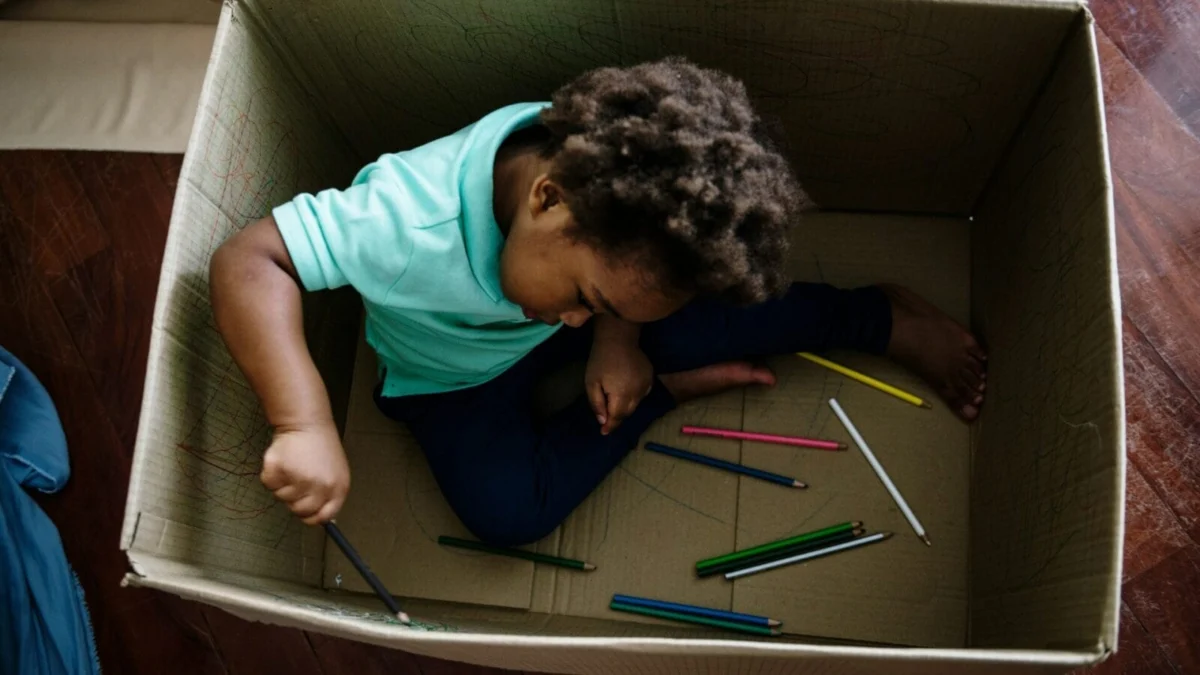
A timeless classic for all ages, the cardboard box is the epitome of open-ended play. Simply provide a child with a large cardboard box and perhaps a marker, and resist the urge to suggest what they should make. The less structure provided, the longer and more creatively a child will engage. A box can transform into a car, a house, a rocket ship, a secret hideout, or a puppet theater – the possibilities are limited only by a child’s imagination. This activity fosters creativity, problem-solving, and independent play, proving that the simplest "toy" often holds the most potential for rich, sustained engagement.
10. "Cooking" with Dry Ingredients: Sensory Play and Life Skills Preview
This activity, suitable for ages 2 to 6, offers a sensory bin experience without requiring a trip to a craft store. A sheet pan or a high-sided bin filled with dry oatmeal, flour, or rice, along with bowls, spoons, and measuring cups, allows children to "make soup" or "bake a cake." Adding a few drops of water can elevate the sensory experience, though it requires a slightly higher tolerance for mess. This activity provides rich sensory input, develops fine motor skills through pouring, measuring, and stirring, and introduces basic life skills. The material itself, whether plain or "lovingly dyed," remains equally captivating to a child, emphasizing that substance trumps superficial aesthetics.
Beyond Aesthetics: Redefining "Enrichment" in Modern Parenting
The growing interest in screen-free activities, coupled with the practical demand for low-effort solutions, signals a crucial re-evaluation of what constitutes "enrichment" in modern parenting. The pressure to create a "perfect," aesthetically cohesive, unplugged childhood – often mirroring the curated perfection of online digital content – is proving to be unsustainable and counterproductive for many families. True enrichment, as supported by child development research and observed by experienced caregivers, lies not in the elaborate setup or the Instagram-worthiness of an activity, but in its capacity to foster genuine engagement, spark curiosity, and allow children the freedom to explore and create independently.
This paradigm shift encourages parents to look beyond consumerism and intricate DIY projects, embracing the inherent value of everyday objects and unstructured time. A child deeply absorbed in sorting beans into a muffin tin, or drawing wobbly suns on a windowpane, is experiencing profound learning and development. These moments, often unphotogenic and messy, are the essence of childhood: unfiltered exploration, imaginative play, and the gradual mastery of skills.
The broader implications of this trend extend to parental well-being. By embracing simpler approaches, parents can alleviate the self-imposed pressure to constantly "entertain" or "educate" their children through elaborate means. This allows for more relaxed interactions, reduces mental load, and creates opportunities for parents to find moments of peace, such as enjoying a warm cup of coffee while their child is deeply engaged in self-directed play. Ultimately, the goal of the screen-free movement should not be to replace one form of digital pressure with an analog equivalent, but rather to empower both children and parents to thrive in a more authentic, less demanding, and truly enriching environment. The "win" is not a perfectly curated photo, but a child who can sit with boredom for five minutes and independently discover something meaningful to do, and a parent who feels equipped and supported in fostering that crucial ability.

0 Comments