
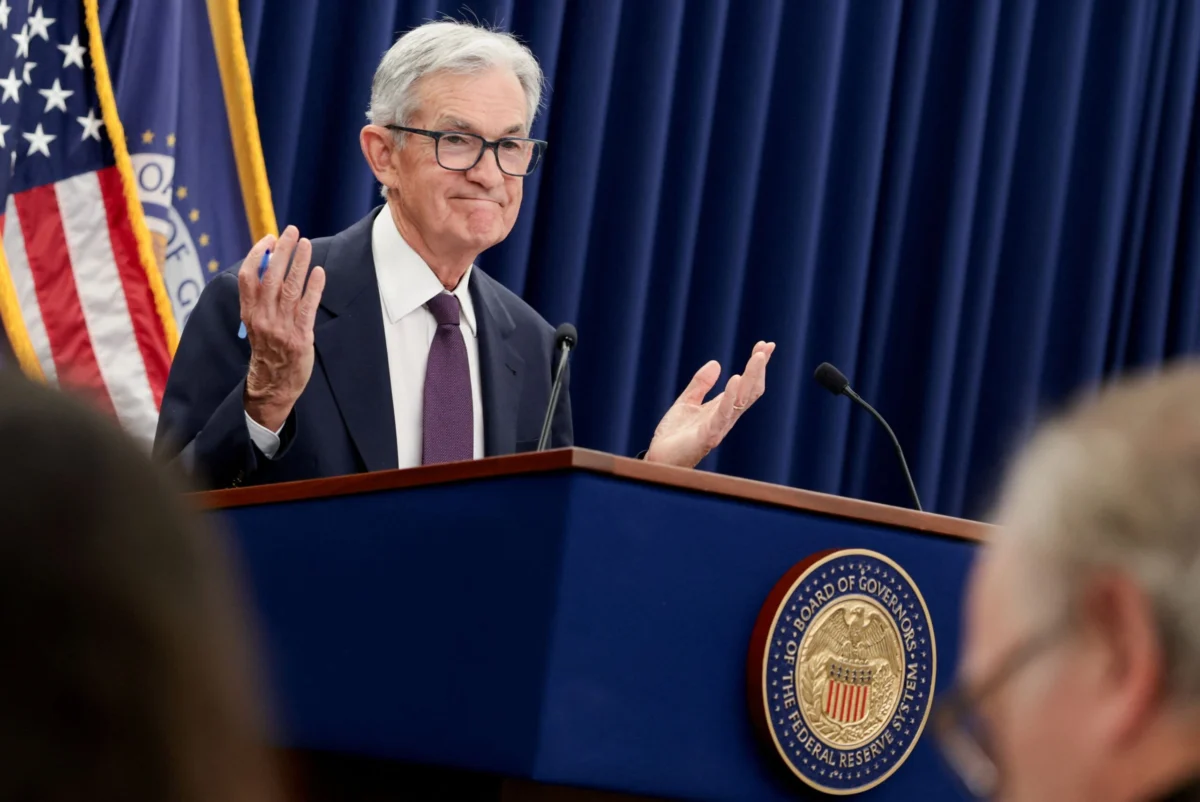
Expectations for significant interest rate reductions by the U.S. Federal Reserve have sharply receded, as a confluence of escalating energy prices and renewed inflation fears reshapes the economic landscape. This dramatic shift in market sentiment, which has seen traders abandon hopes of an early summer easing, directly coincides with heightened geopolitical instability following the U.S.-Israel attacks on Iran and a subsequent surge in global oil prices, pushing Brent crude to approximately $100 a barrel. This development places the central bank in a complex position, balancing its dual mandate of price stability and maximum employment against a backdrop of global uncertainty.
A Rapid Reversal in Market Expectations
Just weeks ago, market participants were largely pricing in a clear path for monetary policy easing. The prevailing anticipation, as reflected by the CME Group’s FedWatch calculations, was for a quarter percentage point rate reduction as early as June, with a strong likelihood of another in September. An outside chance of a third cut by year-end was also on the table, contingent on evolving economic data. This optimistic outlook was anchored by several key factors: a perceived softening in the domestic labor market, signs of moderating inflation across various sectors, and the imminent arrival of a new, potentially more dovish Federal Reserve Chair, Kevin Warsh, slated to take over from Jerome Powell in May.
However, the geopolitical chessboard shifted dramatically. The U.S.-Israel attacks on Iran introduced a profound layer of uncertainty, particularly concerning global energy supplies. The Middle East, a pivotal region for crude oil production and transit, immediately reacted with price surges. The Strait of Hormuz, a critical chokepoint through which a significant portion of the world’s seaborne oil passes, became a focal point of concern, with any potential disruption threatening to send oil prices even higher. This sudden escalation quickly recalibrated market thinking, pushing the fight against inflation back to the forefront of the Fed’s policy considerations.
Goldman Sachs economists, for instance, formally adjusted their rate forecast, pushing back the next anticipated cut from June to September. In a recent note, they underscored the challenge: "A higher inflation path will make it harder for the Fed to start cutting soon." While still anticipating a second cut before the end of 2026, their revised outlook hinges on the labor market weakening "sooner and more substantially" than currently expected, arguing that such a scenario would mitigate concerns about oil prices impacting inflation expectations.
Yet, other market players are even more cautious. Traders in the fed funds futures market have effectively taken a September cut off the table. Current CME Group data now suggests that only one rate cut is fully priced in for 2026, slated for December. Beyond that, no additional cuts are anticipated until well into 2027 or even the early part of 2028, a stark contrast to the earlier sanguine forecasts. This long-term outlook suggests a deep-seated concern among investors that inflation, fueled by energy costs and geopolitical risk, could prove more persistent than previously believed.
The Geopolitical Spark and Its Economic Ramifications
The U.S.-Israel military actions against Iran represent a significant escalation in an already volatile region. While the full scope of the conflict’s economic fallout is still unfolding, the immediate and most pronounced effect has been on global energy markets. Oil prices, which had been trending lower or stable for several months, experienced an abrupt and substantial rally, breaching the psychological $100 per barrel mark. This level harks back to periods of heightened inflation and economic stress, such as in 2008 and 2014, and signals a significant increase in input costs for businesses and households worldwide.
The Strait of Hormuz, connecting the Persian Gulf to the Arabian Sea, is strategically vital, with roughly 20% of the world’s petroleum liquids passing through it daily. Any threat to this maritime choke point, whether real or perceived, sends ripples through global supply chains and commodity markets. Higher oil prices translate directly into increased costs for transportation, manufacturing, and a myriad of consumer goods, inevitably feeding into broader inflation. This inflationary pressure directly complicates the Federal Reserve’s task, making it exceedingly difficult to justify interest rate cuts when one of the primary components of inflation is accelerating.
The Fed’s Enduring Inflation Battle
The Federal Reserve has been locked in a prolonged battle against inflation since the post-pandemic economic reopening triggered a surge in demand, supply chain disruptions, and an expansionary fiscal and monetary policy stance. Initially, central bank officials characterized the rising prices as "transitory," a temporary phenomenon linked to pandemic-induced dislocations. However, as inflation proved more persistent and broad-based, the Fed embarked on one of the most aggressive interest rate hiking cycles in decades, raising the federal funds rate from near zero to a range of 5.25%-5.50% between March 2022 and July 2023.
This series of rate hikes aimed to cool demand, bring down inflation, and re-anchor inflation expectations. While headline inflation, as measured by the Consumer Price Index (CPI), has retreated significantly from its 9.1% peak in June 2022, and the Fed’s preferred gauge, the Personal Consumption Expenditures (PCE) price index, has also shown moderation, both remain above the central bank’s 2% target. Core PCE, which strips out volatile food and energy prices, is particularly scrutinized by Fed officials as a better indicator of underlying inflationary trends.
The Commerce Department is set to release the January PCE data, and economists surveyed by Dow Jones anticipate core PCE to show an annual inflation rate of 3.1%. This would represent a 0.1 percentage point gain from December’s reading and a further step away from the Fed’s 2% objective. Such a reading would strongly suggest that inflationary pressures were percolating even before the latest Iran strike, giving Fed officials even greater pause about the prospects for lower rates.

Bank of America economist Stephen Juneau, in a recent analysis, acknowledged that some critical components, notably housing, are showing signs of stabilizing or receding. However, he cautioned that inflation otherwise "has been rangebound and remains above levels consistent with 2% core PCE." Juneau’s conclusion resonates with the current market sentiment: "The upshot is that the Fed should not be in a rush to ease rates further."
The Dual Mandate and the Labor Market Context
Beyond price stability, the Federal Reserve is also mandated to foster maximum sustainable employment. Prior to the recent geopolitical flare-up, a perceived softening in the labor market was a key pillar supporting expectations for earlier rate cuts. Indicators such as a gradual rise in unemployment, a decline in job openings, and a moderation in wage growth were seen as evidence that the economy was cooling sufficiently to allow the Fed to pivot towards easing without reigniting inflation.
However, the labor market has shown remarkable resilience. While some measures suggest a slight cooling, job growth remains robust, and the unemployment rate continues to hover at historically low levels. This strength, while positive for workers, adds another layer of complexity for the Fed. A tight labor market can contribute to wage inflation, which, in turn, can feed into broader price pressures. If the labor market remains strong even as energy prices rise, the Fed’s ability to cut rates without jeopardizing its inflation fight becomes severely constrained.
Goldman Sachs economists acknowledged this delicate balance, noting that if the labor market were to weaken "sooner and more substantially" than anticipated, concerns about higher oil prices might not be an insurmountable obstacle to earlier rate cuts. This highlights the Fed’s data-dependent approach, where incoming economic reports on both inflation and employment will critically inform future policy decisions.
Political Pressure and the Fed’s Independence
The Federal Reserve’s independence from political influence is a cornerstone of its credibility and effectiveness. Yet, in times of economic uncertainty, political pressure on the central bank often mounts. Former President Donald Trump, a frequent critic of Fed policy during his presidency, has again weighed in, calling for immediate rate cuts. In a post on Truth Social, Trump stated, "Where is the Federal Reserve Chairman, Jerome "Too Late" Powell, today? He should be dropping Interest Rates, IMMEDIATELY, not waiting for the next meeting!"
Such calls, while not directly influencing the FOMC’s decisions, underscore the political dimension of monetary policy. The Fed, under Chairman Powell, has consistently emphasized its commitment to making decisions based on economic data and its dual mandate, insulated from short-term political considerations. This commitment is particularly vital during a period of transition, with Powell’s tenure set to conclude in May and Kevin Warsh widely expected to take the helm.
Warsh, chosen by President Trump, is generally perceived as being more amenable to aggressive easing policies. However, the current economic climate, marked by renewed inflationary pressures and geopolitical instability, presents a formidable challenge that could temper any immediate dovish inclinations. The new chair will inherit a complex economic environment where the trade-offs between stimulating growth and controlling inflation have become even more pronounced.
The Path Forward: Uncertainty and the March FOMC Meeting
The Federal Open Market Committee (FOMC) is scheduled to issue its next rate decision on March 18. Given the recent developments, traders are now assigning a nearly 100% probability to the committee staying on hold, maintaining the federal funds rate at its current level. This decision would underscore the Fed’s cautious stance and its commitment to seeing more definitive evidence that inflation is sustainably moving towards its 2% target before contemplating any easing.
The outlook for interest rates remains highly uncertain and will largely depend on how the geopolitical situation in the Middle East evolves. A de-escalation of tensions and a subsequent moderation in oil prices could potentially reinstall a sense of normalcy in the markets and renew hopes for more aggressive easing later in the year. Conversely, any further escalation or prolonged disruption to global energy supplies would likely entrench inflationary pressures, forcing the Fed to maintain a restrictive stance for longer, potentially even contemplating further tightening if the situation deteriorates significantly.
Moreover, the upcoming economic data releases, particularly the PCE inflation report and subsequent labor market data, will be critical. Should inflation prove more stubborn than anticipated, or if the labor market remains exceptionally strong despite higher energy costs, the Fed’s flexibility will be severely limited. The central bank faces a delicate balancing act: avoiding a premature pivot that could reignite inflation, while also preventing an overly restrictive policy that could tip the economy into a recession. The current environment demands a high degree of adaptability and a data-dependent approach, with global events now exerting an even greater influence on domestic monetary policy.

0 Comments