
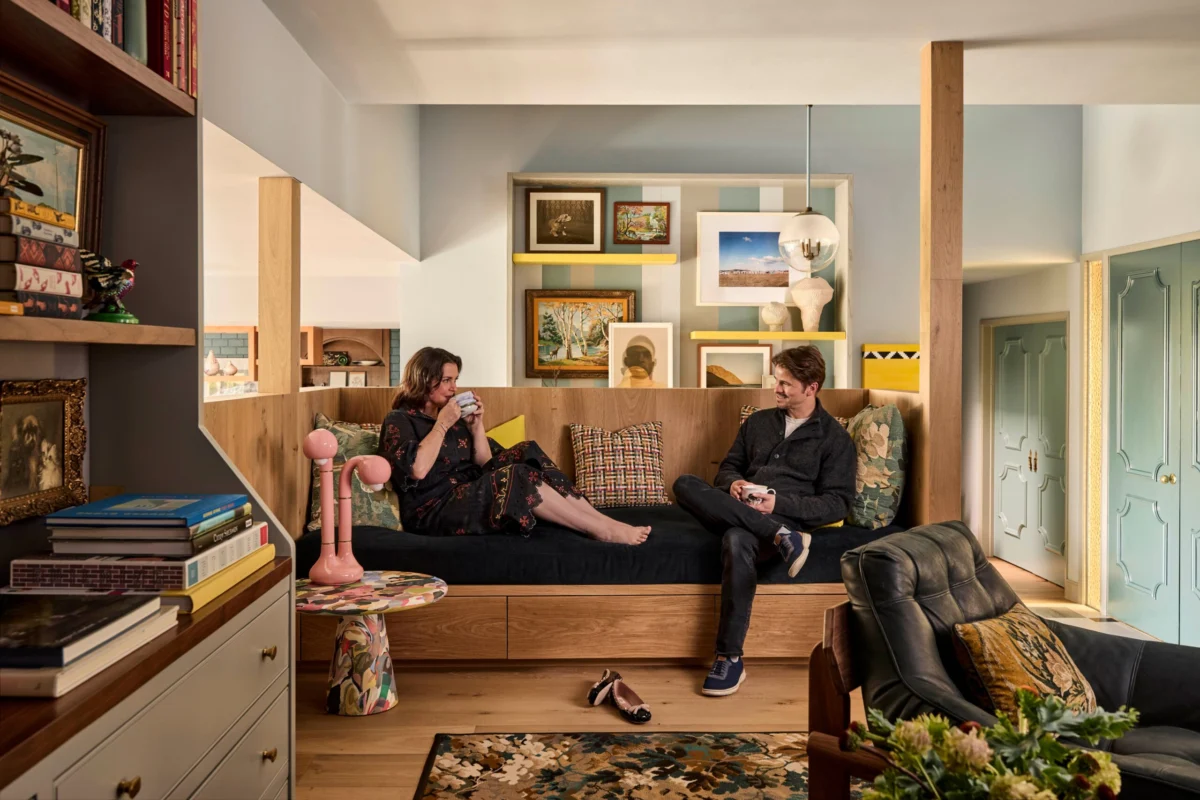
Actress Melanie Lynskey, celebrated for her captivating performances, including her Emmy-nominated role in "Yellowjackets," has unveiled the deeply personal and artfully curated Los Angeles residence she shares with her husband, actor Jason Ritter, and their young daughter. The 3,200-square-foot home, which Lynskey initially found possessed a "lovely feeling" and inherent warmth, underwent a significant transformation to imbue it with the cozy, lived-in atmosphere she envisioned. The couple’s desire to fully embrace their home was fueled by Lynskey’s past experience in a previous residence, where she reflected, "I wish I really lived here" after a decade. This sentiment propelled them to actively infuse their current dwelling with their personalities and memories from the outset.

The Genesis of a Cozy Sanctuary
Lynskey, a native of New Zealand, has always harbored a strong sense of her own aesthetic. Her initial apprehension about engaging an interior designer stemmed from a desire to maintain clarity over her vision. "I’m just so clear about what I want," she stated, expressing a concern that an external designer’s "very clear vision" might impede her own. However, after successfully managing the renovation of the kitchen herself, a project that proved to be demanding, she recognized the value of professional collaboration for the remaining spaces. "One room was enough," she quipped, signaling her readiness to enlist expert assistance.

A Collaborative Design Journey with Jason Martin
The introduction to interior designer Jason Martin, founder of the Los Angeles-based design studio Martin & Brockett, proved to be a pivotal moment. A mutual friend facilitated their connection, and Lynskey quickly discovered a shared creative wavelength with Martin. "I realized very quickly that we were on the exact same page," she recalled. "He really embraced all of the ideas that I had, and then elevated and edited them."

Martin, in turn, found the collaboration particularly rewarding. He described Lynskey as "the most adventurous client I’ve ever had," noting her already impressive and extensive art collection. Rather than imposing a design and then sourcing art to fit, Martin prioritized integrating Lynskey’s existing pieces, many of which hold deep personal significance, particularly those from her native New Zealand. These artworks, including pieces by Māori and Pacific Island artists, serve as constant reminders of home. "Almost all of my art is from New Zealand," Lynskey shared. "When I look at it, I see the hills outside of Wellington or people with moko tattoos—things that just make me instantly think of home."

A Tapestry of Textiles and Heritage
Lynskey’s passion for collecting extends beyond art to an impressive array of textiles. She had amassed bolts of fabric from sources like Liberty London over many years, a testament to her keen eye for pattern and color. "Every single one of my weird boxes of fabric got used for something," she remarked, highlighting how these cherished materials found their way into lampshades, pillows, and other decorative elements.

This extensive collection of art and textiles became the foundational elements of the home’s design. Martin observed Lynskey’s pronounced preference for "rich, evocative color," humorously noting, "These are neutrals to her." To ensure a cohesive and harmonious aesthetic amidst such vibrant selections, Martin focused on natural and animal motifs. The fabrics themselves were sourced from esteemed houses such as Watts of Westminster, Pierre Frey, and Dedar, chosen for their "color-rich patterns" that maintained a sense of classic elegance, preventing the overall palette from becoming overwhelming.

Overcoming Design Challenges: From Travertine to Tranquility
The home’s architecture presented certain challenges, particularly a renovation from the early 1990s that clad much of the interior in beige travertine. Lynskey described a "little room downstairs that was always confusing," which has since been artfully transformed into a "cozy snug." This intimate space is now lacquered in a rich red, featuring a built-in daybed and offering tranquil views of a garden redesigned by Fi Campbell. "That’s where I read scripts now," she stated, underscoring its newfound purpose and comfort.

The living room also posed a significant puzzle for Lynskey, who admitted to rearranging the furniture "literally by myself, picking it up by hand, probably 12 times," without achieving the desired flow. Martin successfully resolved this spatial dilemma, creating a room that is "really cozy and comfortable, and also good for game nights, which was our main directive," Lynskey explained. "It’s lovely to feel like the whole house has meaning now."

Personal Touches and Cherished Heirlooms
Jason Ritter’s approach to the design process was notably different. He candidly admitted to having "zero creativity in this realm," likening his imaginative capacity to "the white nothing area in The Matrix." He placed his complete trust in Lynskey’s vision, humorously reflecting, "At a certain point, I thought, ‘Why do I continually step in with my opinions when I don’t know what I’m talking about?’"

However, Ritter’s input was crucial in one specific instance: the dining room lighting. When Lynskey and Martin found themselves at an impasse, Ritter was tasked with making the final decision, unaware of which option each designer had proposed. He ultimately selected Martin’s choice: striking pink Murano glass chandeliers, a decision that brought a vibrant and elegant focal point to the dining space.

A particularly poignant addition to the home is a sofa inherited from Ritter’s late father, the beloved actor John Ritter. Upholstered in a distinctive leafy green pattern, this piece holds immense sentimental value. "There was no question that we were going to work around that sofa," Martin affirmed, recognizing its profound importance to Ritter. "It meant so much to him."

A Lasting Collaboration and a Home Filled with Meaning
The transformation of Lynskey and Ritter’s Los Angeles home is more than just an aesthetic renovation; it’s a testament to the power of personal expression and collaborative artistry. The process fostered a deep connection between Lynskey and designer Jason Martin, forging a friendship that transcended the professional relationship. "It was honestly a surprise how much I loved working with Jason," Lynskey confessed. "I treasure him as a person. We would have appointments where I’d say, ‘Okay, 45 minutes looking at fabric,’ and it would be three hours of us chatting and coming up with more ideas." She paused, reflecting on the conclusion of the project, adding, "I think we’re both a little bit sad that it’s over."

This sentiment underscores the success of the design: not only has the house been transformed into a visually stunning and deeply comfortable sanctuary, but it has also become a space imbued with shared memories, personal histories, and a profound sense of belonging. The residence now stands as a vivid reflection of Melanie Lynskey and Jason Ritter’s journey together, a place where art, heritage, and love converge to create a truly unique and cherished home.

0 Comments