
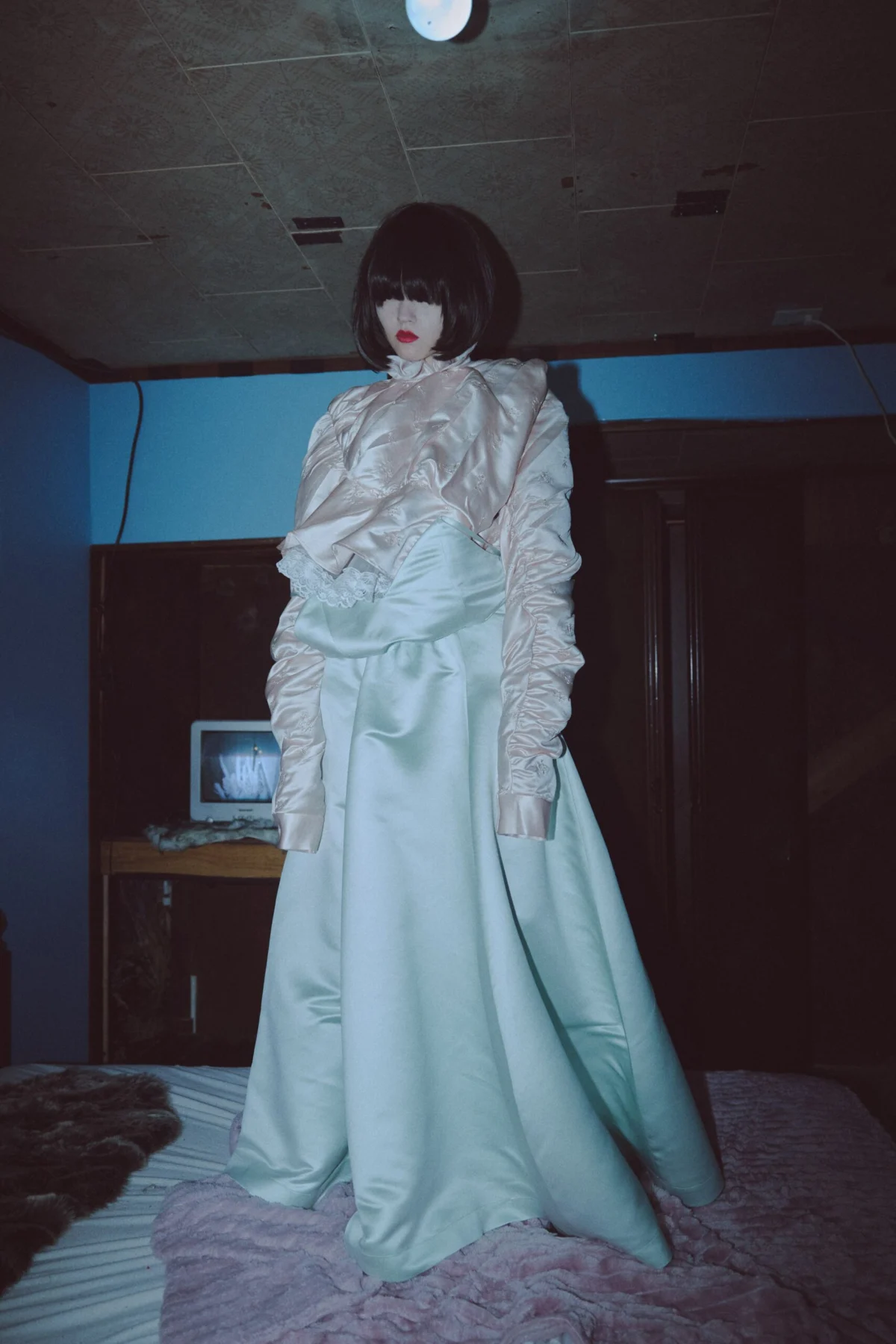
The intersection of avant-garde fashion and immersive performance reached a visceral peak during the Tokyo Fall 2026 season, as designer Mikio Sakabe bypassed the traditional runway in favor of a psychological horror experience. Set within the creaking floorboards and dimly lit corridors of a 90-year-old Japanese residence, the presentation challenged the conventional boundaries of garment display, prioritizing atmospheric storytelling over the visibility of the collection. The venue, a structure purportedly haunted and currently utilized as a high-concept escape room for horror enthusiasts, served as the backdrop for a collection that juxtaposed "cutesy" aesthetics with a pervasive sense of dread. In an industry often criticized for its predictable formats, Sakabe’s decision to elicit screams of genuine terror from his audience marks a significant pivot toward experiential luxury and world-building.
A Narrative-Driven Departure from the Traditional Runway
The presentation was structured not as a linear show, but as a calculated walkthrough of ten distinct rooms. Each space functioned as a self-contained vignette of domestic horror, where one or two models were positioned in states of distress or eerie stillness. The lighting was intentionally kept at a minimum, with windowless rooms obscured by shadows, forcing attendees to navigate the space with a heightened sense of vulnerability.
Observers encountered models with faces veiled by unkempt hair, some curled in fetal positions on the floor, shivering in simulated fear, while others sat motionless facing the walls. The sensory experience was punctuated by sudden bursts of aggression; models would sporadically bang against the wooden walls or spring unexpectedly from closets, triggering the kind of visceral reactions rarely seen at a high-fashion event. One of the most striking installations featured a red-lit alcove where a man brandished a crowbar, his menacing expression captured and broadcast on a nearby television set through a grainy, distorted feed.
This departure from the catwalk is indicative of a broader shift in the global fashion landscape, where designers are increasingly viewing their collections as components of a larger cinematic or digital universe. For Sakabe, the "horror" element was not merely a gimmick but a vehicle for emotional transportation. He noted that even for adults, entering an eerie, unfamiliar space can instantly bridge the gap between reality and fantasy—a transition he believes is essential for truly experiencing his creative vision.
The Aesthetic Duality of the Fall 2026 Collection
While the darkness made it difficult to discern the technical minutiae of every seam, the silhouettes that emerged from the shadows maintained Sakabe’s signature "twisted" aesthetic. The collection featured a blend of subverted Japanese schoolgirl tropes and deconstructed tailoring. Key pieces included:
- Deconstructed Sailor Collars: A staple of Japanese youth culture, reimagined through jagged cuts and asymmetrical draping.
- Super-Shouldered Blazers: Exaggerated proportions that lent a sense of armor or inhumanity to the wearer.
- Holey Knits and Distressed Textiles: Pieces that appeared both fragile and weathered, echoing the decay of the 90-year-old venue.
- Twisted Blouses: Intricate draping that created a sense of physical distortion, aligning with the "uncanny" theme of the presentation.
The garments were described as "jarringly cutesy," a term that refers to the Japanese concept of kawaii being subverted into something unsettling. By placing traditionally innocent or youthful designs in a violent and claustrophobic context, Sakabe tapped into a long-standing tradition in Japanese horror—the subversion of the domestic and the familiar.
Commercial Viability and the "Grounds" Phenomenon
Despite the experimental nature of his seasonal presentations, Mikio Sakabe remains a formidable force in the commercial fashion market. This is largely due to the success of his footwear brand, Grounds. Known for its distinctive "bubble-soled" sneakers, Grounds has transitioned from a cult favorite to a mainstream staple in major Asian fashion hubs like Tokyo and Shanghai.
The commercial success of the footwear line provides Sakabe with the financial freedom to treat his apparel presentations as pure artistic expressions rather than sales-driven events. Industry analysts suggest that this "bi-level" business model—where a high-volume accessory line funds avant-garde runway experimentation—is becoming a blueprint for independent designers in the 2020s.
Table 1: The Economic Context of Japanese Independent Fashion (Estimated 2024-2026)
| Metric | Detail | Impact on Independent Designers |
|---|---|---|
| Growth of "Experience Economy" | +15% annually in Tokyo luxury sector | Shift from runway shows to immersive installations. |
| Grounds Sneaker Market Share | ~12% in "Niche Designer Sneaker" category | Provides R&D funding for Sakabe’s apparel. |
| Average Age of Fashion Consumers | 22–35 (Gen Z / Millennials) | High demand for "Instagrammable" yet subversive content. |
| International Export Value | $1.2B (Japanese Streetwear/Avant-Garde) | High interest from European and North American boutiques. |
Chronology of the Presentation and Designer Philosophy
The Fall 2026 presentation represents a culmination of Sakabe’s evolution since he founded his eponymous label in 2007. After graduating from the prestigious Royal Academy of Fine Arts in Antwerp, Sakabe returned to Japan with a mission to merge European deconstruction with Japanese subcultures.
- 2007–2015: Sakabe establishes a reputation for "Akihabara-chic," drawing inspiration from anime and otaku culture.
- 2019: The launch of Grounds marks a shift toward commercial scalability and high-tech footwear design.
- 2023–2025: Sakabe begins experimenting with non-traditional venues, including outdoor urban spaces and digital-only reveals.
- Fall 2026: The "Haunted House" presentation marks his most extreme foray into immersive theater.
In post-event statements, Sakabe articulated a philosophy that prioritizes "atmosphere" over "visibility." He argued that in the age of high-definition digital lookbooks, the physical presentation no longer needs to serve as a catalog. Instead, it should serve as an emotional anchor. "If it was too bright, the clothes would be visible, but the atmosphere would be completely lost," Sakabe explained. By sacrificing the audience’s ability to see the clothes clearly, he ensured they would feel the world the clothes inhabit.
Industry Reactions and the Psychological Appeal of Horror
The fashion industry has a storied history of utilizing horror and the macabre to challenge societal norms. From Alexander McQueen’s "Savage Beauty" to the subversive "heroin chic" of the 1990s, the "darker" side of human emotion has always been a potent tool for designers. However, Sakabe’s Fall 2026 show is being noted for its literal interpretation of the genre.
Psychologists and fashion historians suggest that the appeal of horror in a retail context lies in its ability to create "flashbulb memories." In a saturated market where consumers see thousands of images daily, the adrenaline spike associated with a jump scare ensures that the brand remains etched in the viewer’s psyche.
Furthermore, the "haunted house" format reflects a uniquely Japanese cultural intersection. The Obakeyashiki (ghost house) is a staple of Japanese summer and autumn festivals. By elevating this folk tradition to the level of high fashion, Sakabe is bridging the gap between "low" entertainment and "high" art, a tactic that has historically resonated well with the Tokyo fashion set.
Broader Implications for Tokyo Fashion Week
The success and viral nature of Sakabe’s presentation have broader implications for Tokyo Fashion Week (Rakuten Fashion Week Tokyo). Historically, Tokyo has struggled to compete with the "Big Four" (New York, London, Milan, Paris) in terms of commercial buying power. However, by leaning into the "weird," the "strange," and the "experiential," Tokyo is solidifying its position as the global capital of creative risk-taking.
Sakabe’s presentation suggests that the future of the fashion show may not be on a stage, but in the shadows. As brands seek deeper engagement with their audiences, the "universe" surrounding the garment—the music, the smell, the lighting, and even the fear—becomes just as marketable as the garment itself.
For the cult fanbase that follows Sakabe, the Fall 2026 collection is more than a wardrobe update; it is an invitation into a dark, fantastical portal. While the screams at the presentation may have been a reaction to the horror, the lasting impression was one of a designer who understands that in the modern world, the most luxury a brand can provide is a genuine, unrepeatable experience. As the industry moves forward, the "Sakabe Method" of prioritizing world-building over product visibility may well become a standard for those looking to survive in an increasingly crowded and distracted marketplace.

0 Comments