
The mistral, a powerful, cold, and dry northwesterly wind that sweeps through the Rhône Valley toward the Mediterranean, remains one of the most significant meteorological influences on the Provence-Alpes-Côte d’Azur region. While Provence is globally recognized for its sun-drenched lavender fields and summer festivals, the arrival of the mistral in the late autumn and winter months transforms the travel landscape, presenting both a challenge to traditional tourism and an opportunity for the burgeoning "slow travel" sector. In cities like Avignon, the historic "City of the Popes," the wind’s intensity—often reaching speeds of 40 to 60 miles per hour and persisting for several consecutive days—has necessitated a shift in hospitality strategies, prioritizing high-quality indoor environments and architectural resilience.
The Meteorological Reality of the Mistral
The mistral is more than a seasonal breeze; it is a structural component of the Provençal climate. Formed by the pressure gradient between high-pressure systems over the Atlantic and Mediterranean and low-pressure systems over the Gulf of Lion, the wind is funneled through the narrow Rhône Valley. This "Venturi effect" accelerates the air, leading to the relentless, buffeting conditions that characterize the region from November through April.
Data from Météo-France indicates that the mistral can blow on upwards of 100 days per year. While it is credited with clearing the air and providing the region’s legendary sharp, bright light—celebrated by artists such as Vincent van Gogh and Paul Cézanne—it also causes significant drops in perceived temperature. For the tourism industry, this means that outdoor activities, such as harbor dining in Marseille or vineyard tours in Châteauneuf-du-Pape, can be abruptly curtailed. Consequently, the off-season traveler must rely on the "indoor infrastructure" of their destination, a factor that is increasingly influencing property development and rental markets in the Vaucluse department.
Avignon as a Strategic Off-Season Hub
Avignon serves as a primary case study for off-season resilience in Provence. Historically significant as the seat of the Catholic Holy See from 1309 to 1377, the city’s architecture was designed to withstand both political upheaval and the elements. The Palais des Papes, one of the largest and most important medieval Gothic buildings in Europe, stands as a testament to this durability.

For the modern traveler, Avignon’s appeal during the mistral season lies in its density. The city’s central district, enclosed by well-preserved medieval ramparts, offers a high concentration of cultural and culinary sites within short walking distances. This minimizes exposure to the wind while allowing for a comprehensive exploration of the region’s history. Key landmarks, including the Jardin des Doms, the Basilique Saint-Pierre, and the Pont Saint-Bénézet, remain accessible, though the focus often shifts to indoor venues such as Les Halles d’Avignon. This historic covered market provides a climate-controlled environment where the region’s agricultural output—truffles, cheeses, and Ventoux wines—remains available to the public regardless of weather conditions.
The Evolution of the Short-Term Rental Market
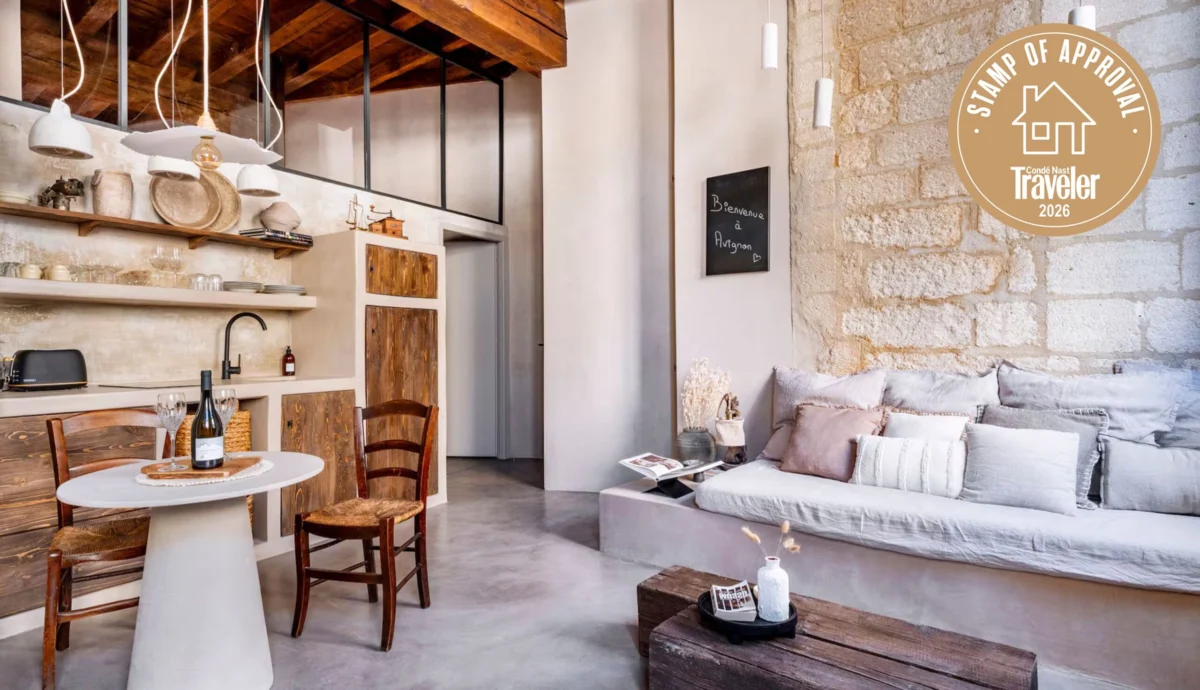
As tourism trends shift toward "living like a local," the demand for high-end, renovated short-term rentals has surged. In Avignon, this is exemplified by the rise of professionally curated apartments that blend historic aesthetics with 21st-century technology. These properties are increasingly competing with traditional hotels by offering amenities specifically designed for extended indoor stays, which are common during mistral peaks.
A representative example of this trend is found in the city’s renovated historic flats, which often feature:
- Architectural Heritage: Restoration of cream-colored stone walls and original dark wood beam ceilings.
- Climate Control: Essential integration of high-efficiency heating and air conditioning systems to combat the mistral’s chill.
- Digital Infrastructure: High-speed Wi-Fi and streaming capabilities (such as Chromecast) to cater to "workation" travelers and digital nomads.
- Gourmet Facilities: Induction stovetops and Nespresso machines, allowing guests to utilize produce from Les Halles without leaving their accommodation.
Industry analysts note that the success of these rentals depends on their "hygge" factor—a term borrowed from Danish culture to describe a quality of coziness and comfortable conviviality. In the context of Provence, this involves the use of linen fabrics, woven textures, and local stone to create a sense of place that remains inviting even when the exterior environment is hostile.
Economic Implications of Off-Season Travel
The shift toward off-season travel is a deliberate goal for the Provence-Alpes-Côte d’Azur Regional Tourism Committee (CRT). According to regional data, the concentration of tourism in the summer months (June–August) puts significant strain on local infrastructure and water resources. By promoting the "joys of the off-season," officials aim to distribute economic benefits more evenly throughout the year.

Local businesses in Avignon, such as Casa Bronzini, Le Petit Comptoir, and Coffeecina, have adapted by offering indoor-focused experiences. Co-working spaces combined with cafes have become particularly popular, providing a refuge for travelers who find their outdoor plans thwarted by the wind. The retail sector has also seen a pivot, with "boutique-and-studio" concepts like Le Nid offering a mix of shopping and indoor wellness activities, such as yoga, to maintain foot traffic during the winter months.
Chronology of the Off-Season Experience
The typical progression of an off-season visit to Avignon during a mistral event follows a predictable pattern that shapes the local economy:
- Arrival and Impact: Travelers arriving via the TGV (high-speed train) at Avignon’s central or TGV stations are immediately met by the wind, often forcing an immediate retreat to pre-booked accommodations.
- The "Shelter-In-Place" Phase: For the first 24 to 48 hours of a mistral peak, visitor activity shifts almost entirely indoors. This period sees a spike in local grocery sales and a higher engagement with in-room amenities.
- Strategic Exploration: As the wind persists but the sky remains clear, travelers engage in "micro-outings" to nearby attractions like the Palais des Papes or the wine tasting rooms of Le Vin Devant Soi, which offer charcuterie and shelter.
- Cultural Integration: The final phase involves a deeper engagement with the city’s permanent residents in venues like Les Halles, where the lack of summer crowds allows for more authentic interaction with vendors and artisans.
Broader Implications and Future Outlook
The resilience of Avignon’s tourism sector during the mistral suggests a broader trend in global travel: the decoupling of "vacation" from "perfect weather." As travelers become more environmentally conscious and seek to avoid the "over-tourism" associated with peak seasons, destinations that can offer a compelling indoor experience will gain a competitive advantage.
However, challenges remain. The lack of elevators in historic buildings and the compact nature of medieval apartments can pose accessibility issues. Furthermore, the reliance on short-term rental platforms like Airbnb continues to be a point of contention in French urban planning, as cities struggle to balance the needs of tourists with the availability of housing for permanent residents.
Despite these hurdles, the allure of the "southern light" and the historical depth of the Vaucluse region continue to draw visitors year-round. The mistral, once viewed purely as a deterrent, is increasingly framed as a unique atmospheric element of the Provençal experience—one that demands a specific type of travel characterized by slow movement, architectural appreciation, and indoor comfort. For the city of Avignon, the wind is not merely a seasonal nuisance but a defining feature that has shaped its past and continues to influence its economic future in the global tourism market.

0 Comments