
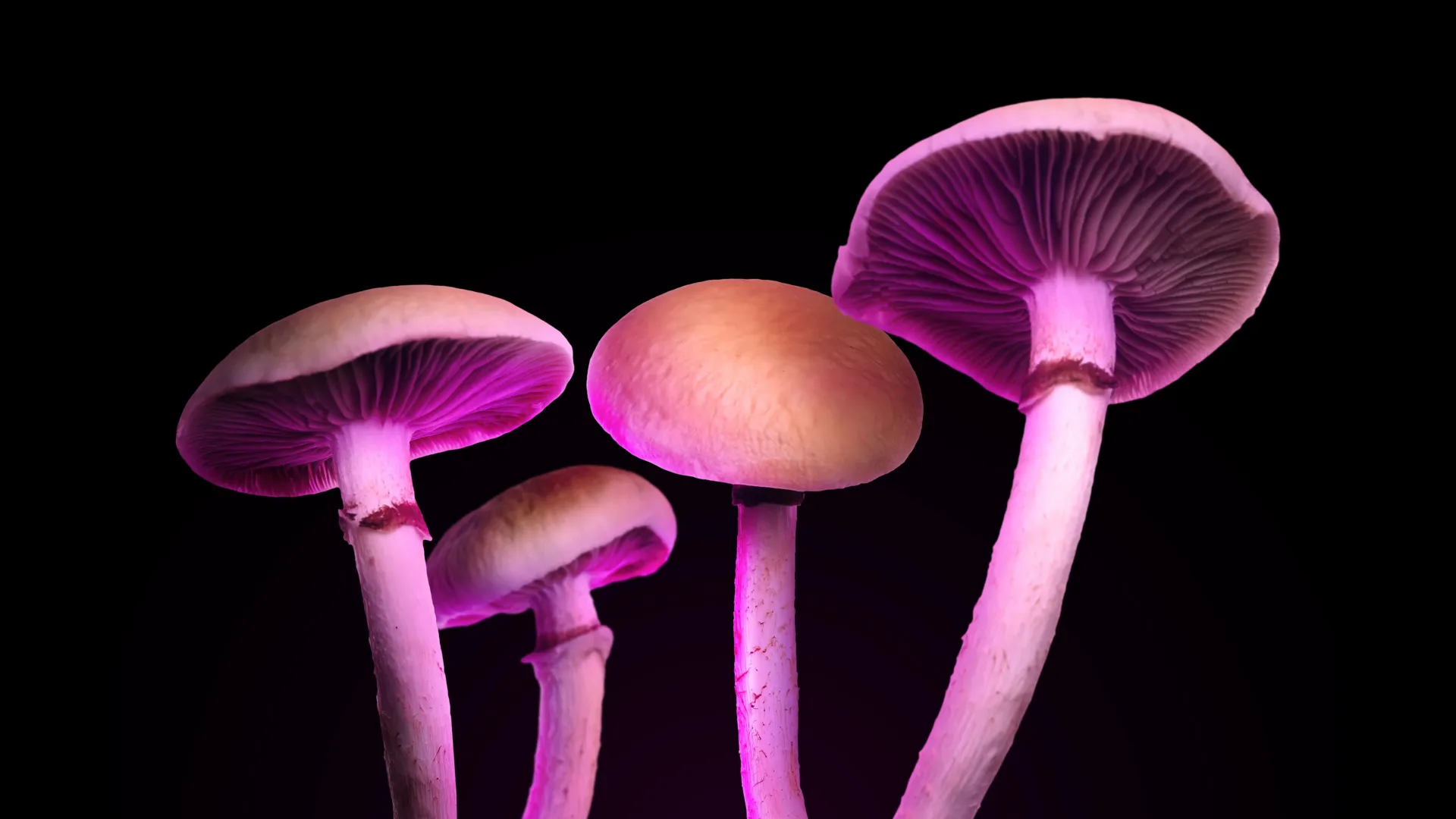
Psilocybin, the well-known psychoactive compound derived from "magic mushrooms," is commanding increasing attention within the scientific community for its potential to revolutionize the treatment of a spectrum of challenging mental health conditions. Researchers are actively exploring its therapeutic promise for conditions as diverse as severe depression, persistent anxiety, intractable substance use disorders, and even certain neurodegenerative diseases. However, a significant hurdle to its widespread medical adoption remains: the intense hallucinogenic effects intrinsically linked to psilocybin. These powerful psychedelic experiences, while potentially contributing to therapeutic outcomes for some, also present a considerable barrier to patient acceptance and clinical integration. Addressing this critical challenge, a groundbreaking study published in the Journal of Medicinal Chemistry by the American Chemical Society (ACS) details the successful creation of modified psilocin molecules. Psilocin is the active compound that the body produces when psilocybin is ingested. Early preclinical investigations in mice have demonstrated that these novel molecular constructs retain their essential biological activity while significantly attenuating the hallucinogenic-like effects observed with pharmaceutical-grade psilocybin.
Dissociating Therapeutic Benefit from Psychedelic Experience
This pioneering research aligns with an emerging scientific paradigm that suggests the profound psychedelic effects of compounds like psilocybin may be separable from their beneficial biological actions. Dr. Andrea Mattarei, a corresponding author on the study, articulated this crucial insight, stating, "Our findings are consistent with a growing scientific perspective suggesting that psychedelic effects and serotonergic activity may be dissociated. This opens the possibility of designing new therapeutics that retain beneficial biological activity while reducing hallucinogenic responses, potentially enabling safer and more practical treatment strategies." This distinction is paramount, as it hints at a future where the therapeutic potential of these compounds can be harnessed without the disorienting and often overwhelming psychedelic experiences that have historically accompanied their use.
Targeting Serotonin Pathways: A Promising Avenue for Brain Disorders
The scientific fascination with psilocybin and its derivatives is deeply rooted in their profound influence on the brain’s serotonin system. Serotonin, a critical neurotransmitter, plays a pivotal role in regulating a vast array of neurological functions, including mood, sleep, appetite, and cognitive processes. Disruptions in serotonin signaling are widely implicated in the pathophysiology of numerous mood disorders, such as major depressive disorder and generalized anxiety disorder, as well as in the progression of certain neurodegenerative conditions like Alzheimer’s disease. For decades, researchers have investigated psychedelics like psilocybin precisely because of their ability to modulate serotonin receptor activity, particularly the 5-HT2A receptor, which is thought to be a key mediator of their effects.
However, the very nature of psychedelic compounds, characterized by their ability to induce altered states of consciousness and intense hallucinations, has been a double-edged sword. While some studies suggest that these altered states may facilitate therapeutic breakthroughs by allowing patients to gain new perspectives on their issues or process traumatic memories, the associated hallucinations can be a source of significant apprehension for patients. This hesitancy can impede access to potentially life-changing treatments, even when compelling evidence points to their efficacy. The research team, led by Sara De Martin, Andrea Mattarei, and Paolo Manfredi, sought to circumvent this limitation by engineering psilocin variants that could offer the therapeutic benefits without the full spectrum of psychedelic side effects.
The Genesis of Novel Psilocin Derivatives: A Strategic Chemical Design
To achieve this ambitious goal, the research team embarked on a sophisticated chemical engineering process. They meticulously designed five distinct chemical variants of psilocin. The core principle behind their design was to create molecules that would be metabolized or released in a manner that promotes a slower and more sustained presence of the active compound in the brain. This gradual release mechanism is theorized to dampen the acute, intense psychedelic effects while allowing for prolonged engagement with the target serotonin pathways, thereby preserving therapeutic efficacy. The strategic modification aimed to fine-tune the pharmacokinetic and pharmacodynamic properties of the psilocin molecule, essentially creating a more controlled and predictable therapeutic agent.
Rigorous Preclinical Evaluation: From Lab Bench to Rodent Models
The scientific journey began with a comprehensive laboratory evaluation of the five synthesized compounds. These initial experiments involved testing the stability and release characteristics of the psilocin derivatives under conditions that mimicked the physiological environment of the human body, including simulated gastrointestinal absorption and analysis in human plasma samples. This crucial screening phase allowed the researchers to identify the most promising candidate molecule. Among the five variants, one compound, designated as "4e," emerged as the frontrunner.
Compound 4e demonstrated remarkable stability during the simulated absorption process. Crucially, it exhibited a desirable characteristic: a gradual and sustained release of psilocin. This property is directly linked to the potential for reduced hallucinogenic responses. Concurrently, laboratory assays confirmed that 4e effectively activated key serotonin receptors, including the 5-HT2A receptor, with an affinity comparable to that of psilocin itself. This indicated that the structural modifications had not compromised the molecule’s ability to engage with its intended biological targets.
Comparative Efficacy and Safety in Rodent Models
Following the promising in vitro results, the research team advanced to preclinical trials using mice to directly compare the effects of 4e with pharmaceutical-grade psilocybin. The substances were administered orally, and the researchers meticulously tracked the concentration of psilocin in the bloodstream and brain over a 48-hour period. The findings were compelling: in mice treated with 4e, the compound demonstrated efficient crossing of the blood-brain barrier, a critical step for any psychoactive substance. Furthermore, 4e resulted in a lower, yet notably more sustained, concentration of psilocin in the brain compared to the rapid and transient peak observed with psilocybin. This prolonged, lower-level exposure is a key indicator of a potentially less intense psychedelic experience.
Behavioral observations provided further robust evidence supporting the hypothesis of reduced hallucinogenic activity. A specific behavioral indicator frequently used in rodent studies to assess psychedelic-like effects is head twitching. Mice that received 4e exhibited significantly fewer head twitches than their counterparts treated with psilocybin. This reduction in a hallmark psychedelic-associated behavior occurred even though 4e demonstrated strong interactions with serotonin receptors. The researchers attribute this critical difference primarily to the controlled release kinetics of psilocin in the brain, suggesting that the rate and duration of receptor activation are more influential in determining the intensity of psychedelic effects than the mere presence of the active compound.
A New Horizon: Psychedelic-Inspired Medicines Without the Psychedelic Experience
The implications of this research are far-reaching and signal a potential paradigm shift in the development of psychiatric and neurological therapeutics. The findings from this study strongly suggest that it is indeed feasible to design stable psilocin-based compounds capable of reaching the brain and effectively activating serotonin receptors, all while substantially mitigating the intense mind-altering effects commonly associated with traditional psychedelic substances. This breakthrough opens up a promising pathway toward developing novel medications that could offer the therapeutic benefits of psychedelics—such as improved mood regulation, reduced anxiety, and potential neuroprotective effects—without the disorienting and potentially distressing psychedelic experiences.
While the preclinical results are highly encouraging, the researchers emphasize that further extensive investigation is imperative. Understanding the precise molecular mechanisms by which these new compounds exert their effects and a comprehensive evaluation of their full biological impact are critical next steps. Before these psilocin derivatives can be considered for human clinical trials, their safety profile must be rigorously established, and their therapeutic potential must be thoroughly examined in controlled studies. This ongoing research phase is crucial for translating these promising laboratory findings into tangible clinical benefits for patients suffering from a wide range of debilitating conditions.
The research was supported by funding from MGGM Therapeutics, LLC, in collaboration with NeuroArbor Therapeutics Inc. Several authors of the study have declared their inventorship on patents related to psilocin, highlighting their foundational contributions to this field of research. This collaboration underscores the growing investment and interest from both academic institutions and the pharmaceutical industry in exploring the therapeutic frontiers of psychedelic compounds and their analogues. The scientific community eagerly anticipates the subsequent stages of this research, which hold the promise of ushering in a new era of mental health treatment.

0 Comments