
The 1990s represent a pivotal era in the history of cinema, characterized by a significant transition from the high-concept, big-budget dominance of the 1980s to a more diversified landscape defined by the rise of independent filmmaking, non-linear storytelling, and a burgeoning digital revolution. This decade saw the emergence of "Auteur Cinema" in the mainstream, where directors such as Quentin Tarantino, David Lynch, and Sofia Coppola pushed the boundaries of narrative structure and visual aesthetics. Unlike the contemporary landscape of the 2020s, which is largely driven by intellectual property, sequels, and cinematic universes, the 1990s were marked by original screenplays that often prioritized mood, character study, and cultural commentary over franchise potential.
The Early 1990s: Surrealism and the Subversion of Genre
The beginning of the decade was marked by a departure from traditional narrative forms. In 1990, David Lynch’s Wild at Heart signaled this shift. Starring Nicolas Cage and Laura Dern, the film blended elements of the road movie with Lynch’s signature surrealism and hyper-violence. The production was a critical milestone, securing the Palme d’Or at the Cannes Film Festival. It challenged audiences with its "Elvis-meets-The-Wizard-of-Oz" aesthetic, establishing a precedent for the "off-beat" thrillers that would define the era.
By 1992, the industry began exploring the intersection of social satire and burgeoning visual effects technology. Robert Zemeckis’s Death Becomes Her served as a scathing critique of the obsession with youth and beauty. Featuring Meryl Streep and Goldie Hawn, the film was notable for its pioneering use of digital skin-retouching and computer-generated imagery (CGI) to depict physical transformations, winning the Academy Award for Best Visual Effects. Industry analysts often cite this film as a precursor to the modern era’s fascination with anti-aging technology and cosmetic perfection.
In 1993, the release of True Romance demonstrated the growing influence of screenwriter Quentin Tarantino. Directed by Tony Scott, the film combined a gritty crime narrative with a stylized, romantic sensibility. Although it was a modest box office performer upon its initial release—grossing approximately $12.3 million against a $12.5 million budget—it achieved significant longevity through the home video market, a recurring trend for 1990s "cult classics."
The 1994-1996 Watershed: The Rise of Independent Voices
The mid-1990s are frequently cited by film historians as a "golden age" for independent cinema. The year 1994, in particular, saw the release of Pulp Fiction, a film that fundamentally altered the trajectory of modern screenwriting. With its non-linear timeline and highly stylized dialogue, the film grossed over $213 million globally on a production budget of just $8 million. It became the first independent film to surpass $100 million at the U.S. box office, proving that artistic experimentation could yield massive commercial success.
Concurrently, Oliver Stone’s Natural Born Killers (1994) utilized a fragmented, multi-media approach to critique the media’s glorification of violence. The film’s production was famously chaotic, employing over 18 different film formats. It sparked intense national debate regarding the "copycat" effect of cinematic violence, illustrating the decade’s focus on provocative social commentary.
The year 1994 also marked the mainstream breakthrough of John Waters with Serial Mom. Waters, previously known for his underground "trash" cinema, utilized the film to satirize suburban American values. Waters later remarked that the film represented the peak of his Hollywood career before he returned to independent production, highlighting the era’s brief but potent flirtation with transgressive comedy in the mainstream.
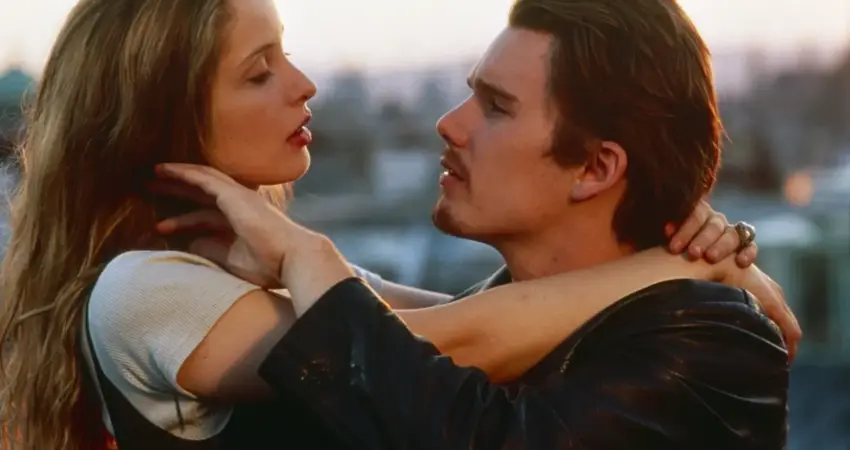
In 1995, the industry witnessed a diversification of genre. Richard Linklater’s Before Sunrise introduced a minimalist, dialogue-driven approach to romance, focusing on the real-time interaction between two strangers in Vienna. This "walk-and-talk" style became a hallmark of independent filmmaking. Simultaneously, international cinema gained a stronger foothold in the West through directors like Wong Kar-wai. His 1995 film Fallen Angels utilized wide-angle lenses and neon-drenched cinematography to capture the urban alienation of Hong Kong, influencing the visual language of fashion photography and music videos for years to come.
The year 1995 also saw the technological revolution of Toy Story, the first feature-length film created entirely with CGI. Produced by Pixar and distributed by Disney, the film grossed $373 million and fundamentally shifted the animation industry away from traditional hand-drawn techniques.
Late 90s: Existentialism and the Dawn of a New Aesthetic
As the decade approached its conclusion, films began to reflect the existential anxieties of the "Gen X" demographic. In 1996, Danny Boyle’s Trainspotting provided a visceral look at drug addiction in Edinburgh. The film was a central pillar of the "Cool Britannia" cultural movement, blending social realism with surrealist imagery and a high-energy soundtrack that featured artists like Iggy Pop and Underworld.
In 1999, David Fincher’s Fight Club emerged as a definitive critique of consumer culture and masculinity at the end of the millennium. Although it received a polarized response from critics and underperformed at the box office, its subsequent success on DVD turned it into a cultural phenomenon. It remains a primary text for analyzing the sociological shifts of the late 20th century.
The year 1999 also saw a resurgence of the "teen movie," but with a sophisticated twist. 10 Things I Hate About You and Cruel Intentions reimagined classic literature (Shakespeare’s The Taming of the Shrew and Laclos’s Les Liaisons Dangereuses, respectively) for a modern high school setting. These films were noted for their high-fashion costumes and soundtracks, which integrated alternative rock and pop into the cinematic experience.
Finally, Sofia Coppola’s directorial debut, The Virgin Suicides (1999), established a new visual grammar for depicting girlhood. Coppola’s use of soft lighting, dreamlike pacing, and a curated soundtrack by the band Air created an aesthetic that continues to influence "mood-based" cinema today. Coppola noted in interviews that the project began as a personal exercise in visual storytelling, emphasizing the "vividness" of the source material’s atmosphere over traditional plot mechanics.
Chronology of Key Releases and Critical Milestones
- 1990: Wild at Heart wins the Palme d’Or, signaling a shift toward surrealist mainstream narratives.
- 1992: Death Becomes Her pioneers digital manipulation of human skin on screen.
- 1994: Pulp Fiction wins the Palme d’Or and legitimizes the "indie" blockbuster.
- 1995: Toy Story marks the transition to the CGI era of animation.
- 1996: Scream revitalizes the horror genre with meta-commentary and self-awareness.
- 1999: Fight Club and The Virgin Suicides define the existential and aesthetic sensibilities of the late 90s.
Supporting Data and Market Impact
The 1990s were characterized by the strength of the home video market (VHS and later DVD), which allowed films that failed at the box office to find secondary life and "cult" status. For example, The Big Lebowski (1998) and Office Space (1999) became highly profitable long after their theatrical runs ended.
According to industry data, the average production budget for a studio film in 1990 was approximately $26.8 million. By 1999, this had risen to over $50 million, reflecting the increasing costs of marketing and the burgeoning use of digital effects. Despite this, the decade remains the most prolific for original (non-sequel) scripts in the top 10 annual box office rankings.
Broader Impact and Implications
The cinematic output of the 1990s left a lasting imprint on global culture. The decade’s emphasis on "vibe" and atmosphere—seen in the works of Wong Kar-wai and Sofia Coppola—predated the modern digital aesthetic seen on social media platforms. Furthermore, the decade’s approach to fashion-forward filmmaking created a symbiotic relationship between the runway and the screen, with designers like Prada and Gucci providing wardrobes that became as iconic as the characters themselves.
In a modern context, the films of the 90s serve as a benchmark for narrative originality. As contemporary cinema becomes increasingly reliant on existing franchises, the "originality" of the 90s provides a roadmap for independent filmmakers seeking to balance artistic integrity with commercial viability. The decade proved that audiences were willing to engage with complex, non-linear, and often uncomfortable stories, provided they were delivered with a distinct and confident directorial vision. The 1990s were not merely a time of transition; they were a decade that redefined the possibilities of what a "movie" could be, moving it away from simple entertainment toward a more profound form of cultural expression.

0 Comments