
Red light therapy, scientifically known as photobiomodulation (PBM) or low-level laser therapy (LLLT), has transitioned from a niche clinical treatment to a multibillion-dollar pillar of the global wellness industry. Originally utilized by NASA in the 1990s to promote plant growth in space and subsequently to treat wound healing in astronauts, the technology is now marketed as a panacea for conditions ranging from muscle atrophy and skin aging to hormonal imbalances and cognitive decline. As fitness centers and specialized "biohacking" studios integrate red-light booths alongside traditional amenities, and as consumer-grade devices become a household staple, a critical gap remains between the aggressive marketing claims of "wellness influencers" and the current state of peer-reviewed clinical research.
The Mechanism of Photobiomodulation
At the cellular level, red light therapy operates on the principle of light-induced biological change. The primary mechanism involves the stimulation of the mitochondria, the powerhouse of the cell. Research indicates that specific wavelengths of light—typically in the visible red (630–660 nm) and near-infrared (810–850 nm) spectrums—interact with a photoreceptor enzyme within the mitochondria called cytochrome c oxidase.
Under conditions of cellular stress or inflammation, nitric oxide can bind to cytochrome c oxidase, effectively "clogging" the mitochondrial respiratory chain and inhibiting the production of adenosine triphosphate (ATP), the primary energy currency of the cell. Proponents of PBM argue that the application of red and near-infrared light dislodges nitric oxide, allowing oxygen to bind to the enzyme and restoring efficient ATP production. This surge in cellular energy is theorized to accelerate tissue repair, reduce oxidative stress, and stimulate the regeneration of damaged fibers.
The depth of penetration is determined by the wavelength. Visible red light (630–660 nm) is largely absorbed by the epidermis and dermis, making it the preferred spectrum for dermatological applications. In contrast, near-infrared light (810–850 nm) possesses the ability to penetrate several centimeters into the body, reaching muscle tissue, tendons, and even bone, which facilitates deeper therapeutic interventions.
Chronology of a Longitudinal Self-Trial
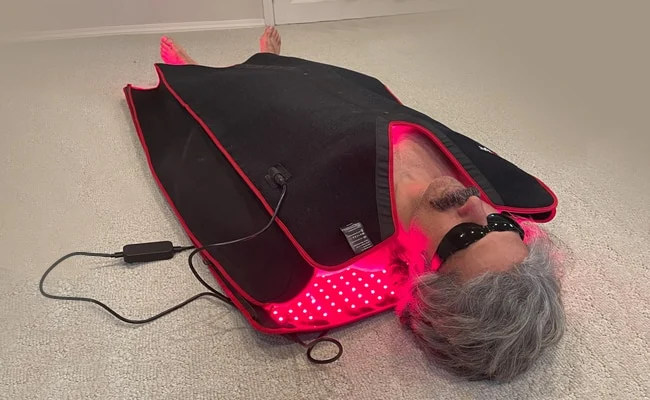
To evaluate the practical efficacy of at-home red light therapy, a controlled 12-week observational study was conducted by an individual subject—a 43-year-old male with a history of powerlifting-related joint strain. The trial commenced in January and concluded in late March, utilizing a high-irradiance red-light "blanket" or "cocoon" lined with medical-grade LEDs.
The protocol required the subject to undergo 15-minute sessions five times per week. The device provided a combination of 660 nm (red) and 850 nm (near-infrared) wavelengths. To ensure maximum surface area exposure, the subject remained unclothed during the sessions. Over the 90-day period, the subject documented changes in several key metrics: muscle recovery times, chronic tendon pain, skin texture, body fat percentage, and subjective mood.
Despite the consistency of the application, the results at the end of the first quarter were negligible. The subject reported no significant reduction in tendon inflammation, no visible improvement in skin elasticity or scar healing, and no measurable change in body composition. This outcome highlights a recurring theme in the PBM discourse: while laboratory settings often yield positive cellular responses, the translation to noticeable "real-world" benefits for healthy individuals is frequently inconsistent.
Evaluating Clinical Efficacy vs. Market Claims
The discrepancy between the perceived benefits of red light therapy and its actual clinical performance is often a matter of scope. While the technology is frequently marketed as a "cure-all," the scientific literature supports a much narrower range of applications.
Dermatological and Aesthetic Applications
There is robust evidence supporting the use of 630–660 nm light for skin health. Meta-analyses have confirmed that PBM can effectively treat radiation dermatitis in oncology patients and accelerate the closure of chronic wounds, such as diabetic ulcers. In the aesthetic sector, consistent use has been shown to stimulate fibroblasts, which increases the production of collagen and elastin. However, clinical studies emphasize that results are not immediate; patients typically require three to five sessions per week for a minimum of three to six months to observe a reduction in fine lines or improved skin texture.
Androgenic Alopecia (Hair Loss)
For individuals experiencing male pattern baldness, red light therapy offers a non-invasive, though modest, intervention. By increasing blood flow to hair follicles and stimulating mitochondrial activity, low-level light therapy has demonstrated the ability to improve hair density. Data suggest that while improvements are statistically significant, they are only maintained through continuous, indefinite use. Discontinuation of the therapy typically results in a reversal of the gains.
Musculoskeletal Pain and Inflammation
Near-infrared light (810–850 nm) has shown promise as an "adjunct therapy" for localized issues such as knee osteoarthritis and plantar fasciitis. By suppressing pro-inflammatory cytokines, the therapy can reduce pain levels when used in conjunction with traditional physical therapy. However, for general whole-body recovery or "systemic" inflammation, the data remains less conclusive.
Muscle Recovery and Performance
Recent reviews published in 2024 and 2025 indicate that red light therapy can lower levels of creatine kinase, a biomarker for muscle damage, following high-intensity exercise. While this suggests an acceleration in the repair of muscle fibers and a reduction in delayed-onset muscle soreness (DOMS), the technology has not been proven to increase peak strength or muscle hypertrophy (growth) beyond what is achieved through standard resistance training.
The Limits of Current Research: Fat Loss and Hormones
Two of the most popular claims regarding red light therapy—fat loss and testosterone optimization—remain largely unsupported by high-quality human trials.
The "fat loss" hypothesis suggests that PBM creates temporary pores in adipocytes (fat cells), allowing triglycerides to leak out and be metabolized. While some small-scale studies have shown minor reductions in waist circumference, these changes rarely translate to a decrease in total body weight. Without a concurrent caloric deficit, any released lipids are typically reabsorbed by the body.
Similarly, the claim that red light exposure to the testes can boost testosterone levels is based almost exclusively on studies involving rodents. There is currently no credible human clinical data to suggest that "testicular irradiation" provides a meaningful hormonal advantage for men. Experts caution that the heat generated by some low-quality LED panels could, ironically, have a negative impact on sperm production and overall testicular health.
Economic Impact and Consumer Accessibility
The surge in interest has created a bifurcated market. On one end are commercial studios, where a single session can cost between $30 and $50. These studios often bundle red light therapy with other modalities, such as "Power Plates" (whole-body vibration therapy), to justify the price point.
On the other end is the at-home consumer market. Entry-level "wands" or small panels can be purchased for $200 to $400, while high-powered, full-body panels or blankets—capable of delivering the irradiance levels required to reach deep tissue—frequently retail between $1,000 and $2,000. For many consumers, the high cost of entry combined with the necessity of long-term, frequent use creates a significant financial and time commitment that may not be proportional to the modest benefits received.
Broader Implications and Expert Perspectives
Medical professionals generally view red light therapy as a safe, low-risk intervention with a high "ceiling" for the placebo effect. Because the treatment is painless and associated with a "warm, soothing" sensation, users may report subjective improvements in mood or well-being that are not corroborated by physiological markers.
The regulatory landscape also plays a role in consumer perception. While many RLT devices are "FDA-cleared," this is not the same as "FDA-approved." FDA clearance simply means the device is substantially equivalent to another legally marketed device; it does not necessarily mean the device has been proven effective for all the claims made in its marketing materials.
Conclusion
The current state of red light therapy is characterized by a conflict between genuine clinical potential and hyperbolic commercial interests. While the technology holds undeniable value for specific dermatological conditions, wound healing, and localized joint pain, its reputation as a revolutionary tool for general wellness, fat loss, and hormonal health is currently ahead of the scientific evidence.
For the average consumer, the decision to invest in red light therapy should be based on targeted needs rather than general health aspirations. As research continues into transcranial PBM for cognitive health and deeper tissue applications, the boundaries of this technology will likely be more clearly defined. Until then, red light therapy remains a supplemental tool that, while beneficial for some, is unlikely to replace the foundational pillars of health: nutrition, exercise, and sleep.

0 Comments