
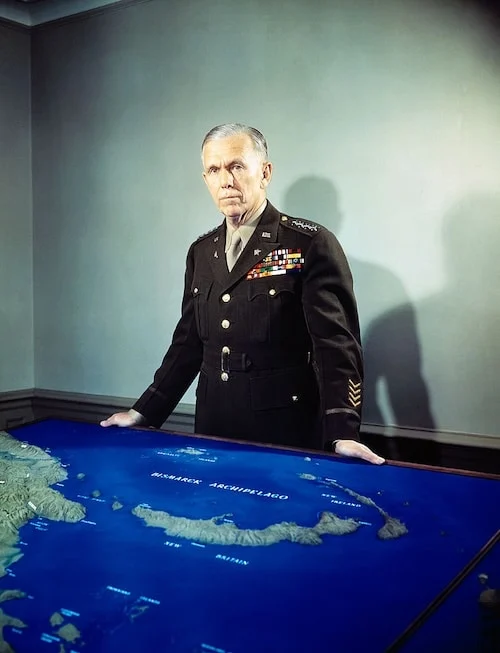
In the contemporary professional landscape, the boundary between vocational responsibilities and personal life has become increasingly porous, facilitated by the ubiquity of digital communication and the "always-on" expectations of the modern workforce. However, the challenge of managing a high-responsibility role within a defined schedule is not a modern phenomenon. Historical precedent for extreme productivity coupled with strict personal boundaries was set nearly a century ago by General George C. Marshall, the Chief of Staff of the United States Army during World War II. Despite overseeing the most significant military expansion in human history and managing a global conflict of unprecedented complexity, Marshall maintained a rigid 5:00 PM departure from his office, providing a blueprint for modern executive management and operational efficiency.
The Administrative Challenge of Global Total War
When George Marshall assumed the role of Chief of Staff in September 1939, the United States Army was ranked seventeenth in the world in terms of size and readiness, trailing behind nations such as Romania. Over the next six years, Marshall presided over the transformation of this modest force into a global juggernaut of 8.3 million personnel. His responsibilities were vast: he managed nine distinct theaters of war, coordinated with Allied commanders, oversaw the development of the Manhattan Project, and served as the primary military liaison to President Franklin D. Roosevelt and Congress.
The sheer volume of data and decision-making required for such a role would, by modern standards, suggest a need for 24-hour availability. The fate of global democracy and the lives of millions were daily variables in his professional equation. Yet, historical records indicate that Marshall was rarely found at his desk after 5:00 PM, nor did he allow the stresses of the War Department to encroach upon his evening recovery. This was not a sign of detachment, but rather a calculated strategy of cognitive preservation. Marshall understood that the quality of his judgment was predicated on his physical and mental vitality.
The Reorganization of 1942: Eliminating Bureaucratic Friction
The cornerstone of Marshall’s ability to maintain a disciplined schedule was his radical restructuring of the War Department. Upon taking office, Marshall found himself at the center of a dysfunctional organizational web. More than 60 different bureaus, agencies, and high-ranking officers had direct access to his office. This "flat" structure, intended to ensure oversight, instead resulted in the Chief of Staff being "worked to tatters on minor details," as he described it. He spent his days arbitrating jurisdictional disputes and reviewing trivial administrative matters rather than focusing on grand strategy.
In early 1942, Marshall initiated a sweeping reorganization, often referred to as the "Big Bang" of the War Department. He tasked Brigadier General Joseph McNarney with streamlining the hierarchy. The results were transformative:
- Reduction of Direct Reports: The number of individuals with direct access to Marshall was slashed from over 60 to approximately six.
- Semi-Autonomous Commands: He created three major commands—Army Ground Forces, Army Air Forces, and Services of Supply—granting them the authority to handle their own internal training and procurement without constant oversight.
- The Operations Division (OPD): Perhaps the most critical innovation was the establishment of the OPD. Functioning as a high-level clearinghouse, the OPD synthesized combat data and intelligence from every theater of war.
The OPD acted as a sophisticated human filter. Theater commanders were required to send copies of all messages to this division, where staff officers would distill the information into manageable intelligence reports. Marshall’s mandate was clear: his staff was to bring him only the "broad phases of plans or changes." By the time Marshall reached his desk each morning, the "noise" of the war had been filtered out, leaving only the essential "signal" for his executive judgment.
The One-Page Memo: Intellectual Rigor as a Time-Saver
To further protect his time and ensure clarity of thought, Marshall instituted the "one-page memo" rule. He demanded that any problem, no matter how complex, be explained—and a solution proposed—on a single sheet of paper. This requirement served a dual purpose. First, it forced his subordinates to engage in rigorous analysis and distillation before seeking his input. If a staff officer could not summarize the issue in one page, Marshall argued, they did not yet fully understand the problem.
Second, this policy allowed Marshall to review dozens of strategic questions in a fraction of the time it would take to sit through lengthy briefings. By shifting the "cognitive load" of synthesis to his staff, Marshall preserved his mental energy for the final, critical act of decision-making. This approach minimized the time spent in meetings, which Marshall viewed as a primary drain on executive productivity.
A Chronology of Disciplined Recovery
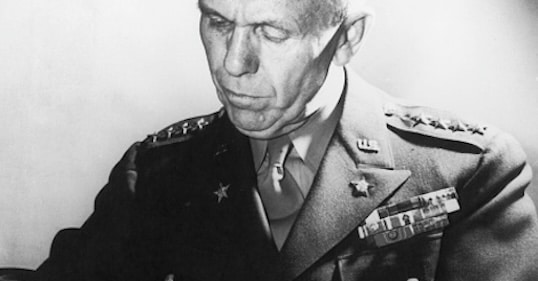
Marshall’s daily routine was characterized by a rhythmic consistency that modern productivity experts would recognize as "deep work" interspersed with "deliberate rest." His schedule was as follows:
- 06:30 AM: Wake up and early morning preparations.
- 07:30 AM: Arrival at the War Department.
- 08:00 AM: Global briefing and immediate transition into high-priority strategic work.
- 12:00 PM: Lunch followed by a 30-to-40-minute "power nap." Marshall was a staunch advocate for the midday nap, believing it restored mental acuity for the afternoon session. He famously encouraged other high-ranking commanders, including Dwight D. Eisenhower, to adopt the habit.
- 01:00 PM – 05:00 PM: Focused afternoon work session.
- 05:00 PM: Immediate departure from the office.
Marshall’s post-work hours were strictly guarded. His primary form of recovery was horseback riding, often accompanied by his stepdaughter, Molly, or his dog, Fleet. Crucially, Marshall refused to ride with professional colleagues. He recognized that "office talk" during his recreation time would prevent the psychological detachment necessary for true recovery. After riding, he would dine with his wife, Katherine, and retire to bed by 9:00 PM.
The most striking example of this discipline occurred on December 7, 1941. Even as the first reports of the attack on Pearl Harbor were being processed, Marshall was out for his morning ride. While critics at the time questioned his absence during the "Day of Infamy," Marshall’s supporters noted that his calm, optimistic, and decisive leadership in the hours following the attack was a direct result of his mental preparedness. He understood that panicking at his desk would not change the tactical reality in Hawaii, but maintaining his composure would be vital for the national response.
Data Analysis: The Cost of the "Always-On" Culture
Modern management data supports Marshall’s historical approach. According to research by business efficiency experts, the average modern employee spends up to 20% of their time—one full day per week—conducting "scavenger hunts" for information across fragmented communication channels like email, Slack, and project management software. Marshall’s OPD model effectively eliminated this waste by centralizing and distilling information.
Furthermore, studies on "decision fatigue" suggest that the quality of executive choices deteriorates after long periods of continuous activity. By capping his workday and ensuring adequate sleep and exercise, Marshall maintained a higher "judgment-per-hour" ratio than commanders who worked 16-hour days. His ability to lead the U.S. through a multi-front war while maintaining his health stands as a statistical anomaly that challenges the "grind" culture of the modern corporate world.
Broader Impact and Modern Implications
The "Marshall Model" offers several actionable strategies for today’s high-pressure environments. While modern professionals may not be able to restructure an entire federal department, the principles of communication hygiene and boundary setting remain applicable.
1. Communication Synthesis
Experts suggest that reducing the number of direct "pings" and notifications is essential. Much like Marshall reduced his direct reports from 60 to six, modern workers can use filters, "Do Not Disturb" settings, and designated "correspondence hours" to prevent their attention from being fragmented. Consolidating communication into specific blocks of time—rather than reacting to every alert—mimics the OPD’s function of turning a chaotic stream of data into a manageable flow.
2. The Power of the "Third Space"
Marshall’s horseback riding served as a "third space"—a transitional activity that allowed him to shift from the role of General to the role of private citizen. Modern psychology emphasizes the importance of this transition to prevent burnout. Whether it is exercise, a hobby, or a dedicated commute ritual, having a non-negotiable "cutoff" activity is vital for long-term sustainability.
3. Setting Behavioral Expectations
Marshall’s 5:00 PM departure was a social contract he established with his staff and superiors. Management experts note that "boundary creep" is often the result of an individual’s own behavior. By consistently responding to emails on weekends, an employee trains their colleagues to expect 24/7 availability. Conversely, by maintaining a strict "off-the-clock" policy, a leader sets a standard that prioritizes results over presence.
Conclusion: The Legacy of a Disciplined Life
General George Marshall’s career did not end with the Allied victory in 1945. He went on to serve as Secretary of State, where he authored the Marshall Plan to rebuild war-torn Europe, and later as Secretary of Defense and President of the American Red Cross. In 1953, he was awarded the Nobel Peace Prize.
Marshall’s legacy suggests that extreme responsibility does not require the sacrifice of one’s humanity or health. On the contrary, his success was a direct product of his limits. By refusing to be "worked to tatters," he ensured that when he was at his desk, his mind was a sharp, effective instrument of national policy. In an age of digital exhaustion, the Marshall Plan for personal management remains a vital case study in the enduring power of discipline, delegation, and the 5:00 PM boundary.

0 Comments