
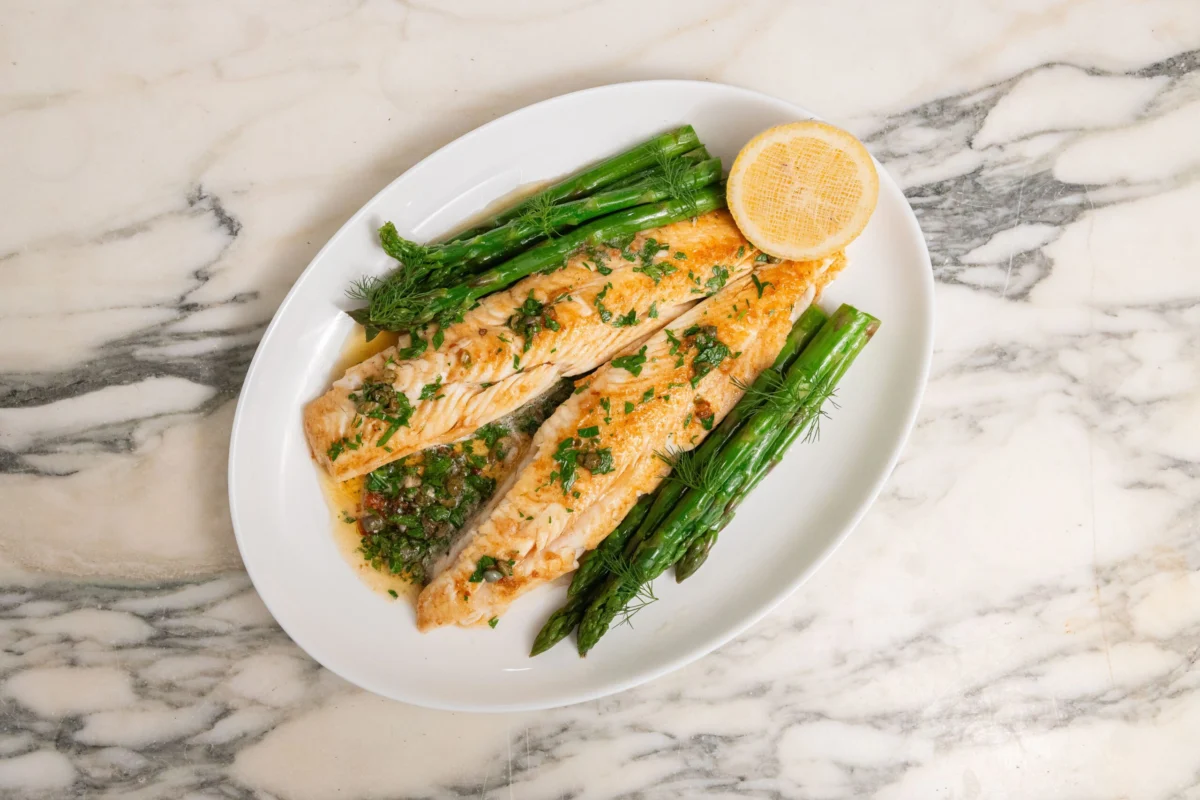
Chef Alexia Duchêne of Le Chêne in New York City is breathing new life into a beloved French bistro staple, Dover Sole Meunière, offering home cooks an accessible yet sophisticated culinary experience. This classic dish, celebrated for its delicate flavors and refined preparation, is elevated by Duchêne’s technique of cooking the fish whole, followed by a dramatic deboning process that transforms a simple meal into an elegant presentation. The dish, featuring the prized Dover sole, is traditionally enhanced by a simple yet rich sauce of brown butter and lemon, and Duchêne’s rendition further adorns it with capers, fresh parsley, and dill, all served alongside tender asparagus. This approach demystifies a dish often perceived as exclusive to high-end restaurants, making its refined charm attainable for domestic kitchens.
The Enduring Appeal of Dover Sole Meunière
Dover Sole Meunière’s history is deeply rooted in French culinary tradition, embodying the principles of cuisine bourgeoise – dishes that are both refined and approachable. The meunière preparation, meaning "miller’s wife’s style," refers to the simple dredging of fish in flour before pan-frying, a technique that yields a lightly crisp exterior and allows the delicate flavor of the fish to shine through. This method has been a cornerstone of French cookery for centuries, evolving from rustic home cooking to a celebrated restaurant dish. The choice of Dover sole, a premium flatfish, is integral to the dish’s prestige. Renowned for its exceptionally mild, sweet flavor and its signature tender, flaky texture when cooked, Dover sole commands a significant presence in the culinary world. Its subtle taste makes it an ideal canvas for the rich, nutty notes of browned butter and the bright acidity of lemon, a pairing that has stood the test of time.
The cultural significance of Dover Sole Meunière extends beyond its ingredients and preparation. It represents a certain era of dining, evoking images of bustling Parisian bistros and leisurely meals. The act of serving a whole fish, especially one as elegant as Dover sole, adds a theatrical element to the dining experience, a practice that Chef Duchêne skillfully reinterprets for a modern audience. This emphasis on presentation, coupled with the dish’s inherent deliciousness, has cemented its status as a classic that continues to captivate diners worldwide.
Chef Duchêne’s Innovative Approach
Chef Alexia Duchêne’s adaptation of Dover Sole Meunière at Le Chêne in New York City highlights a commitment to both authenticity and innovation. While respecting the traditional flavor profile, her method of cooking the fish whole before carefully deboning it tableside (or in the kitchen for a home cook) introduces a captivating visual element. This technique not only preserves the moisture and integrity of the fish during cooking but also allows for a more controlled and aesthetically pleasing final presentation. The gentle cooking process ensures that the delicate flesh of the Dover sole remains succulent and flaky, a testament to Duchêne’s understanding of the fish’s unique qualities.
The accompanying sauce, a harmonious blend of brown butter, lemon, capers, parsley, and dill, is a classic ensemble that perfectly complements the mildness of the sole. The browning of the butter, a crucial step in the meunière preparation, unlocks a depth of flavor, transforming it into a nutty, golden elixir. The capers add a briny counterpoint, while the fresh herbs provide aromatic freshness, cutting through the richness of the butter. Served alongside perfectly cooked asparagus, the dish becomes a complete and balanced meal, demonstrating a thoughtful consideration for every component.
Duchêne’s philosophy, as evident in this recipe, suggests a belief that classic dishes, when approached with skill and a touch of creativity, can remain relevant and exciting. Her willingness to share this refined technique with home cooks underscores a broader trend in the culinary world, where chefs are increasingly eager to bridge the gap between professional kitchens and domestic cooking, empowering individuals to recreate restaurant-quality meals in their own homes.
Understanding Dover Sole and its Substitutes
Dover sole (Solea solea) is a species of flatfish native to the eastern Atlantic Ocean and Mediterranean Sea. It is characterized by its elongated, oval body and its preference for sandy or muddy seabeds. The fish is highly prized for its culinary attributes: a firm yet tender flesh, a delicate sweetness, and a mild flavor profile that is not overpowering. This subtlety is precisely why it lends itself so well to simple preparations like the meunière, where it can be the star without being masked by aggressive seasonings or sauces.
The availability of true Dover sole can vary depending on geographical location and season. In regions where it is not readily available, or for consumers seeking more accessible options, alternative flatfish can be employed with successful results. Fluke, also known as summer flounder, is a strong contender. It shares Dover sole’s mild flavor and flaky texture, making it an excellent substitute in meunière preparations. Another viable option is skate wing. While skate has a slightly different texture, often described as more cartilaginous and firmer, its flavor is also mild and sweet, and it absorbs the rich meunière sauce beautifully. When selecting substitutes, the key is to opt for white, flaky fish that can withstand pan-frying and pair harmoniously with butter and lemon. The success of the meunière preparation relies on the fish’s ability to cook quickly and retain its delicate structure, qualities that both fluke and skate wing possess to a commendable degree.
The Practicality of Home Preparation
A significant aspect of Chef Duchêne’s approach is its surprising achievability for the home cook. While the visual impact of a whole, deboned fish might suggest a complex undertaking, the underlying principles are straightforward. The article explicitly addresses a common query: the use of fillets versus a whole fish. It confirms that while cooking the fish whole offers a more dramatic presentation, opting for pre-filleted Dover sole or even fillets of other suitable white fish will yield an equally delicious result. This flexibility is crucial for home cooks, acknowledging that not everyone has access to a fishmonger who can expertly prepare a whole fish, nor the confidence to do so themselves.
The choice of cookware is also demystified. While a specialized long, oval fish pan might be ideal for a whole Dover sole, the article assures readers that a large skillet or a medium Dutch oven will suffice. The primary requirement is a pan wide enough to accommodate the fish lying flat, ensuring even cooking. This practical advice removes potential barriers to entry, encouraging cooks to experiment with the recipe without requiring specialized equipment. The butter, lemon, and caper sauce, the very soul of the meunière, is inherently adaptable, its flavors readily coating and enhancing either whole fish or fillets. This adaptability is a hallmark of well-designed classic recipes, allowing them to transcend specific ingredients or methods while retaining their essential character.
Broader Culinary Context and Implications
The enduring popularity of Dover Sole Meunière, and Chef Duchêne’s contemporary interpretation, speaks to a broader cultural fascination with classic French cuisine. In an era of rapid culinary trends and global fusion, there remains a deep appreciation for dishes that embody tradition, simplicity, and impeccable technique. The article’s inclusion of links to other classic French recipes, such as Bistro-Style Croque Monsieur, Poulet Rôti, and Ratatouille, further contextualizes Duchêne’s work within this rich culinary heritage. These dishes, like Sole Meunière, are celebrated for their timeless appeal and their ability to evoke comfort and sophistication.
Chef Duchêne’s contribution to this ongoing narrative lies in her ability to make such a refined dish accessible. By breaking down the process and offering practical advice, she democratizes a culinary experience that might otherwise be perceived as exclusive. This has significant implications for home cooks, empowering them to explore more sophisticated cooking techniques and to impress guests with restaurant-quality meals. It also reflects a growing trend where culinary institutions and chefs are actively engaging with the public to share their knowledge and passion, fostering a more inclusive and engaging food culture. The success of such recipes in home kitchens can lead to increased confidence, a greater appreciation for quality ingredients, and a deeper understanding of culinary principles. This, in turn, can influence purchasing habits, potentially leading to greater demand for premium ingredients like Dover sole, and supporting sustainable fishing practices if sourced responsibly.
The implications of making classic dishes like Dover Sole Meunière more accessible extend to the preservation and evolution of culinary traditions. By adapting these recipes for modern kitchens and lifestyles, chefs like Duchêne ensure that these culinary treasures are not lost to time but are instead continually rediscovered and enjoyed by new generations. This dynamic interplay between tradition and innovation is vital for the continued vibrancy of the culinary arts.

0 Comments