
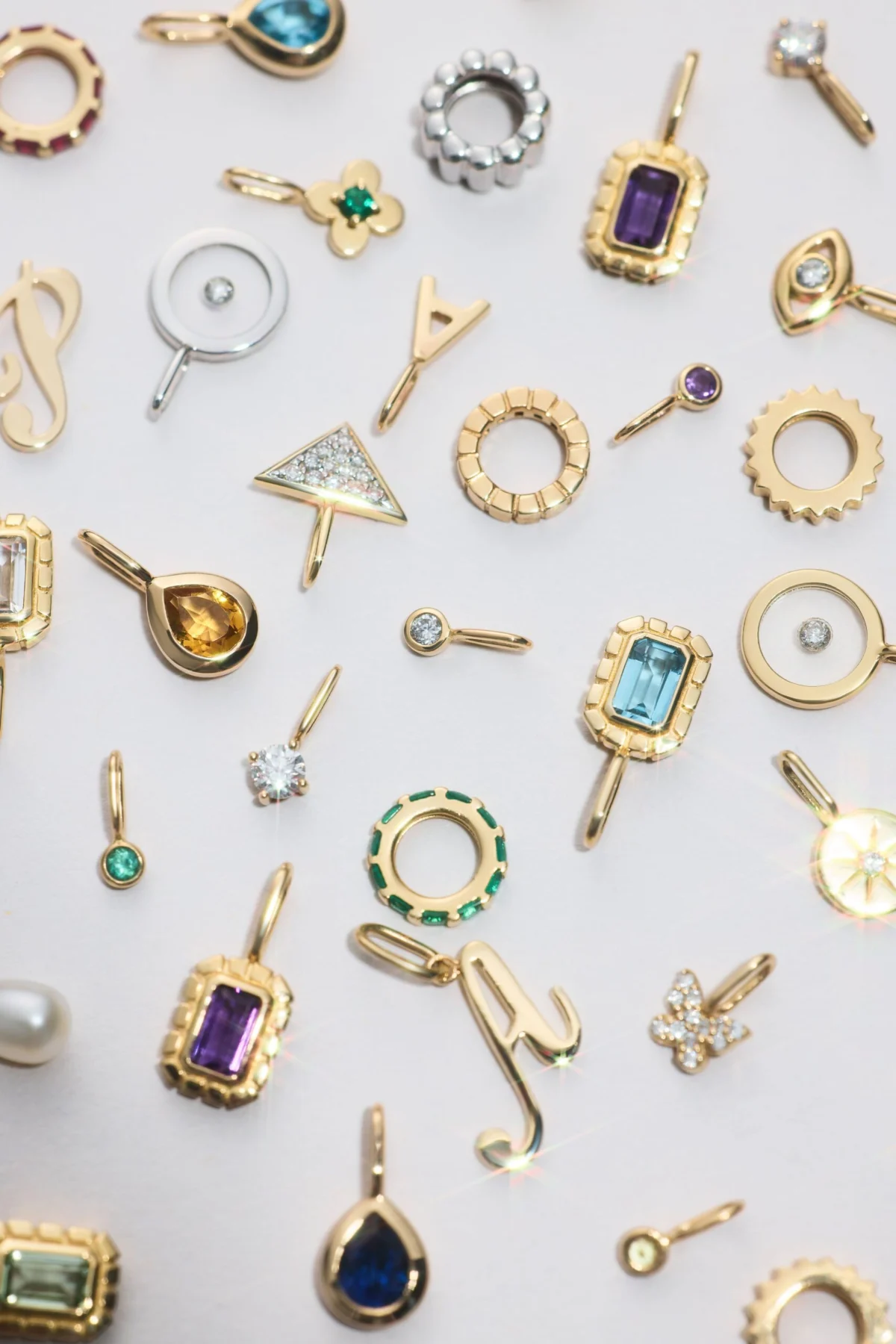
The global jewelry industry is currently navigating a period of unprecedented volatility as the spot price of gold reaches historic heights, fundamentally altering the business models of mid-tier brands. In a rapid escalation that has caught many market analysts off guard, the gold spot price—a real-time measure of the metal’s market value—breached the $3,000 per ounce threshold in March 2025. By January 2026, the price surged past $5,000 per ounce, representing a staggering 162% increase over a five-year period. This meteoric rise has placed an immense strain on the "demi-fine" sector, a category of jewelry that bridges the gap between affordable fashion accessories and high-end luxury investment pieces. While the ultra-wealthy continue to purchase high-jewelry as a hedge against inflation, the middle-market consumer is showing signs of significant fatigue, forcing brands to choose between aggressive price hikes or a total redesign of their product offerings.
The Economic Drivers of the Bullion Surge
The current valuation of gold is not an isolated phenomenon but rather a symptom of broader global instability. Historically, gold is viewed as a "safe-haven" asset. When investors lose confidence in fiat currencies—specifically the U.S. dollar—or when geopolitical tensions escalate, capital flows into precious metals. The period leading into 2026 has been defined by a "perfect storm" of economic factors, including persistent high inflation and a weakening dollar.
Furthermore, geopolitical conflicts have played a decisive role. According to Bart Melek, managing director and global head of commodity strategy at TD Securities, the unpredictability of modern warfare and shifting trade policies have disrupted traditional market trends. The implementation of new tariffs and the potential for interest rate cuts by the Federal Reserve have created an environment where gold is the only perceived constant. Melek notes that the market is currently reacting to conflicting reports regarding international conflicts, particularly involving the White House’s stance on imminent resolutions versus intelligence suggesting prolonged engagement. In such a climate, gold prices remain "unusually" detached from normal cyclical trends.
A Chronology of the Pricing Crisis
The escalation of gold prices has followed a steep and disruptive timeline that has left many retailers struggling to update their tags fast enough to maintain margins.

- January 2021 – December 2024: Gold prices maintained a relatively stable, albeit upward, trajectory, allowing demi-fine brands to flourish on the promise of 14-karat solid gold at accessible price points.
- March 2025: The market witnessed a psychological breakthrough as gold crossed $3,000 per ounce. This prompted the first wave of minor price adjustments across the industry.
- September 2025: Silver prices more than doubled, signaling that the surge was not limited to gold but was affecting the entire precious metals complex.
- December 2025: Major retailers like Angara reported taking hits to their gross margins, hoping the spike was temporary.
- January 2026: Gold hit the $5,000 per ounce mark. The "hope" for a price correction vanished, replaced by a permanent shift in corporate strategy.
- March 2026: Leading brands, including Mejuri, officially announced significant price increases, with some best-selling items rising by more than 20% in a single month.
The K-Shaped Recovery and Consumer Divergence
The jewelry market is currently mirroring the "K-shaped" economy observed in other retail sectors. High-end luxury brands, which utilize 18-karat gold and high-grade gemstones, have seen minimal impact on consumer behavior. For these customers, the jewelry is an asset; a higher price tag often reinforces the item’s perceived value as a long-term investment.
"In the mid-tier, we’re seeing the exact opposite," says Ankur Daga, co-founder and CEO of Angara. Daga describes jewelry as the "canary in the coal mine" for consumer spending. Because it is a purely discretionary purchase, it is often the first category to be cut when the average household budget is squeezed. This has led to a bifurcation of the market: shoppers are either migrating toward lower-karat options (10k) to maintain the "solid gold" status at a lower price or sticking with 14k and 18k pieces but purchasing them less frequently.
Strategic Pivots: The Rise of 10-Karat Gold
To combat the rising cost of materials, many brands are introducing 10-karat gold as a new standard for demi-fine jewelry. This represents a significant shift in the industry, as 14-karat gold was previously the minimum standard for many "affordable luxury" labels.
The mathematical reality of this shift is found in the purity levels. Ten-karat gold contains 41.7% pure gold, compared to the 58.3% found in 14-karat gold. While this reduction in gold content makes the pieces more affordable, it also alters the physical properties of the jewelry. Ten-karat gold is harder and more durable because of the higher concentration of alloy metals, but it is also less hypoallergenic, which can be a deterrent for sensitive consumers.
David Benayoun, co-founder and CEO of Ana Luisa, reports that his brand began experimenting with 10k gold in early 2023. Since then, the solid gold category has tripled in sales, suggesting that consumers are willing to sacrifice purity for the sake of price. Similarly, Mejuri, a dominant player in the space, recently informed customers that it would be focusing on 10k gold collections alongside its traditional 14k offerings. Noura Sakkijha, CEO of Mejuri, framed the move as a way to maintain quality and durability without alienating the brand’s core demographic.

Operational Innovations and Financial Hedging
Beyond changing the metal itself, jewelry executives are turning to sophisticated financial instruments and operational efficiencies to protect their bottom lines.
- Gold Locks and Deposits: Brands like Ana Luisa are utilizing "gold locks," a system where the company pays a deposit on a specific amount of gold to be used over a set timeframe. While this requires more upfront capital, it provides a buffer against daily market volatility.
- Forward Contracts: Sebastian Picardo, CEO of Monica Vinader, utilizes forward contracts to hedge against price increases. By locking in a price for future delivery, the brand can maintain consistent pricing for its global customer base, despite the three-to-six-month lead time required for production.
- Component Standardization: To achieve economies of scale, Monica Vinader is standardizing components such as clasps and earring backs across various collections. Ordering these items in higher volumes allows the brand to negotiate better rates with suppliers, offsetting the cost of the raw gold.
- Made-to-Order Models: Angara has leaned into a made-to-order production model. While this means they must buy gold at daily market rates, it eliminates the risk of holding expensive inventory that might not sell if consumer trends shift.
The 2008 Parallel: A Return to Silver and Mixed Metals
Industry veterans are drawing parallels between the current crisis and the Great Recession of 2008. During that era, the financial squeeze led to the explosive growth of brands like Pandora, which leaned heavily into sterling silver—a much more affordable precious metal.
In 2026, a similar trend is emerging. Silver is no longer seen as a "budget" alternative but as a stylistic choice. Taylor and Mackinley Hill, co-founders of the brand Stone Fruit, noted that the current climate has fueled a trend toward bolder, more sculptural silver jewelry. "The silver look is back," they stated, noting that the metal allows for larger, more statement-making silhouettes that would be prohibitively expensive in solid gold.
Angara’s Ankur Daga also anticipates a surge in mixed-metal designs, such as silver bases with gold accents. This allows brands to maintain the "gold look" while significantly reducing the total weight of the gold used in each piece. As Daga noted, "Every gram counts" in a $5,000-per-ounce market.
Future Implications for the Jewelry Landscape
The long-term implications of this "golden squeeze" suggest a permanent restructuring of the jewelry market. If gold prices remain at these elevated levels, the demi-fine category may eventually split into two distinct industries: one focused on 10k gold and high-quality silver, and another that caters exclusively to the "investment" shopper with 18k and 22k gold.

Furthermore, the volatility is forcing a shift toward design-led value rather than material-led value. Brands are now looking at ways to use less gold—through hollow designs or thinner bands—while using gemstones to provide the visual "heft" of the piece.
As the industry moves deeper into 2026, the survival of mid-market jewelry brands will depend on their ability to navigate the complex intersection of global politics, commodity markets, and shifting consumer psychology. With gold prices remaining a "hydra" of challenges, the brands that succeed will be those that can maintain their aesthetic identity while being ruthlessly efficient with the precious materials they employ. The "canary in the coal mine" is still singing, but the tune has changed from one of easy luxury to one of calculated survival.

0 Comments