
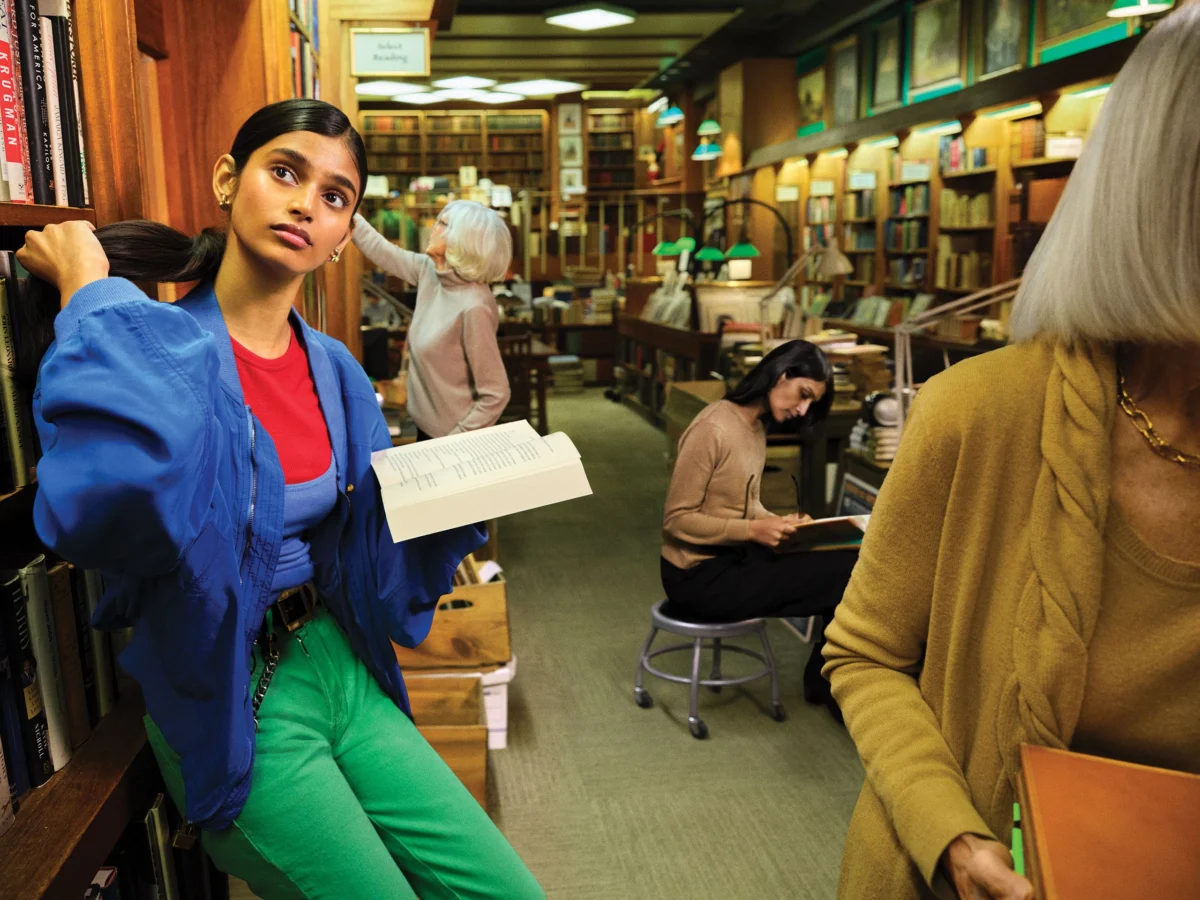
The landscape of New York City’s cultural identity is undergoing a significant transformation as residents and visitors alike pivot away from digital consumption in favor of tactile, analog experiences. This shift, characterized by a renewed interest in physical books and historic community hubs, was recently highlighted in a comprehensive survey of the city’s evolving literary scene, which brought together prominent authors, publishers, and cultural icons. At the center of this movement is the Argosy Book Store, a century-old Manhattan institution located on East 59th Street. Founded by Louis Cohen in 1925 and currently operated by his three daughters—Judith, Naomi, and Adina Lowry—along with the third generation of the family, the bookstore serves as a primary anchor for a city rediscovering the value of "slow media." During a recent gathering at the store, novelist Monica Datta, whose forthcoming debut Nebraska has already generated significant buzz in publishing circles, joined model Bhavitha Mandava to discuss the cross-pollination of fashion, art, and literature that defines the current New York moment.

The Architectural and Historical Anchors of the Literary Scene
The endurance of independent bookstores like Argosy is not merely a matter of nostalgia but a reflection of a resilient business model that prioritizes curation over algorithms. Argosy remains one of the few surviving landmarks of what was once known as "Book Row," a stretch of Fourth Avenue that formerly housed dozens of second-hand bookstores. Its survival into 2026 is a testament to the family’s commitment to preserving rare volumes, Americana, and antique maps. The bookstore’s multi-story layout offers a physical manifestation of New York’s intellectual history, where modern novelists like Datta can engage with the public in the same aisles that have housed the works of generations of writers before them.
Parallel to the revival of the independent bookstore is the resurgence of the classic New York bistro as a site for intellectual exchange. Le Veau d’Or, the city’s oldest French bistro located on East 60th Street, has recently undergone a revitalization led by Chef Charles Izenstein and the team behind the acclaimed restaurant Frenchette. Originally opened in 1937, Le Veau d’Or was a favorite haunt of illustrators like Hilary Knight, whose drawings still adorn the wood-paneled walls. Today, it serves as a meeting ground for the vanguard of the publishing world. Recent patrons include Mitzi Angel, the president and publisher of Farrar, Straus and Giroux (FSG), and her husband, the distinguished poet Frederick Seidel. Their presence at the bistro highlights the symbiotic relationship between the city’s culinary and literary worlds, where discussions regarding upcoming titles—such as a new history of the telephone involving industrial intrigue and "skulduggery"—take place over traditional French fare.

The Sociology of App Fatigue and the Return to Tangible Media
The movement toward physical media is largely driven by a phenomenon sociologists describe as "app fatigue." After more than a decade of digital-first consumption, a growing segment of the population is intentionally disconnecting from the "pallor-inducing glow" of smartphone screens. This trend is visible in public spaces throughout the city, from the uptown local subway trains to the rehearsal studios of Lincoln Center. Observations of commuters show a marked increase in the visibility of paperbacks and hardcovers, suggesting that the book has once again become a preferred companion for New York’s "liminal moments"—the time spent waiting for a train, a performance, or a table at a restaurant.
Data from the publishing industry supports this anecdotal evidence. While digital formats offered convenience during the early 2020s, print sales have remained remarkably robust, particularly among younger demographics who view physical books as a form of "digital detox." This shift is also reflected in the rise of niche community activities, such as art cafes and matchmaking services that eschew algorithmic dating in favor of human-centric interactions. The "BookTok" phenomenon, while digital in nature, has ironically fueled a massive surge in physical book sales, as social media users share images of their personal libraries and "TBR" (to be read) piles, turning reading into a performative yet tangible social act.

Influential Figures and the 2026 Reading List
The current literary renaissance is bolstered by the involvement of high-profile advocates who bridge the gap between popular culture and serious literature. Sarah Jessica Parker, a long-time resident of the West Village and a prominent figure in the New York cultural scene, has become a formidable force in the industry. Through her imprint, SJP Lit, and her recent role as a judge for the Booker Prize, Parker has leveraged her platform to champion new voices. In a recent statement, Parker emphasized the "lyrical and joyful" nature of Daniel Mason’s upcoming novel, Country People, a follow-up of sorts to his acclaimed North Woods. Parker’s endorsement of Mason’s work, which she describes as a "cocoon" for devoted readers, illustrates the power of celebrity curation in an era where consumers are overwhelmed by choice.
The 2026 literary calendar is further populated by a diverse array of highly anticipated titles across various genres:

- Monica Datta’s Nebraska: A debut novel that explores themes of place and identity, already being cited as a defining work for the mid-2020s.
- Madeline Cash’s Lost Lambs: Described as the "debut of the season," Cash’s work is gaining traction among the city’s younger creative class.
- Patrick Radden Keefe’s London Falling: A true crime narrative from the author of Empire of Pain, continuing his streak of deeply researched, gripping non-fiction.
- Saba Sams’s Gunk: A debut novel that follows her successful short story collection, Send Nudes.
- Allegra Goodman’s This Is Not About Us: A contemporary exploration of social dynamics from a seasoned novelist.
- Lauren Groff’s Brawler: The latest offering from one of the most celebrated prose stylists of the current era.
- George Saunders’s Vigil: A new novel from the Booker Prize winner, expected to continue his exploration of the human condition with his signature wit and empathy.
The Intersection of Performance and Literacy
The literary trend extends into the performing arts, where the narrative depth of classic and contemporary books informs the work of dancers and actors. At Lincoln Center, members of the New York City Ballet, including Emma Von Enck and Jovani Furlan, have been noted for integrating reading into their rigorous rehearsal schedules. This practice suggests that for many artists, literature serves as a necessary intellectual stimulant that complements their physical discipline.
Furthermore, the Broadway revival of The Outsiders, based on the seminal novel by S.E. Hinton, demonstrates the enduring power of literary adaptations. The production has become a focal point for a new generation of theatergoers, with cast members like Sky Lakota-Lynch and Brent Comer engaging with the source material both on and off stage. This synergy between the page and the stage reinforces the idea that New York’s cultural sectors are not siloed but are part of a continuous, "cross-pollinating" ecosystem.

Broader Implications and the Future of the City’s Intellectual Life
The implications of this literary resurgence are profound for the future of urban life. As New York City continues to navigate the complexities of the post-digital age, the return to bookstores and bistros signifies a desire for permanent, physical spaces that foster community and intellectual growth. The success of the Argosy Book Store and the revival of Le Veau d’Or suggest that the city’s residents are increasingly valuing "heritage" over "disruption."
From a retail perspective, the growth of independent bookstores—which have seen a steady increase in numbers according to the American Booksellers Association—provides a counter-narrative to the decline of traditional brick-and-mortar stores. These shops have become more than just retail outlets; they are community centers that host readings, signings, and discussions, providing a "third space" outside of home and work.

In conclusion, the "Top Shelf" culture currently being celebrated in New York City is a multifaceted movement that combines fashion, history, and a deep-seated love for the written word. It is a response to the transience of the digital world and a reaffirmation of the city’s status as a global literary capital. As readers look forward to the release of Mason’s Country People and Datta’s Nebraska, the message from the city’s publishers, authors, and cultural icons is clear: the most sophisticated technology for exploring the human experience remains the printed book. Whether in a West Village townhouse, an uptown subway car, or a century-old bookstore, the act of reading continues to be a vital, evolving, and indispensable part of the New York experience.

0 Comments