
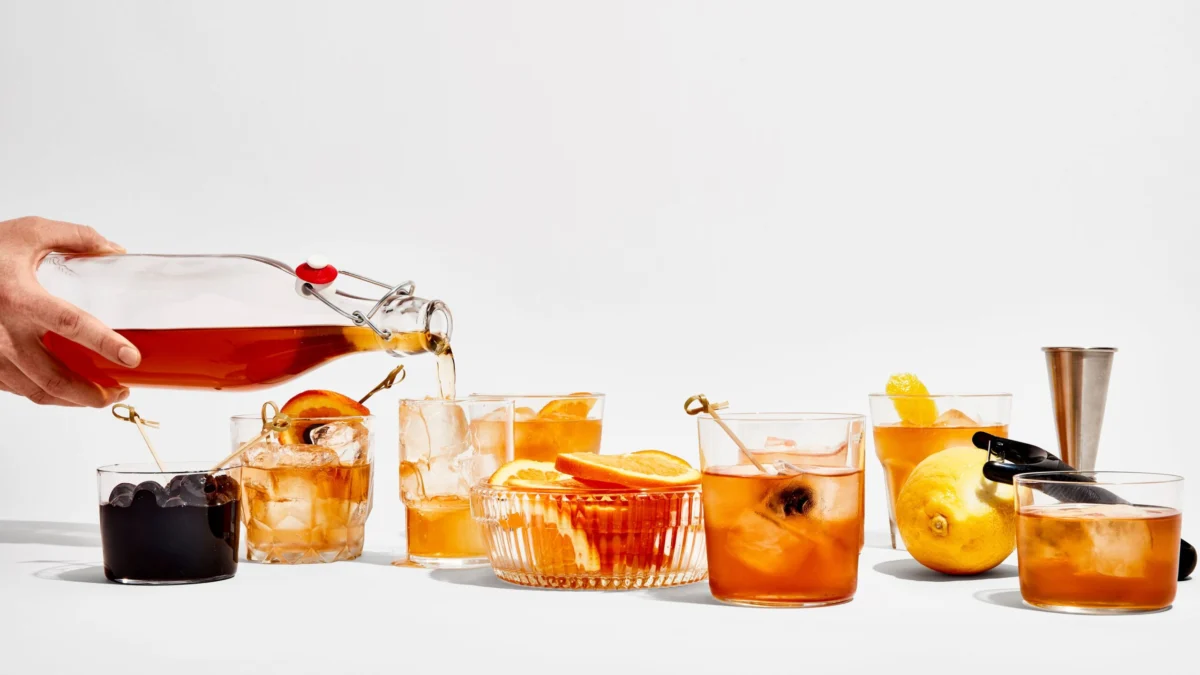
When the invitation arrives with the ubiquitous request to "bring something to drink," the pressure to impress can be palpable. While a well-chosen bottle of wine is always appreciated, elevating your contribution to that of a true party hero can be achieved by arriving with a meticulously prepared batch of Old-Fashioned cocktails. This strategic approach bypasses the need for on-the-spot mixology, allowing you to simply pour, garnish, and serve, freeing you to mingle and enjoy the festivities.
The beauty of a batched Old-Fashioned lies in its elegant simplicity and the foresight it represents. This classic cocktail, a cornerstone of American mixology, is built upon a foundation of spirit, sugar, bitters, and water. By combining these elements in advance, you create a perfectly balanced elixir that captures the essence of the individual drink without the immediate labor. The recipe typically involves a thoughtful blend of rye whiskey or bourbon, a rich simple syrup, Angostura bitters, and a precisely measured amount of water. This added water is crucial; it artfully mimics the dilution that occurs when a single cocktail is stirred over ice, ensuring that each serving is as smooth and nuanced as its freshly made counterpart.
The strategic advantage of preparing cocktails in batches extends far beyond the Old-Fashioned. Once this technique is understood, a world of spirit-forward classics becomes accessible for advance preparation. Consider the Manhattan, Negroni, Martini, Boulevardier, and Rob Roy, among many others. The ability to present a pre-mixed pitcher or a beautifully bottled collection of these sophisticated drinks at any gathering—be it a holiday celebration, a casual backyard barbecue, a lively tailgate, or an intimate dinner party—is a definitive power move that signals both preparedness and a refined understanding of hospitality.
The Genesis of the Batched Old-Fashioned
The Old-Fashioned itself boasts a lineage stretching back to the very definition of a cocktail as established in 1806: spirit, sugar, bitters, and water. Originally known simply as the "Whiskey Cocktail," its name evolved as cocktail trends shifted, solidifying its identity as the "Old-Fashioned" when more complex concoctions began to emerge. This historical simplicity is precisely what makes it an ideal candidate for batching. Instead of the meticulous, individual construction of each drink, the batched approach consolidates the process, allowing for the preparation of multiple servings—whether for two, four, eight, or more—with remarkable efficiency.
The Crucial Role of Water in Batched Cocktails
The inclusion of water in a batched cocktail recipe might initially seem counterintuitive to those accustomed to the direct application of spirits. However, this element is not merely an additive; it is an essential component that replicates a critical stage of the traditional cocktail-making process. When a cocktail is stirred or shaken with ice, the gradual melting of the ice introduces a controlled amount of dilution. This dilution is fundamental to chilling the drink and, more importantly, to softening the edges of the alcohol, integrating the flavors, and achieving a harmonious balance.
In the context of a batched cocktail, where the mixing does not occur over ice, the pre-addition of water serves this exact purpose. It ensures that each pour from the batch delivers a cocktail that is not only chilled but also possesses the nuanced complexity and approachable strength that one would expect from a meticulously prepared single serving. Without this intentional dilution, the resulting drink could taste overly harsh and unbalanced, missing the sophisticated interplay of ingredients that defines a well-crafted Old-Fashioned.

The Practical Advantages of Advance Preparation
The primary allure of the batched Old-Fashioned, and indeed any batched cocktail, is the profound time-saving and stress-reducing benefit it offers to the host or the invited guest aiming to contribute significantly. The ingredients in a classic Old-Fashioned—whiskey, sugar, and bitters—are inherently shelf-stable. This characteristic allows for a considerable lead time in preparation.
A Timeline of Optimal Flavor Development
To achieve peak flavor integration, it is recommended to prepare the batched Old-Fashioned at least one day in advance of the event. This allows the components to meld and mature within the bottle. For an even more profound and smoother profile, some enthusiasts suggest aging the cocktail for up to two weeks. During this extended period, the spirit, syrup, and bitters continue to interact, creating a more unified and sophisticated flavor.
Furthermore, the storage potential of a batched Old-Fashioned is remarkably robust. When stored in an airtight container, the cocktail can maintain its quality for up to three months in the refrigerator. For those seeking an even longer shelf life and a unique serving experience, the freezer offers an excellent alternative. Due to its high alcohol content, the liquid will not freeze solid but will instead thicken into a syrupy consistency. This frozen state, when poured over fresh ice, creates a delightful, slushy-like texture that can be enjoyed for at least six months. This extended shelf life makes it a practical option for stocking up for multiple events or for ensuring a ready supply of sophisticated cocktails for impromptu gatherings.
Beyond the Old-Fashioned: Expanding the Batched Cocktail Repertoire
The principles behind batching an Old-Fashioned are readily transferable to a wide array of spirit-forward cocktails. This opens up a vast landscape of possibilities for hosts and entertainers. By understanding the core formula, one can confidently prepare large quantities of other beloved drinks:
- Manhattan: Typically comprising whiskey, sweet vermouth, and bitters, a batch of Manhattans can be prepared with the same proportional scaling and a measured addition of dilution.
- Negroni: This iconic Italian aperitivo, made with gin, Campari, and sweet vermouth, is another excellent candidate for batching, offering a bitter yet balanced profile.
- Martini: While a classic Martini is often built to order, a batched version (especially a dirty or Vesper variation) can be a significant time-saver for larger gatherings.
- Boulevardier: A close cousin to the Negroni, substituting whiskey for gin, the Boulevardier is equally amenable to batch preparation.
- Rob Roy: A variation of the Manhattan that uses Scotch whisky, this classic also benefits from the efficiency of batching.
The fundamental approach involves multiplying the ingredients of the original recipe by the desired number of servings and then introducing the necessary dilution, typically a calculated amount of water. For bitters, a gradual increase and tasting are advised to ensure optimal flavor integration without overpowering the drink. Sweetness and water levels can be fine-tuned by the teaspoonful until the perfect balance is achieved.
Tips for Crafting the Quintessential Batched Old-Fashioned
To ensure your batched Old-Fashioned is a resounding success, consider these key recommendations:
- Whiskey Selection: The choice between rye and bourbon significantly impacts the final flavor profile. Rye whiskey tends to produce a drier, spicier cocktail, while bourbon yields a richer, sweeter, and often smoother drink. For a reliable and budget-friendly rye, Old Overholt is a widely available and consistent choice. For a more premium option, Michter’s rye has received accolades for its quality. Bourbon enthusiasts might find Bulleit or Knob Creek 9-Year to be excellent choices, both of which have been recognized in taste tests for their superior character.
- Syrup Consistency: A rich simple syrup, typically a 2:1 ratio of sugar to water, provides a more viscous sweetness that integrates well into the spirit. Standard simple syrup (1:1) can also be used, but adjustments to the water content might be necessary.
- Bitters Measurement: While Angostura bitters are traditional, experimenting with other aromatic bitters or even orange bitters can add unique layers of complexity. When batching, it’s crucial to add bitters incrementally and taste as you go. The flavor of bitters can intensify over time, so a slight under-addition during the initial mixing is often preferable, allowing for adjustments before serving.
- Dilution Precision: As previously emphasized, the addition of water is critical. The exact amount will depend on the proof of the whiskey and personal preference, but a general guideline is to add approximately 1/4 cup of water per 4 cocktails. This can be adjusted based on taste.
- Aging for Flavor: Allow the batched cocktail to rest in the refrigerator for at least 24 hours. This period is essential for the flavors to marry and mellow. Longer aging periods, up to two weeks, can further enhance the complexity and smoothness.
- Garnishes at Serving: While the cocktail itself can be prepared well in advance, garnishes such as orange peels or brandied cherries should be added just before serving. This preserves their freshness and aromatic qualities.
Addressing Common Questions About Batched Cocktails
The practice of batched cocktails often prompts a range of inquiries from both novice and experienced drinkers. Here are some frequently asked questions and their answers:

Should I use bourbon or rye for my batched Old-Fashioned?
Both bourbon and rye whiskey are excellent choices, each lending a distinct character to the cocktail. Rye offers a spicier, drier profile, while bourbon provides a richer, sweeter, and often smoother experience. The selection ultimately depends on individual preference. For a consistent and accessible rye, Old Overholt is a widely recommended option. For those seeking a premium rye, Michter’s has garnered significant praise. On the bourbon front, Bulleit and Knob Creek 9-Year are consistently ranked among the best.
Can I freeze a batch of Old-Fashioneds?
Absolutely. Due to the high alcohol content of the spirit base, a batched Old-Fashioned will not freeze solid. Instead, it will develop a thick, syrupy consistency, making it ideal for storage in the freezer. This also offers a unique serving experience when poured over ice.
How long will a batch of Old-Fashioneds last?
When stored properly in an airtight container, a batched Old-Fashioned can remain delicious for up to three months in the refrigerator. For longer storage, the freezer is an excellent option, where it can be kept for at least six months. It is advisable to add garnishes only when serving to maintain their freshness.
Why do batched cocktail recipes include water?

The inclusion of water is paramount to achieving the correct balance and dilution that is naturally achieved when a cocktail is stirred over ice. Water replaces the melting ice’s contribution, preventing the cocktail from tasting overly strong or harsh and ensuring a smooth, integrated flavor profile. While water is the standard, some experiment with mild juices, though this often necessitates adjusting the sweetener as well.
Can I double this recipe?
Yes, the recipe is highly scalable. The key is to maintain the exact proportions of all ingredients—whiskey, syrup, bitters, and water. For larger gatherings, a large glass beverage dispenser or multiple individual bottles can be used for efficient serving.
The art of the batched cocktail, exemplified by the venerable Old-Fashioned, transforms a simple request into an opportunity for culinary creativity and impressive hospitality. By embracing this technique, hosts and guests alike can elevate their entertaining game, ensuring that every gathering is met with perfectly crafted, readily available, and undeniably delicious libations. The implications are clear: in the realm of party preparedness, foresight and thoughtful preparation are indeed the most potent ingredients.

0 Comments