
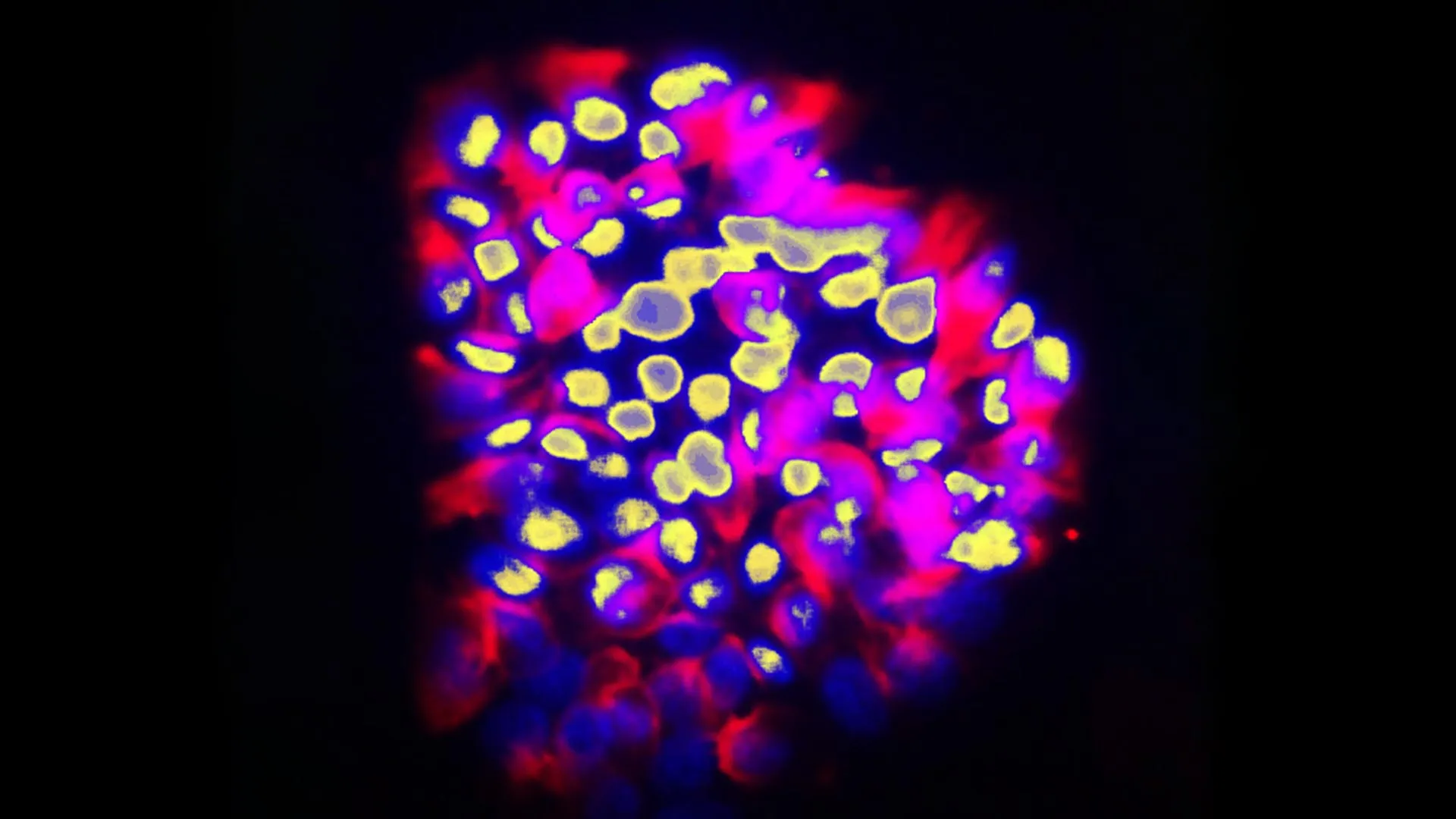
The enigma of why some tumors aggressively spread throughout the body while others remain contained has long been a critical challenge in oncology. Understanding the intricate mechanisms that govern a cancer cell’s ability to metastasize is paramount to revolutionizing patient care and improving survival rates. In a significant stride towards this goal, researchers at the University of Geneva (UNIGE) have identified key molecular factors influencing tumor dissemination and developed an artificial intelligence tool capable of predicting this risk with remarkable accuracy across various cancer types. This groundbreaking study, published in the esteemed journal Cell Reports, heralds a new era of personalized cancer treatment and offers promising avenues for novel therapeutic targets.
The Complex Biology of Cancer Metastasis
Cancer, at its core, is not simply a chaotic proliferation of rogue cells, but rather a profoundly distorted developmental process. As explained by Professor Ariel Ruiz i Altaba, a leading figure in the Department of Genetic Medicine and Development at the UNIGE Faculty of Medicine and the senior author of the study, "The origin of cancer is often attributed to ‘anarchic cells.’ However, cancer should rather be understood as a distorted form of development." During normal embryonic development, specific biological programs are activated and then precisely switched off to guide cell differentiation and tissue formation. In cancer, genetic and epigenetic alterations can inadvertently reactivate these dormant developmental pathways, driving uncontrolled tumor growth and, crucially, the invasive and migratory behavior characteristic of metastases.
Metastasis, the process by which cancer cells spread from their primary site to distant organs, is the primary cause of cancer-related mortality. This phenomenon accounts for a staggering percentage of deaths, particularly in common cancers such as breast, lung, and colon cancer. By the time circulating tumor cells are detectable in the bloodstream or lymphatic system, the disease has often progressed to a more advanced and challenging stage to treat. While significant progress has been made in identifying the genetic mutations that initiate tumor formation, a comprehensive understanding of why certain cells within a tumor acquire the capacity to break away, travel, and establish secondary tumors elsewhere has remained elusive.
"The difficulty lies in being able to determine the complete molecular identity of a cell – an analysis that destroys it – while observing its function, which requires it to remain alive," Professor Ruiz i Altaba elaborates on the inherent complexities of studying these mobile cancer cells. To circumvent this limitation, the UNIGE team employed an innovative approach. They meticulously isolated, cloned, and cultivated tumor cells derived from colon cancer in laboratory settings. These individual cell clones, representing distinct cellular behaviors within the tumor, were then rigorously evaluated both in vitro (in lab dishes) and within a sophisticated mouse model. This dual-pronged strategy allowed researchers to observe and quantify their ability to navigate through realistic biological barriers, simulating the journey through tissues and blood vessels, and ultimately, their potential to generate secondary tumors, or metastases.
Identifying the Molecular Signatures of Cancer Spread
The research team embarked on an extensive analysis of gene activity within approximately thirty distinct cell clones isolated from two primary colon tumors. This deep dive into the transcriptome of these cells revealed compelling and consistent gene expression patterns. These patterns were found to be intimately correlated with the individual cell clones’ propensity for migration and dissemination. A pivotal finding of this research is that metastatic potential is not dictated by the unique molecular profile of a single, isolated cancer cell. Instead, it emerges from the collective behavior and intercellular communication of groups of related cancer cells within the tumor microenvironment. This suggests that the complex interplay between cancer cells and their immediate surroundings plays a crucial role in orchestrating the metastatic cascade.
From Gene Signatures to Artificial Intelligence: The MangroveGS Tool
Building upon these critical insights into gene expression patterns associated with metastatic potential, the researchers ingeniously integrated these molecular "signatures" into a sophisticated artificial intelligence system. This novel tool, christened "Mangrove Gene Signatures" (MangroveGS), represents a significant advancement in cancer diagnostics. "The great novelty of our tool, called ‘Mangrove Gene Signatures (MangroveGS),’ is that it exploits dozens, even hundreds, of gene signatures. This makes it particularly resistant to individual variations," explains Aravind Srinivasan, a key member of the research team. By analyzing a broad spectrum of genetic signals, MangroveGS gains a more robust and reliable understanding of a tumor’s metastatic capabilities, mitigating the inherent variability observed in individual cancer cells or specific gene mutations.
Following an extensive training phase using a diverse dataset, the MangroveGS model demonstrated exceptional predictive power. It achieved nearly 80% accuracy in forecasting metastasis and recurrence in colon cancer patients, a performance that significantly surpasses existing diagnostic methodologies. Perhaps even more remarkably, the gene signatures identified through the study of colon cancer proved to be universally applicable. The same molecular patterns were found to be highly effective in predicting metastatic risk in a range of other prevalent cancer types, including stomach, lung, and breast cancer. This cross-cancer applicability underscores the fundamental biological principles governing metastasis that the AI tool has successfully deciphered.
A Timeline of Discovery and Innovation
The journey leading to the development of MangroveGS involved several key stages:
- Early 2010s: Initial research into the fundamental differences between localized and metastatic cancer cells begins, focusing on understanding the basic biology of cell migration and invasion.
- Mid-2010s: Researchers at UNIGE identify specific biological programs that are aberrantly reactivated in cancer cells, suggesting a link to distorted developmental processes.
- Late 2010s: The focus sharpens on colon cancer as a model system to investigate the cellular and molecular factors driving metastasis. Isolation and cloning of tumor cells from primary tumors commence.
- Early 2020s: Extensive analysis of gene expression in cloned tumor cells reveals distinct patterns correlating with metastatic potential. The critical role of intercellular communication is elucidated.
- 2022-2023: The identified gene signatures are integrated into an artificial intelligence framework, leading to the development of the MangroveGS tool. Rigorous testing and validation across multiple cancer types are conducted.
- Present: The study is published in Cell Reports, making the MangroveGS tool available for potential clinical application, promising a new era of precision oncology.
Broader Implications for Cancer Care and Research
The potential impact of MangroveGS on clinical practice is profound and far-reaching. The AI tool is designed to be integrated seamlessly into hospital workflows. Tumor samples collected during routine patient care can be rapidly analyzed. The RNA content of these cells can be sequenced, and the MangroveGS algorithm can then generate a metastasis risk score. This crucial information can be securely transmitted to oncologists and patients through an encrypted platform, enabling timely and informed decision-making.
"This information will prevent the overtreatment of low-risk patients, thereby limiting side effects and unnecessary costs, while intensifying the monitoring and treatment of those at high risk," Professor Ruiz i Altaba stated, highlighting the dual benefit of the technology. For patients with a low predicted risk of metastasis, this could mean avoiding aggressive treatments with significant side effects, improving their quality of life, and reducing the financial burden of unnecessary therapies. Conversely, for patients identified as high-risk, it allows for more intensive monitoring and the prompt initiation of aggressive treatment strategies, potentially improving their prognosis.
Beyond individual patient care, MangroveGS also offers significant advantages for the advancement of cancer research. "It also offers the possibility of optimizing the selection of participants in clinical trials, reducing the number of volunteers required, increasing the statistical power of studies, and providing therapeutic benefits to the patients who need it most," Professor Ruiz i Altaba added. By accurately stratifying patients based on their metastatic risk, clinical trials can be designed more efficiently. This could lead to faster drug development, a more accurate assessment of treatment efficacy, and ultimately, a quicker delivery of life-saving therapies to those who will benefit most.
Future Directions and Unanswered Questions
While MangroveGS represents a monumental leap forward, the scientific community continues to explore the multifaceted nature of metastasis. Future research will likely focus on:
- Expanding the AI’s scope: Further training MangroveGS with even larger and more diverse datasets to enhance its accuracy and applicability to rarer cancer types.
- Identifying therapeutic targets: Investigating the specific genes and molecular pathways highlighted by MangroveGS to develop novel targeted therapies that can inhibit metastatic processes.
- Understanding the tumor microenvironment: Delving deeper into the complex interactions between cancer cells and their surrounding stromal cells, immune cells, and extracellular matrix, which are known to influence metastatic behavior.
- Longitudinal studies: Implementing MangroveGS in clinical settings and conducting long-term studies to continuously monitor its impact on patient outcomes and treatment strategies.
The University of Geneva’s breakthrough underscores the power of interdisciplinary research, combining fundamental biological discovery with cutting-edge computational approaches. As scientists continue to unravel the intricate molecular language of cancer, tools like MangroveGS promise to transform our ability to predict, manage, and ultimately conquer this devastating disease, offering renewed hope to millions worldwide.

0 Comments