
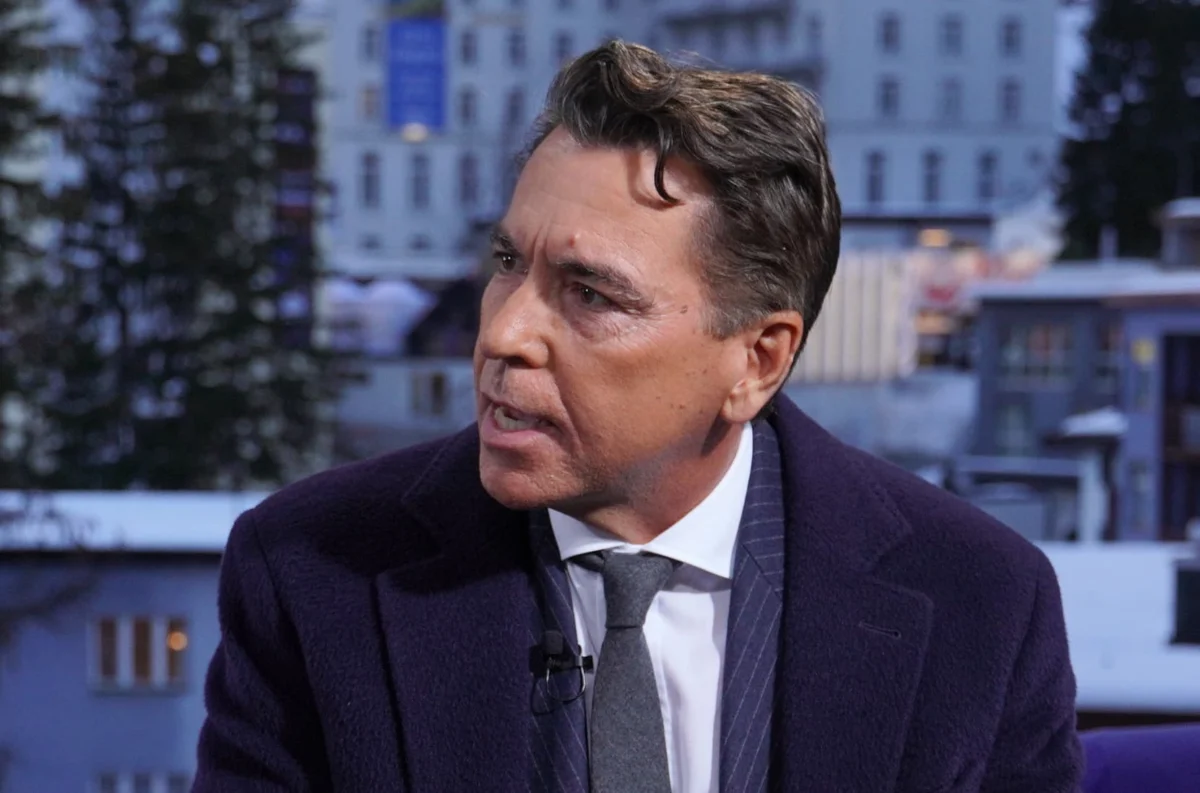
Orlando Bravo, founder and managing partner of Thoma Bravo, a leading private equity firm specializing in software and technology investments, mounted a robust defense of the private markets against increasing criticism regarding valuations and liquidity, asserting that deep sector expertise is now more crucial than ever in distinguishing successful ventures from struggling ones. Speaking during "Squawk on the Street" at the World Economic Forum (WEF) in Davos, Switzerland, on January 21, 2026, Bravo underscored the specialized approach that he believes insulates firms like Thoma Bravo from broader market pressures, particularly as artificial intelligence (AI) accelerates disruption across the software industry.
A Pivotal Defense Amidst Davos Scrutiny
Bravo’s remarks come at a critical juncture for the private capital industry, which has faced intensified scrutiny over its opaque valuation practices, liquidity challenges, and the potential for significant write-downs in a higher interest rate environment. From the iconic snowy peaks of Davos, a traditional gathering place for global leaders to address pressing economic issues, Bravo articulated a strategy rooted in granular understanding and active management. "We have been living in the details of the space for a very, very long time, not on a high level, not investing in stocks, [but] investing in companies, customer contracts, knowing the details," Bravo stated in an interview with CNBC’s Leslie Picker. He emphasized, "So, yes, as a sector specialist in private equity, our companies are very, very different. We are so comfortable with our private credit book, given the choices we’ve made as a specialist." This assertion directly addresses the core anxieties of investors and analysts who question whether private market assets truly reflect fair value, especially after a period of unprecedented growth fueled by low interest rates.
The private markets, encompassing private equity, private credit, and venture capital, have experienced explosive growth over the past two decades, attracting trillions of dollars from institutional investors seeking higher returns and diversification away from publicly traded assets. This expansion was significantly propelled by a prolonged period of low-interest rates, which made debt financing inexpensive and boosted asset valuations across the board. However, the paradigm shift in global monetary policy, marked by aggressive interest rate hikes from central banks worldwide beginning in 2022, has fundamentally altered the investment landscape. This shift has led to a re-evaluation of asset prices, particularly in sectors that thrived on cheap capital, and has exposed potential vulnerabilities within the private markets, including slower mark-to-market adjustments compared to public equities and concerns over redemptions. The World Economic Forum, an annual gathering that brings together heads of state, CEOs, and financial leaders, serves as a significant platform for such discussions, reflecting the global implications of private market dynamics on capital allocation and economic stability.
The Evolving Landscape of Private Markets: A Chronology of Concern
The current climate of apprehension surrounding private markets did not materialize overnight but is the culmination of several interlocking economic and financial trends. Following the Global Financial Crisis of 2008, private capital emerged as an increasingly attractive asset class. Its perceived ability to generate alpha through operational improvements, leverage, and long holding periods, coupled with the illiquidity premium, drew significant allocations from pension funds, sovereign wealth funds, and endowments. Assets under management (AUM) in private equity alone surged from approximately $2 trillion in 2010 to over $8 trillion by the mid-2020s, with private credit also experiencing similar exponential growth, reaching an estimated $1.5 trillion globally. This growth was largely predicated on a macro-environment characterized by abundant liquidity and a hunt for yield in a low-return public market.
However, the easy money era began to recede sharply from early 2022. Central banks, grappling with persistent inflation that reached multi-decade highs, aggressively tightened monetary policy, pushing benchmark interest rates to levels not seen in over a decade. This had a profound impact on private markets in several ways:
- Increased Cost of Debt: Private equity deals, heavily reliant on leveraged buyouts, became significantly more expensive to finance, compressing potential returns and increasing the risk profile of new and existing investments.
- Higher Discount Rates: Valuation models, which discount future cash flows to arrive at a present value, began incorporating higher risk-free rates, naturally leading to lower present values for portfolio companies, even if their underlying operational performance remained stable.
- Slower Exit Environment: Initial Public Offerings (IPOs) and merger & acquisition (M&A) activity slowed considerably as public market volatility increased and potential buyers became more cautious, prolonging holding periods for private equity firms and delaying capital distributions to LPs.
- Liquidity Concerns: Investors, facing their own capital calls and rebalancing needs within their broader portfolios, began to seek liquidity. This put pressure on private funds that, by their nature, offer limited and infrequent redemption options, leading to an increase in secondary market activity and, in some cases, redemption gates.
These pressures intensified throughout 2023 and 2024, leading to a wave of markdowns across various private credit and equity funds. The inherent lack of real-time price discovery in private markets, in contrast to the daily fluctuations of public stocks, sparked concerns that some firms might be slow to adjust their valuations, potentially presenting a more favorable, albeit potentially misleading, picture to their limited partners (LPs). It is against this backdrop that prominent voices within the financial industry began to publicly question the integrity of private market valuations.
One of the most vocal critics has been John Zito, Deputy Chief Investment Officer of Credit at Apollo Global Management. Just last month, in late 2025, Zito reportedly informed UBS clients that private equity firms were broadly misstating the value of their software holdings, famously declaring that "all the marks are wrong." His comments sent ripples through the industry, amplifying concerns that the true impact of the changed economic environment had yet to be fully recognized in private portfolios. Zito even pointed to specific deals, including Thoma Bravo’s $6.4 billion take-private acquisition of customer experience software company Medallia in 2021, suggesting it would perform "worse than people expect."
Concurrently, institutional concerns have deepened regarding the private credit sector, which has grown to rival traditional bank lending for middle-market companies. Morgan Stanley, in a recent report released in late 2025 or early 2026, projected direct-lending default rates to reach approximately 8% by 2026, a figure that would near the peaks observed during the tumultuous COVID-era economic downturn in 2020. This forecast underscores the potential for significant credit losses in a segment of the market previously lauded for its resilience and tailored financing solutions, adding another layer of complexity to the broader private markets debate.
Data Underpinning the Debate: Valuations, Defaults, and AI’s Ascent
The debate surrounding private market valuations and credit quality is not merely theoretical; it is underpinned by significant shifts in economic data and technological advancements. The dramatic increase in private capital AUM, particularly in technology-focused sectors, occurred during a decade characterized by historically low interest rates and a robust appetite for growth-at-any-cost. This environment allowed for aggressive valuations and highly leveraged transactions, with valuation multiples for private software companies often reaching parity with, or even exceeding, their public counterparts.
Data from industry sources like Preqin and PitchBook consistently shows that private equity dry powder (capital committed but not yet invested) has reached record levels, indicating continued investor confidence in the long-term prospects of the asset class, yet also reflecting the challenges in deploying capital at attractive valuations in the current environment. However, the spread between public and private market valuations has widened in some sectors, prompting questions about the speed and accuracy of private market write-downs. While public software companies experienced significant corrections in 2022-2023, often seeing share prices plummet by 30-50% or more from their peaks, private software companies’ valuations, while also declining, often did so at a slower pace, raising concerns about potential lags in reporting.
Morgan Stanley’s projection of an 8% default rate in direct lending for 2026, if realized, would represent a substantial increase from the historically low rates observed during the preceding years of loose monetary policy, which often hovered in the 1-3% range. For context, while default rates in broadly syndicated loans have also risen, direct lending portfolios typically comprise smaller, often more leveraged companies, making them potentially more sensitive to economic headwinds and rising borrowing costs. The direct lending market, estimated to be well over $1.5 trillion globally, has become a vital source of financing, and any systemic stress within it could have broader implications for the real economy, potentially impacting small and medium-sized businesses reliant on this capital.
Simultaneously, the meteoric rise of artificial intelligence has introduced another layer of complexity and opportunity. AI is not just an incremental technology; it is a transformative force capable of fundamentally reshaping industries, none more so than software. Industry analysts project that AI could add trillions to the global economy by the next decade, with a significant portion driven by software innovation. Companies that can effectively integrate AI into their products and operations – whether through enhanced automation, predictive analytics, or generative capabilities – stand to gain significant competitive advantages, potentially leading to increased market share and profitability. Conversely, those that fail to adapt risk rapid obsolescence, as their offerings may be outcompeted by more intelligent, efficient, and personalized AI-powered solutions. This creates a dichotomy where certain software assets may command premium valuations due to their AI readiness and potential, while others, perceived as vulnerable to disruption, may face accelerated declines. The "winners and losers" dynamic, as Bravo suggests, is becoming starker and moving at an unprecedented pace.
Thoma Bravo, with its singular focus on software, has built a formidable track record over two decades, managing assets exceeding $130 billion. The firm’s strategy involves acquiring mission-critical software companies, often with recurring revenue models, and then implementing operational improvements, optimizing pricing, and pursuing add-on acquisitions to drive growth and profitability. This deep specialization in a single sector, according to Bravo, grants the firm unparalleled insights into market trends, customer needs, and technological shifts, enabling them to navigate the complexities of AI disruption more effectively than generalist investors who might lack the specific domain knowledge required to differentiate between truly transformative and merely hyped AI applications.
Voices of Discontent and Reassurance: Investor and Industry Reactions
John Zito’s blunt assessment of software valuations within private equity resonated with a segment of the investment community that has grown increasingly wary of the sector’s opacity. His assertion that "all the marks are wrong" taps into a broader concern about the potential for firms to delay acknowledging losses, thereby presenting a more favorable, albeit potentially misleading, picture to their limited partners (LPs). Zito’s specific critique of the Medallia deal underscores the perceived risk in overpaying for growth-oriented software companies, particularly when market conditions shift dramatically, as they have since the 2021 acquisition. The Wall Street Journal, in its reporting on Zito’s comments, highlighted Medallia as a prime example of a deal whose future performance might diverge significantly from initial expectations.
Bravo, acknowledging the specific criticism regarding Medallia, offered a candid admission of misjudgment, a rare occurrence in public pronouncements from private equity leaders. "When we bought it, we way overestimated or extrapolated the very high rate of growth of that company into the future. We made a mistake. And that cost us to pay too much. Now, the equity from our standpoint has been impaired for a long time," Bravo conceded. This level of transparency is noteworthy in an industry often characterized by guarded pronouncements. He further added that "Our investors, this group that holds the capital in the world, has known that for years. So there is no new news." This statement aims to reassure that Thoma Bravo has been upfront with its LPs, including major U.S. pension funds and global sovereign wealth funds, a crucial element in maintaining trust in long-term relationships, particularly when faced with underperforming assets.
Indeed, investor confidence is paramount for private equity firms, as they rely on continuous capital commitments for new funds. Pension funds, endowments, and sovereign wealth funds, which allocate significant portions of their portfolios to private markets, demand transparency and a clear understanding of risks and returns. While the allure of private market outperformance remains, these sophisticated investors are increasingly scrutinizing reporting methodologies, liquidity provisions, and the alignment of interests between general partners (GPs) and LPs. Bravo highlighted that Thoma Bravo’s investor base has remained confident due to the firm’s consistent performance and openness. "They’ve seen our marks, they’ve seen our exits, they’ve seen our progression," he affirmed, adding, "Everybody’s extremely comfortable." This suggests that a long track record of delivering returns and maintaining open communication can help mitigate concerns even during periods of market volatility.
Beyond specific deals, the broader industry is grappling with the implications of AI. While some private equity firms are actively investing in AI startups or integrating AI capabilities into their portfolio companies, others are still assessing the full impact. There’s a consensus among industry analysts that software companies, especially those with outdated technology stacks or undifferentiated products, will face immense pressure. Publicly traded software firms, in particular, have already experienced significant valuation adjustments, with Bravo noting that recent declines in some names are "very warranted." He drew a sharp distinction, arguing that "many, many software companies in the public markets that will be disrupted from AI. Those companies were going to be disrupted anyway. AI will create a disruption a lot faster." This suggests that private equity, with its ability to take companies private, restructure, and reinvest away from public market scrutiny, might be better positioned to navigate such profound transformations, allowing for longer investment horizons and strategic pivots.
Navigating the Future: Implications for Private Equity and the Software Ecosystem
The discussions at Davos, particularly those involving leaders like Orlando Bravo

0 Comments