
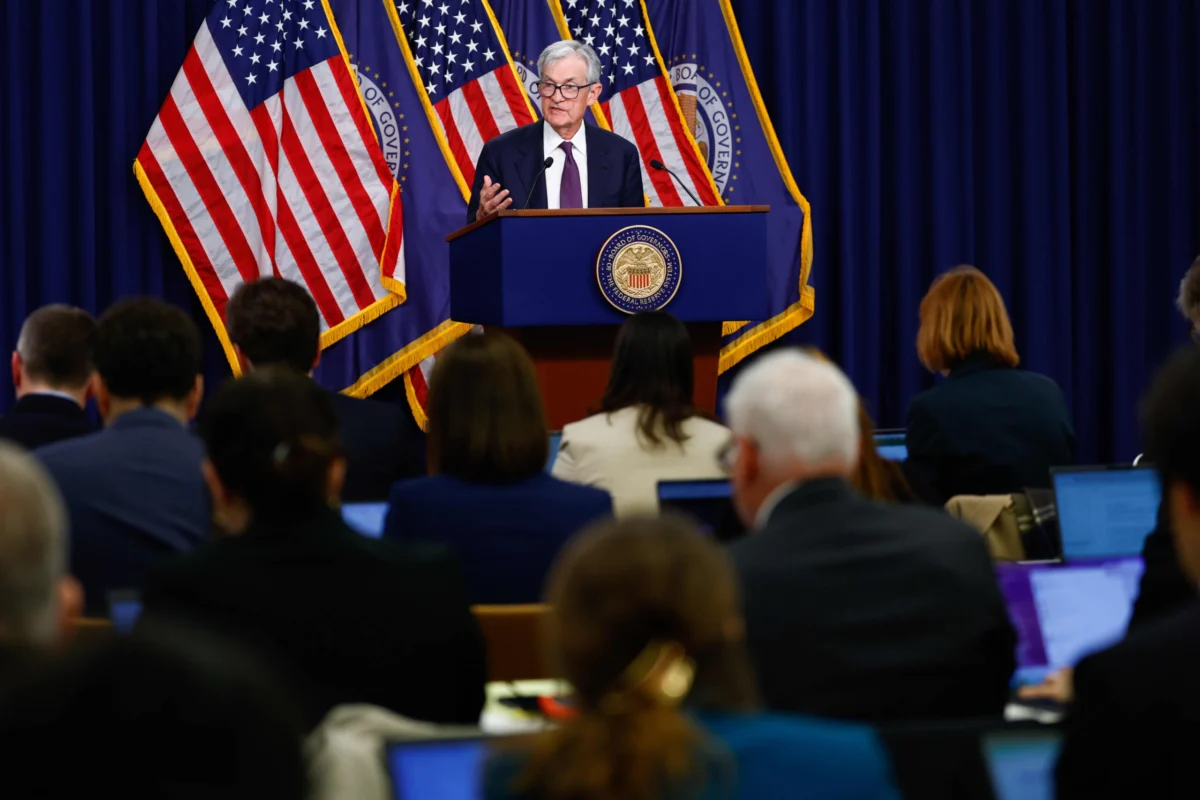
WASHINGTON – The Federal Reserve on Wednesday concluded its latest Federal Open Market Committee (FOMC) meeting by opting to hold its benchmark interest rate steady, a widely anticipated decision that underscores the complex economic landscape confronting U.S. policymakers. This pivotal moment for monetary policy comes as the central bank grapples with a resurgence of inflationary pressures, a labor market presenting mixed signals, and the burgeoning uncertainty emanating from a geopolitical conflict in the Middle East, all while navigating an unprecedented level of political pressure and scrutiny.
The FOMC voted 11-1 to maintain the federal funds rate within its current target range of 3.5% to 3.75%. This rate, which dictates overnight lending costs for banks, serves as a foundational lever for the broader economy, influencing everything from mortgage rates and credit card interest to business investment and consumer spending. The decision to keep rates unchanged reflects a cautious approach by the Fed as it assesses incoming economic data, weighing the risks of easing too soon against the potential for an overly restrictive monetary stance to dampen economic growth.
Navigating Persistent Inflation and Shifting Projections
In its post-meeting statement, the committee made only minor adjustments to its economic outlook, yet these subtle shifts carried significant weight. Policymakers now project a slightly faster pace of economic growth and higher inflation for 2026 compared to their previous estimates in December. Despite these elevated uncertainties, the Fed’s closely watched "dot plot," which aggregates individual members’ projections for future interest rates, still pointed towards at least one rate reduction this year, followed by another in 2027. However, the exact timing and magnitude of these potential cuts remain highly ambiguous, subject to evolving economic conditions.
A deeper dive into the "dot plot" reveals a growing divergence in views among FOMC participants. Of the 19 members, seven indicated an expectation that rates would remain unchanged throughout 2026, a notable increase from just one participant in the December update. This shift suggests a hardening resolve among a significant minority within the Fed to prioritize inflation containment, even at the expense of delaying rate cuts that many market participants had eagerly anticipated. Looking further out, while forecasts for future years showed a wide dispersion, the median outlook anticipates an additional cut in 2027, with the federal funds rate eventually stabilizing around 3.1% over the long term, a level considered to be closer to a neutral stance.
The market’s immediate reaction was palpable, with stocks falling to session lows following the central bank’s announcement and Federal Reserve Chair Jerome Powell’s subsequent press conference. Investors appeared to react negatively to the implied "higher-for-longer" rate trajectory and the renewed emphasis on the threat of persistent inflation, particularly in light of recent geopolitical developments.
The Shadow of Geopolitics: War in the Middle East
A critical factor shaping the Fed’s current deliberations is the war with Iran, which erupted nearly three weeks prior to the FOMC meeting. This conflict has rapidly escalated, sending shockwaves across global markets and significantly complicating the inflation outlook. The fighting, particularly its potential impact on the Strait of Hormuz – a vital chokepoint for global oil shipments – has led to a sharp increase in crude oil prices. Brent crude futures, for instance, surged past $100 a barrel in the immediate aftermath of the conflict’s onset, while WTI futures also saw significant gains, reflecting fears of supply disruptions and a broader geopolitical risk premium.
In its statement, the FOMC explicitly acknowledged this new variable, noting, "The implications of developments in the Middle East for the U.S. economy are uncertain." During his news conference, Chair Powell reiterated this sentiment, stating it was "too soon to know" the full impact of the war. He elaborated, "Near term measures of inflation expectations have risen in recent weeks, likely reflecting the substantial rise in oil prices caused by the supply disruptions in the Middle East." This direct linkage of rising energy costs to inflation expectations underscores the Fed’s concern that the conflict could derail progress towards its 2% inflation target, potentially necessitating a longer period of restrictive monetary policy. The ripple effects of elevated oil prices extend beyond gasoline pumps, impacting transportation costs for goods, manufacturing inputs, and consumer spending power, all contributing to broader inflationary pressures.
A Mixed Picture from the Labor Market
Adding another layer of complexity to the Fed’s decision-making is the "mixed signs" emerging from the labor market. While the unemployment rate has remained relatively low, suggesting a degree of resilience, recent payrolls readings have shown signs of weakening. For instance, the most recent Non-Farm Payrolls report indicated a slowdown in job creation, falling below consensus estimates, while previous months’ figures were also subject to downward revisions. Furthermore, initial jobless claims, a leading indicator of labor market health, have seen sporadic upticks, hinting at potential underlying softening.
Despite these "weak payrolls readings," Fed officials continue to project a 4.4% unemployment rate by the end of the year, signaling an expectation that the labor market will remain relatively robust even as economic growth moderates. This projection suggests the Fed believes that any softening would be gradual and not indicative of a sharp downturn. However, the dissent from Governor Stephen Miran, who again favored a quarter-percentage-point rate cut, highlights concerns within the committee about the deteriorating jobs climate. Miran’s consistent call for easing indicates a belief that the current monetary policy might be overly restrictive, potentially jeopardizing labor market stability. Notably, Governor Christopher Waller, who had joined Miran in advocating for a cut in January, voted this time to hold, reflecting a shift in his assessment of the current economic risks.
Prior to the onset of the Middle East conflict and a series of unexpectedly firm inflation readings (some of which predated the energy shock), market participants had largely been pricing in expectations for two, and possibly even three, rate reductions this year. The confluence of rising oil prices and persistent inflationary pressures has effectively recalibrated these expectations, pushing them down to at most one cut in 2026, further emphasizing the delicate balance the Fed must strike.

Updated Economic Projections: Growth and Inflation Outlook
In their updated Summary of Economic Projections (SEP), Fed officials presented a revised outlook for key economic indicators:
- Gross Domestic Product (GDP): Officials now foresee U.S. GDP increasing at a 2.4% pace this year, a slight acceleration from the 2.2% projected in December. Growth is then expected to progress at a solid 2.3% rate in 2027, an upward revision of three-tenths of a percentage point from the previous outlook. These projections suggest a more resilient economy than previously anticipated, capable of absorbing higher interest rates, at least for the near term.
- Inflation: The outlook for inflation has also been revised upward. The personal consumption expenditures (PCE) price index, the Fed’s preferred inflation gauge, is now expected to reflect a 2.7% inflation rate for 2026, both on a headline and core basis. This is a significant increase from the December projection of 2.5% for headline PCE and 2.6% for core PCE. However, policymakers maintain that inflation will gradually fall back near the Fed’s 2% target in subsequent years, as the transient impacts of tariffs and the war eventually fade. This forward-looking confidence hinges on the assumption that current inflationary pressures are largely exogenous and temporary.
- Unemployment Rate: Despite the aforementioned mixed signals and weak payrolls data, the Fed’s projection for the unemployment rate by year-end remains unchanged at 4.4%. This suggests the central bank anticipates that the economy can achieve its inflation goals without a substantial deterioration in the labor market.
The Political Backdrop: A Test of Fed Independence
The Fed’s decision to hold rates comes against an unusually charged and complicated political backdrop, placing significant strain on the institution’s cherished independence. President Donald Trump has been an outspoken critic of Chair Powell and his colleagues, consistently badgering them to lower rates. Earlier this week, Trump publicly criticized Powell for not convening a special meeting to ease monetary policy, even as inflation showed signs of running hot and the war’s impact remained uncertain. This persistent public pressure from the executive branch represents a significant challenge to the Fed’s ability to conduct monetary policy free from political influence, a principle widely regarded as crucial for economic stability.
Further compounding the political complexities is the imminent end of Chair Powell’s term in May. President Trump has nominated former Fed Governor Kevin Warsh as Powell’s successor. Warsh is known for his preference for lower rates and a more streamlined approach to monetary policy, though his recent public statements on his current thinking have been scarce. Should Warsh be confirmed, his leadership could usher in a new era for the central bank, potentially shifting its policy trajectory, particularly regarding the pace and timing of rate adjustments.
However, Warsh’s nomination is currently entangled in a legal and political quagmire. The U.S. Attorney for Washington, Jeanine Pirro, has subpoenaed Chair Powell for evidence related to the Fed’s multibillion-dollar headquarters renovation. Powell has vehemently resisted this subpoena, accusing Trump of using it as a pretext to exert undue pressure on the Fed to lower rates. A federal judge sided with Powell, tossing the subpoenas and agreeing with the assessment that the effort was indeed a thinly veiled attempt to twist Powell’s arm on monetary policy.
The legal battle is far from over, as Pirro has vowed to appeal the judge’s decision. This ongoing legal saga has spilled over into the legislative arena, with Senator Thom Tillis (R-N.C.), a key member of the Senate Banking Committee, publicly stating his intention to block Warsh’s nomination until the matter concerning Powell is fully settled. This legislative blockade means that if the court battle extends past May, Powell would effectively remain in his seat as Fed Chair until Warsh’s confirmation, or another nominee, is secured.
During his news conference, Powell addressed this unprecedented situation directly, asserting, "I have no intention of leaving the board until the investigation is well and truly over, with transparency and finality." This firm stance underscores his commitment to the institution’s integrity and independence. Regarding his future beyond the resolution of the investigation, Powell stated, "I have not made that decision yet, and I will make that decision based on what I think is best for the institution and for the people we serve." Powell’s term on the Board of Governors does not expire until early 2028, meaning he could potentially remain a voting member even if he were to step down as Chair, though this scenario is less common amidst such political turmoil. This extraordinary convergence of geopolitical shocks, persistent inflation, and direct political interference creates an exceptionally challenging environment for the Federal Reserve.
Broader Impact and Implications for the Economy
The Fed’s decision to hold rates steady, coupled with its revised economic projections and the complex geopolitical and political backdrop, carries significant implications across various sectors of the U.S. economy. For consumers, the "higher-for-longer" interest rate environment means that borrowing costs for mortgages, auto loans, and credit cards will remain elevated. This can dampen demand for big-ticket items and potentially slow down the housing market, which has already shown sensitivity to rising rates. Businesses, particularly those reliant on financing for expansion or inventory management, will also face higher costs of capital, which could impact investment decisions and hiring plans.
The persistence of inflation, exacerbated by the Middle East conflict, could continue to erode purchasing power, particularly for lower-income households. While the Fed projects inflation to eventually return to its 2% target, the timeline for this remains uncertain, and prolonged periods of elevated prices could force consumers to make difficult choices about their spending.
For financial markets, the Fed’s cautious stance and the reduced expectation of immediate rate cuts signal a more challenging environment for equities, especially growth stocks that are sensitive to interest rates. Bond yields, particularly on shorter-term Treasuries, are likely to remain elevated, reflecting investor expectations of continued monetary tightening or a delayed easing cycle. The volatility stemming from geopolitical events and political uncertainty is also likely to persist, prompting investors to seek safe-haven assets and potentially leading to broader market instability.
Looking ahead, the Federal Reserve faces a formidable balancing act. It must carefully weigh the risks of re-igniting inflation against the dangers of stifling economic growth, all while navigating an unpredictable geopolitical landscape and fending off unprecedented political interference. The coming months will be crucial in determining whether the U.S. economy can achieve a "soft landing" – bringing inflation under control without triggering a recession – or if it is destined for a more turbulent path. The future direction of monetary policy will hinge on the evolution of inflation data, the stability of the labor market, the trajectory of the Middle East conflict, and ultimately, the Fed’s ability to maintain its independence and credibility in the face of intense external pressures.

0 Comments